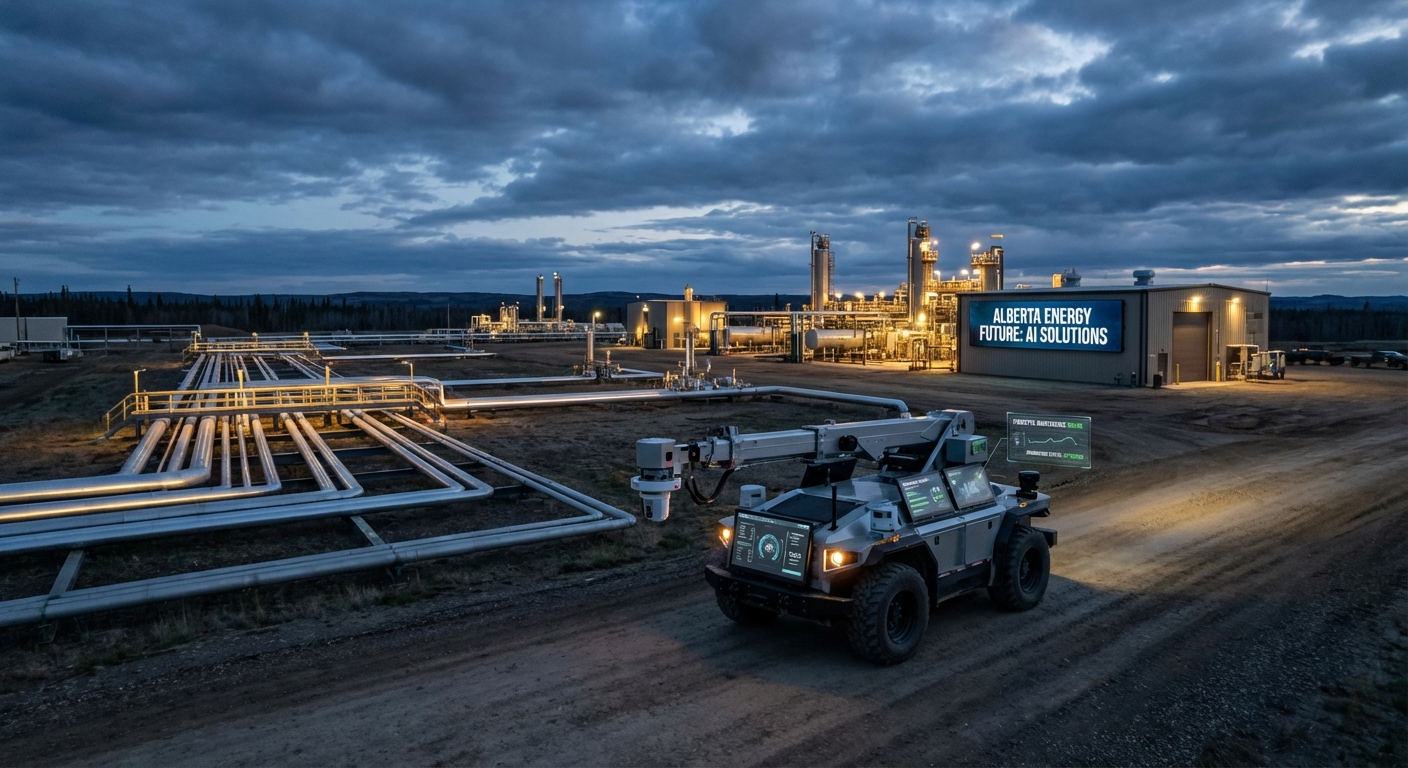
Alberta’s energy legacy serves as the financial and intellectual engine driving its digital future. By 2026, the province has leveraged its industrial expertise to become a global leader in clean technology, artificial intelligence, and industrial software, creating a diversified economy where traditional resources and high-tech innovation coexist and reinforce one another.
For over a century, Alberta has been defined by its vast natural resources. From the first major oil strike at Leduc No. 1 in 1947 to the massive engineering feats of the Athabasca oil sands, the province has built a world-class reputation for energy production. However, as of 2026, this narrative is shifting. The "Oil Patch" is no longer just about pipelines and drilling rigs; it is a sophisticated laboratory for digital transformation. This evolution is not a replacement of the old by the new, but rather a convergence where digital tools are used to solve the most pressing challenges of the energy sector while simultaneously birthing a standalone technology industry.
The Foundation: Alberta’s Enduring Energy Legacy
To understand Alberta’s digital future, one must first appreciate the scale of its energy legacy. Alberta holds the third-largest proven oil reserves in the world, primarily located in the oil sands. This industry has dictated the province’s economic cycles, infrastructure development, and social fabric for generations. The legacy is characterized by high-stakes engineering, massive capital investment, and a "can-do" culture that prides itself on solving complex physical problems.
The wealth generated by the energy sector created a unique environment: a high concentration of corporate headquarters in Calgary and a robust research ecosystem in Edmonton. By the early 2020s, the energy sector accounted for over 25% of Alberta's GDP. This economic dominance provided the necessary tax base to fund world-class universities, such as the University of Alberta and the University of Calgary, which would eventually become the incubators for the province’s digital pivot.
Furthermore, the physical infrastructure of the energy legacy—large-scale power generation, extensive rights-of-way, and industrial parks—has provided a literal foundation for the digital economy. High-density power grids designed for industrial refineries are now being repurposed or expanded to support massive data centers and AI computing clusters.
The Catalyst for Digital Transformation
The transition toward a digital future accelerated in the mid-2010s following significant fluctuations in global oil prices. The 2014–2016 downturn, in particular, served as a catalyst for "forced innovation." Energy companies realized that to remain competitive in a low-carbon, price-volatile world, they needed to reduce operational costs and carbon intensity through technology.
As we stand in 2026, we see the results of this shift. Digital transformation in the energy sector—often referred to as Energy 4.0—has moved from a buzzword to a standard operational requirement. Companies have integrated the following technologies to bridge the gap between their legacy assets and a digital future:
- Industrial Internet of Things (IIoT): Hundreds of thousands of sensors across pipelines and processing plants provide real-time data to prevent leaks and optimize flow.
- Digital Twins: Virtual replicas of physical assets allow engineers to simulate maintenance scenarios and stress-test facilities without physical risk.
- Autonomous Operations: Remote-controlled drilling and automated hauling in the oil sands have significantly improved safety and efficiency.
These internal needs created a "pull" effect, drawing tech talent and startups to the province to solve industrial problems. This symbiotic relationship ensured that the tech sector did not grow in isolation but was grounded in the practical, high-value needs of the energy industry.
Alberta’s Rise as an AI and Machine Learning Powerhouse
One of the most significant pillars of Alberta’s growing digital future is its global standing in Artificial Intelligence (AI). This is largely centered in Edmonton at the Alberta Machine Intelligence Institute (Amii) and the University of Alberta. For decades, researchers like Richard Sutton, often called the "father of reinforcement learning," have called Alberta home.
By 2026, the province has successfully commercialized this academic excellence. AI is no longer restricted to labs; it is the backbone of Alberta’s new economy. Reinforcement learning, a type of AI that learns through trial and error to achieve a goal, is being used to optimize the provincial power grid, predict commodity market shifts, and manage complex logistics for international trade.
The government’s strategic investment in AI has attracted global tech giants. Companies that once viewed Alberta solely as an oil and gas hub have established "AI Centers of Excellence" in Calgary and Edmonton. This has created a virtuous cycle: top-tier graduates from Alberta’s universities now have the option to stay in the province to work for world-leading firms or launch their own startups, rather than migrating to Silicon Valley or Toronto.
The Clean Tech and CCUS Frontier
A major intersection of the energy legacy and the digital future is the Clean Technology (CleanTech) sector. As global pressure for decarbonization intensified throughout the early 2020s, Alberta positioned itself as a leader in Carbon Capture, Utilization, and Storage (CCUS).
In 2026, Alberta operates some of the world’s most advanced CCUS projects, such as the Alberta Carbon Trunk Line. These projects are inherently data-intensive. Managing the capture, transport, and underground injection of CO2 requires sophisticated monitoring software and geological modeling—all of which are digital products.
Moreover, the expertise gained in the oil patch is being applied to the hydrogen economy. Alberta’s goal to become a global supplier of blue and green hydrogen relies on digital grid management and automated chemical processing. The digital future in Alberta is, in many ways, "green" because the province is using its engineering legacy to pioneer the software and hardware needed for a net-zero world.
Infrastructure and the "Silicon Prairie"
Calgary and Edmonton have emerged as distinct but complementary tech hubs. Calgary, with its high concentration of corporate decision-makers, has become a center for fintech, cybersecurity, and enterprise software. Edmonton, fueled by the University of Alberta, remains the heart of research, AI, and biotechnology.
The "Silicon Prairie" designation is supported by measurable growth. By 2026, venture capital (VC) investment in Alberta has seen consecutive years of growth, often outperforming traditional Canadian tech centers on a per-capita basis. This is facilitated by programs like the Alberta Enterprise Corporation, which helps foster a robust VC ecosystem.
| Metric | Traditional Energy Era (Pre-2015) | Digital & Integrated Era (2026 Status) |
|---|---|---|
| Primary Economic Driver | Raw resource extraction and export. | Integrated energy, AI, and industrial software. |
| Workforce Focus | Heavy machinery, manual labor, and traditional engineering. | Data science, software engineering, and automated systems. |
| Innovation Source | Internal R&D within major oil companies. | Collaborative ecosystem of startups, universities, and Amii. |
| Investment Profile | Large-scale CAPEX (billions in physical plants). | Diversified VC, R&D tax credits, and tech scale-ups. |
| Environmental Focus | Compliance-based reclamation. | Technology-driven decarbonization and CCUS. |
| Geographic Reach | Focused on physical pipelines to specific markets. | Global export of software, AI models, and CleanTech IP. |
Workforce Evolution: From Rigs to Code
One of the most challenging yet successful aspects of Alberta's transition is the evolution of its workforce. The province has implemented aggressive retraining programs to move workers from traditional trades into tech-adjacent roles. This "upskilling" is not about turning every welder into a software developer, but rather about integrating digital literacy into every trade.
In 2026, a "digital energy worker" might be a petroleum engineer who uses Python to analyze seismic data, or a heavy equipment technician who maintains autonomous haul trucks using diagnostic software. The Government of Alberta has partnered with post-secondary institutions to offer micro-credentials in data analytics and cybersecurity, ensuring that the legacy workforce is not left behind by the digital future.
This transition has been bolstered by the province’s relatively low cost of living and high quality of life compared to other North American tech hubs. As remote work became standardized in the early 2020s, Alberta’s cities became attractive destinations for tech workers seeking to balance a high-tech career with access to the Rocky Mountains and affordable housing.
Challenges and the Path Ahead
Despite the progress made by 2026, the path has not been without obstacles. The primary challenge remains the volatility of the global economy and the sheer scale of the legacy sector. Balancing the immediate economic benefits of oil and gas exports with the long-term goal of digital diversification requires careful policy navigation.
Other challenges include:
- Grid Capacity: The surge in data centers and AI computing requires massive amounts of reliable electricity. Alberta is currently upgrading its grid to handle this "digital load" while also transitioning to renewable sources.
- Global Competition: Other regions, such as Texas and Norway, are pursuing similar "Energy-to-Digital" strategies. Alberta must maintain its competitive edge through continuous investment in AI research and attractive corporate tax structures.
- Talent Retention: While the province is producing world-class graduates, the global demand for AI talent is fierce. Maintaining an ecosystem where these individuals feel they can build global companies from within Alberta is essential.
Frequently Asked Questions
How has Alberta's energy sector influenced its tech growth?
The energy sector provided the initial capital, complex problems to solve, and the corporate infrastructure that attracted tech companies. Many of Alberta's most successful startups began by providing software solutions specifically for oil and gas, such as emissions tracking or supply chain management, before expanding into other global industries.
Which cities are the primary hubs for digital innovation?
Calgary and Edmonton are the primary hubs. Calgary is often seen as the corporate and fintech center, housing the headquarters of major firms and a growing number of tech scale-ups. Edmonton is the academic and research heart, particularly world-renowned for its artificial intelligence and machine learning research through Amii and the University of Alberta.
What role does AI play in Alberta’s current economy?
In 2026, AI is integrated into almost every major industry in Alberta. It is used for predictive maintenance in the energy sector, optimizing crop yields in agriculture, managing logistics in the manufacturing sector, and developing new medical treatments in the life sciences sector. It is no longer a standalone industry but a "utility" that powers the broader economy.
Is the traditional energy sector being replaced?
No, it is being transformed. While Alberta is diversifying into tech, the energy sector remains a vital part of the economy. The goal is "decarbonized production," where digital tools and CCUS are used to make Alberta's energy the most sustainable and technologically advanced in the world.
What are the key incentives for tech companies moving to Alberta?
Companies are drawn by the Alberta Innovation Grant, a competitive corporate tax rate, a highly educated workforce, and the lower cost of operating compared to hubs like Vancouver, Toronto, or San Francisco. Additionally, the proximity to major industrial "customers" in the energy and agriculture sectors provides a unique market for B2B tech firms.
Conclusion and Next Actions
Alberta’s journey from a traditional energy powerhouse to a diversified digital leader is a blueprint for resource-dependent economies worldwide. By 2026, the province has proven that a legacy of industrial strength is not a hindrance to a digital future—it is a prerequisite. The integration of AI, CleanTech, and industrial software has created an economy that is more resilient, sustainable, and globally competitive.
For businesses and professionals looking to engage with this transition, the following steps are recommended:
- For Investors: Look toward the "Industrial Tech" and "CleanTech" sectors in Calgary and Edmonton, where legacy expertise meets digital innovation.
- For Tech Talent: Explore the specialized micro-credential programs offered by Alberta’s universities to bridge the gap between software skills and industrial applications.
- For Energy Firms: Continue the integration of AI and autonomous systems to meet the dual demands of lower costs and lower carbon emissions.
Alberta’s future is no longer just about what is beneath the ground, but also about the ideas and algorithms generated above it.