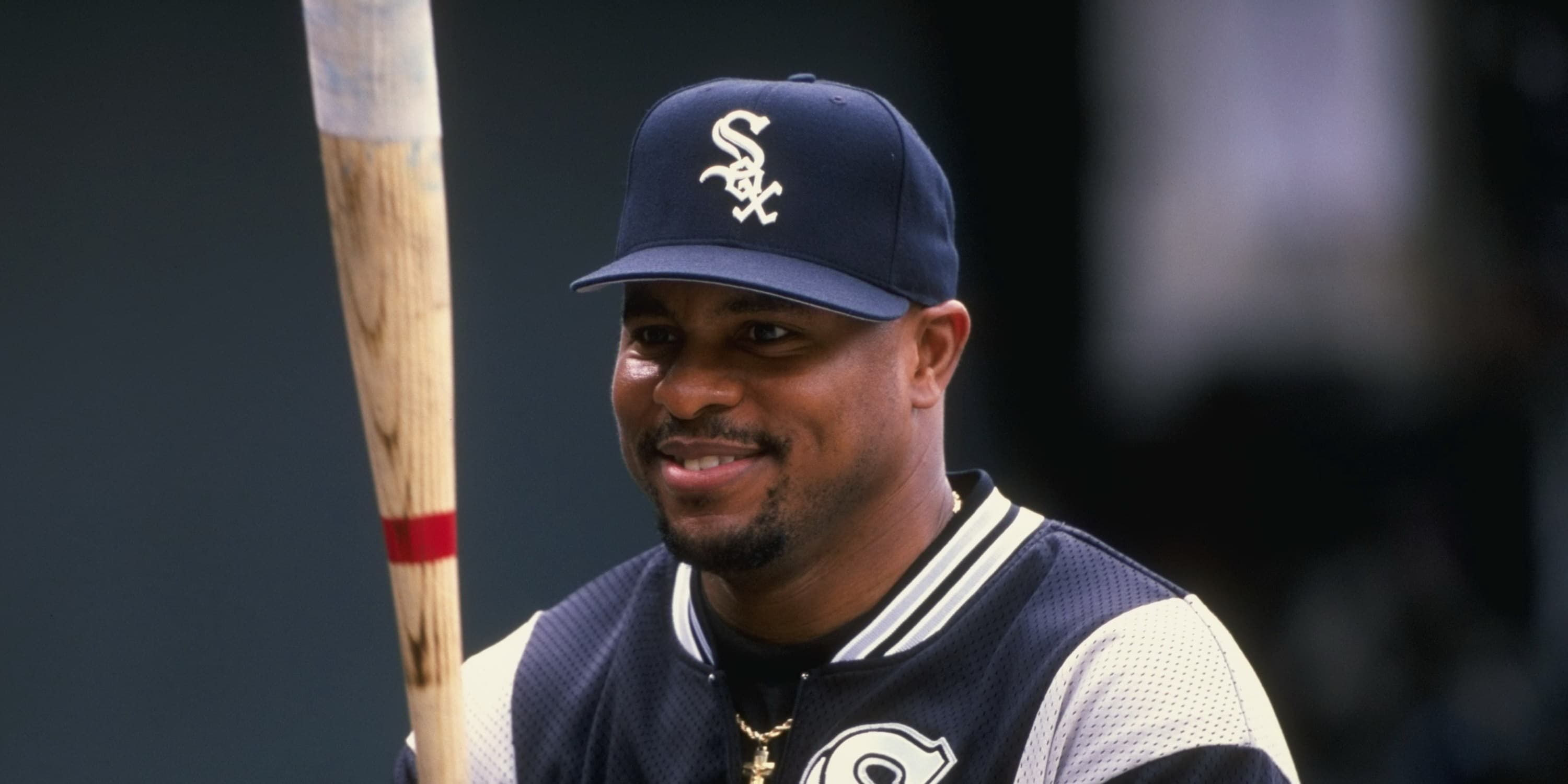
As of 2026, Albert Belle’s net worth is estimated to be approximately $35 million to $40 million. This wealth is primarily the result of his historic career in Major League Baseball (MLB), where he became the first player in history to earn a $10 million annual salary, alongside significant insurance payouts following a career-ending injury.
The financial narrative of Albert Belle is one of pioneering contracts and elite performance. During the 1990s, Belle was not only one of the most feared hitters in baseball but also a trailblazer in the business of sports. His transition from the Cleveland Indians to the Chicago White Sox and finally the Baltimore Orioles set new benchmarks for player compensation that paved the way for the mega-contracts seen in the modern era.
The Financial Architecture of Albert Belle’s MLB Career
To understand Albert Belle’s net worth in 2026, one must look back at the sheer scale of his earnings during a period when MLB salaries were experiencing exponential growth. Belle played 12 seasons in the major leagues, a tenure cut short by a degenerative hip condition, yet his total career earnings exceeded $97 million.
The Cleveland Era and the Rise of a Powerhouse
Albert Belle, initially known as Joey Belle, began his career with the Cleveland Indians. While his early years involved standard rookie and arbitration-level pay, his production quickly outpaced his compensation. By the mid-1990s, Belle was the engine of a dominant Cleveland lineup.
In 1995, Belle achieved the unprecedented feat of hitting 50 home runs and 50 doubles in a single season. This statistical anomaly served as the ultimate leverage for his future contract negotiations. At this stage, his earnings were significant but only a fraction of what was to come. His ability to drive in runs and maintain a high slugging percentage made him the most coveted free agent of his time.
The Historic Chicago White Sox Contract
In the winter of 1996, Albert Belle signed a five-year, $55 million contract with the Chicago White Sox. This deal was a watershed moment for professional sports. It made Belle the first player to surpass the $10 million per year threshold, specifically earning an average annual value (AAV) of $11 million.
A critical, often overlooked aspect of this contract was a unique "escalator clause." The clause stated that if any player in baseball signed a contract that paid them more than Belle, he had the right to demand that his salary be raised to match or exceed it, or he could opt out of the contract. This sophisticated financial maneuver demonstrated Belle’s (and his agent’s) intent to remain the highest-paid player in the game, regardless of market shifts.
The Baltimore Orioles and the $65 Million Deal
After just two seasons in Chicago, Belle exercised his opt-out clause following the 1998 season. He then signed a five-year, $65 million contract with the Baltimore Orioles. This contract was intended to take him through the 2003 season. At the time, $13 million per year was an astronomical sum, placing him at the very top of the league's earners.
Career Earnings Breakdown by Team
The following table outlines the estimated distribution of Albert Belle's professional earnings throughout his career, illustrating how his wealth was accumulated through various high-value contracts.
| Team | Period | Estimated Total Earnings | Key Achievement/Note |
|---|---|---|---|
| Cleveland Indians | 1989–1996 | $15,500,000 | 50/50 Season (1995) |
| Chicago White Sox | 1997–1998 | $22,000,000 | First $10M+ Annual Salary |
| Baltimore Orioles | 1999–2001 | $59,500,000 | Includes disability payouts |
| Total Career Earnings | 1989–2001 | ~$97,000,000 | Before taxes and agent fees |
The Role of Disability Insurance in Wealth Preservation
One of the most complex chapters in Albert Belle’s financial history involves his retirement. In early 2001, Belle was diagnosed with degenerative arthritis in his right hip. At age 34, he was physically unable to continue playing at a professional level.
Because Belle was still under contract with the Baltimore Orioles, the financial implications were significant. Under MLB rules, contracts are guaranteed. However, the Orioles had protected themselves with a substantial disability insurance policy.
- Guaranteed Payments: Even though Belle could no longer take the field, the Orioles were legally obligated to pay the remainder of his $65 million contract.
- Insurance Recovery: The insurance company reportedly covered approximately 70% to 80% of the remaining salary owed to Belle.
- Active Roster Status: To facilitate the insurance claim, the Orioles kept Belle on the 60-day disabled list for the duration of his contract (through 2003) rather than officially retiring him.
This arrangement ensured that Belle received his full contracted earnings despite his inability to play. For a modern analysis of his net worth, this period is crucial because it represent "passive" accumulation—earning tens of millions of dollars while effectively being retired, which allowed for significant capital preservation.
Post-Retirement Financial Life and Investments
Following his departure from baseball, Albert Belle has maintained a relatively low profile compared to his peers who entered broadcasting or coaching. This reclusive nature has influenced the trajectory of his net worth.
Investment Strategies and Asset Growth
Wealth management for a high-net-worth individual like Belle typically involves a diversified portfolio of equities, real estate, and municipal bonds. In the two decades since his retirement, the S&P 500 has seen substantial growth. Assuming a conservative investment strategy, the $40 million to $50 million (post-tax) that Belle likely retained from his playing days would have had ample opportunity to grow, even accounting for lifestyle expenses.
Lifestyle and Expenditures
Belle has spent much of his retirement in Scottsdale, Arizona. Arizona’s cost of living for high-net-worth individuals is generally more favorable than in states like California or New York, particularly regarding property taxes and general lifestyle inflation. By avoiding the common "athlete pitfalls" of failed restaurant ventures or excessive luxury spending often reported in the media, Belle has been able to maintain a stable financial base.
Factors Influencing the 2026 Net Worth Valuation
When calculating Albert Belle’s net worth in 2026, several economic and personal factors are weighed to reach the $35 million to $40 million estimate:
- Taxation: Playing in Maryland, Illinois, and Ohio during his career meant Belle was subject to significant state income taxes, in addition to the federal top marginal rate. It is estimated that nearly 45-50% of his gross $97 million was diverted to taxes and agent fees.
- Inflation and Purchasing Power: While his $13 million salary in 1999 would be equivalent to over $24 million in 2026 dollars, the actual cash remained at the historical value. Wealth preservation depends on how those 1999 dollars were invested against inflation.
- Legal Considerations: Belle has faced various legal issues post-retirement, including a 2018 arrest in Arizona. While legal fees can be substantial, they have not been of the magnitude that would fundamentally liquidate a fortune of this size.
- Endorsements: Unlike contemporaries such as Ken Griffey Jr. or Derek Jeter, Belle’s "bad boy" persona during the 90s limited his blue-chip endorsement deals. His net worth is almost entirely a product of his MLB salary and subsequent investments rather than long-term commercial partnerships.
Comparison with Contemporaries
To provide context for Albert Belle’s financial status in 2026, it is useful to compare him with other sluggers from the same era.
- Ken Griffey Jr.: While Griffey earned more in total salary and significantly more in endorsements, his net worth is estimated to be higher (around $80M-$90M) due to a 20-year deferred payment structure with the Cincinnati Reds.
- Barry Bonds: Despite higher career earnings, Bonds’ net worth has been impacted by more extensive legal and personal overhead, though it remains significantly higher than Belle's due to longer career longevity.
- Frank Thomas: A contemporary of Belle on the White Sox, Thomas has successfully transitioned into a media personality and entrepreneur, maintaining a net worth in the $40M-$50M range.
Albert Belle’s position is unique because he earned "elite" money in a very concentrated window of time. His earnings-per-game ratio remains one of the highest of the 20th century.
Frequently Asked Questions
Did Albert Belle lose his money after retiring?
No. Unlike some professional athletes who struggle with bankruptcy, there is no evidence that Albert Belle has lost his fortune. His reclusive lifestyle in Arizona and the guaranteed nature of his final $65 million contract suggest a stable financial situation.
How much did the Baltimore Orioles pay Albert Belle while he was injured?
The Orioles paid the full remaining value of his five-year, $65 million contract. Because he was placed on the disabled list due to a hip condition, the contract remained active. The team recovered a majority of this cost through disability insurance.
Was Albert Belle the highest-paid player in baseball?
Yes, for a period in the late 1990s. When he signed with the Chicago White Sox for $11 million per year, he became the first player to reach an eight-figure annual salary. He later increased this to $13 million per year with the Baltimore Orioles.
What does Albert Belle do for a living in 2026?
Belle is largely retired and does not hold a traditional public-facing job. He has occasionally appeared at team reunions for the Cleveland Guardians (formerly Indians), but his primary focus has been on his family and private investments.
Does Albert Belle receive an MLB pension?
Yes. As a player with more than 10 years of service time, Belle is eligible for the maximum MLB pension. In 2026, this provides a significant annual income, which is separate from his personal investment portfolio and net worth.
Final Financial Outlook
The financial legacy of Albert Belle is a testament to the "free agent boom" of the 1990s. By combining historic performance on the field with aggressive contract negotiations, Belle secured a level of wealth that has endured for over 25 years post-retirement. While his public image was often controversial, his financial management—facilitated by guaranteed contracts and insurance protections—has allowed him to maintain a net worth of approximately $35 million to $40 million in 2026. For investors and sports analysts, Belle remains a primary example of how concentrated high-earning years, if protected by insurance and prudent lifestyle choices, can create multi-generational wealth.