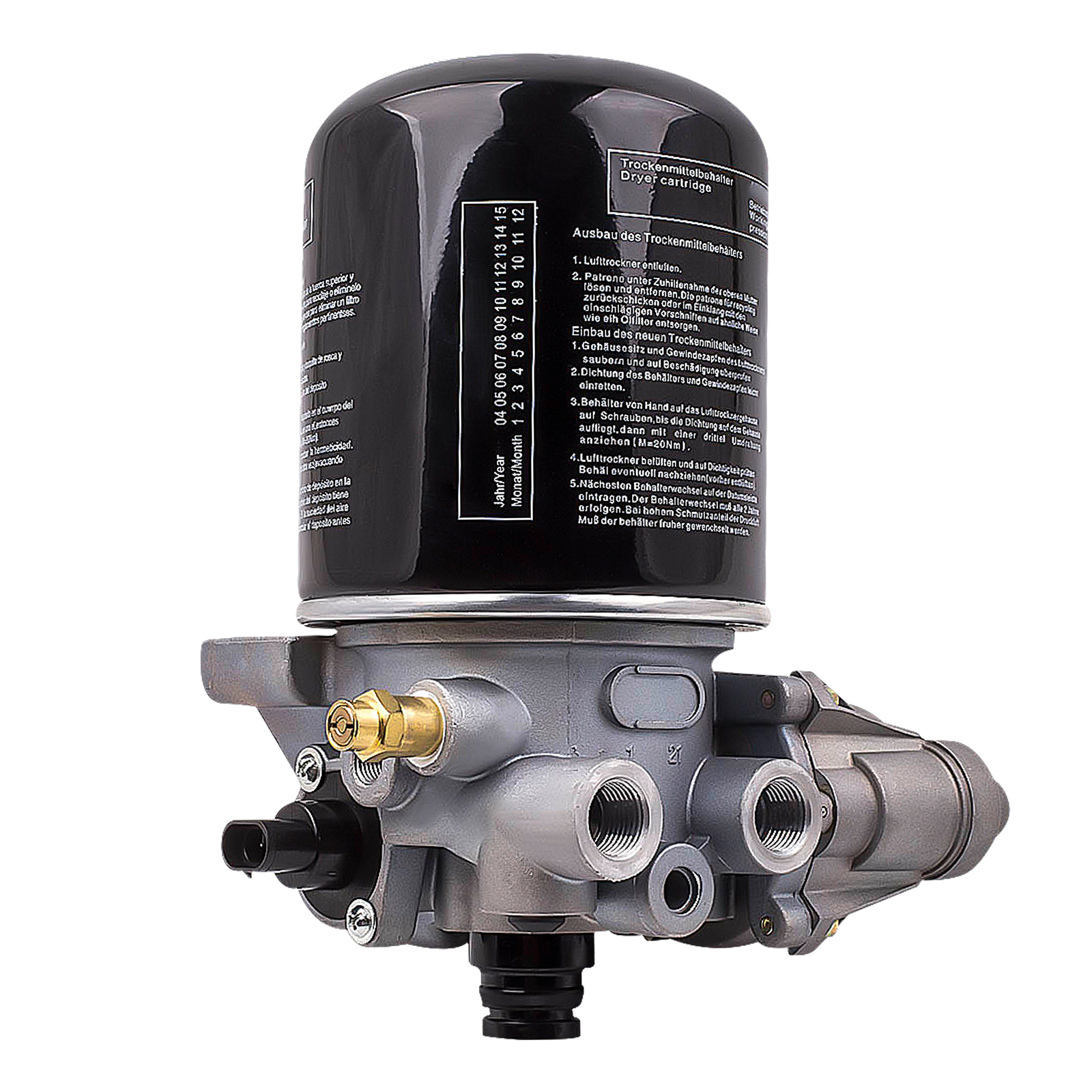
The air dryer is a critical component of a vehicle's air brake system, functioning as a filtration and dehydration unit located between the air compressor and the reservoir tanks. It removes water vapor, oil droplets, and solid contaminants from the compressed air to prevent corrosion, freezing, and component failure within the braking circuit.
The Vital Relationship Between Air Brakes and the Air Dryer
In a heavy-duty commercial vehicle, the air brake system relies on a constant supply of pressurized air to actuate drum or disc brakes. This air is generated by an engine-driven compressor. However, the process of compressing atmospheric air inherently introduces two major enemies of mechanical systems: heat and moisture.
When the compressor draws in ambient air, it also draws in humidity. As the air is compressed, it becomes significantly hotter. When this hot, pressurized air travels through the discharge line toward the storage tanks, it begins to cool. According to the laws of thermodynamics, as air cools, its ability to hold water vapor decreases. Without an intervening component, this moisture would condense into liquid water inside the brake lines and air tanks.
By 2026, the complexity of automated manual transmissions (AMTs) and advanced driver assistance systems (ADAS) has made dry air more important than ever. These systems often utilize the same air supply for shifting and sensors; any moisture or oil carryover can lead to electronic-pneumatic failures that are far more costly than a simple brake line freeze. The air dryer serves as the primary defense mechanism, ensuring that the "pneumatic nerve system" of the truck remains clean and dry.
How the Air Dryer Operates: The Science of Desiccants
The operation of a modern air dryer is a multi-stage process involving mechanical separation and chemical adsorption. Understanding this process is essential for anyone responsible for the maintenance of Class 7 and Class 8 vehicles.
1. The Cooling Phase
As air exits the compressor, it enters the air dryer through the inlet port. Many systems feature a "cooling coil" or a long discharge line before the dryer to help lower the air temperature. This temperature drop causes a portion of the water vapor to condense into liquid droplets before it even reaches the filtration media.
2. Physical Filtration
Inside the air dryer housing, the air first passes through a series of baffles or a centrifugal filter. This stage uses mechanical force to "spin" the air, flinging heavier oil droplets and liquid water against the walls of the housing, where they collect in the bottom (the purge sump).
3. The Desiccant Bed
The most critical stage is the desiccant cartridge. This cartridge is filled with thousands of tiny, highly porous beads, usually made of molecular sieve material or silica gel. These beads have a massive surface area and are "hygroscopic," meaning they actively attract and hold water molecules on their surface through a process called adsorption. As the air flows through this bed, the remaining water vapor is trapped, leaving the air nearly 100% dry.
4. The Purge Cycle
A dryer cannot collect water indefinitely. When the air governor reaches the "cut-out" pressure (typically 125–135 PSI in 2026 standards), it signals the compressor to stop pumping and simultaneously opens the purge valve at the bottom of the air dryer. A small amount of dry air from a dedicated "purge volume" tank flows backward through the desiccant beads. This reverse flow strips the moisture from the beads and exhausts it out of the purge valve—creating the characteristic "pfft" sound heard when a truck reaches its maximum air pressure.
Critical Components of the Air Dryer System
To maintain the system effectively, one must recognize the individual components that can fail or require servicing.
- Desiccant Cartridge: The replaceable element containing the drying agent. In 2026, many fleets utilize oil-coalescing cartridges, which include an extra layer of material designed to trap aerosolized oil that escapes the compressor.
- Purge Valve: The mechanical valve at the base of the dryer that opens to exhaust contaminants. It is the most common point of failure due to debris or "carboning" from burnt oil.
- Heater Element: Since the purge valve exhausts liquid water, it is susceptible to freezing in winter temperatures. An internal 12V or 24V heating element prevents the valve from icing shut.
- Check Valve: This prevents the air already in the reservoir tanks from flowing back into the dryer during the purge cycle.
- Governor: While often mounted separately, the governor controls when the dryer purges. In "Integrated" dryer systems (like the Bendix AD-IS), the governor is mounted directly to the dryer body.
Comparing Common Air Dryer Types and Specifications
Modern trucks use several different configurations of air dryers. Selecting the right one depends on the air consumption of the vehicle (e.g., a city bus with frequent door openings vs. a long-haul truck).
| Feature | Standard Desiccant Dryer | Oil-Coalescing Dryer | Integrated System (AD-IS) |
|---|---|---|---|
| Primary Goal | Moisture Removal | Moisture + Oil Aerosol Removal | Complete Air Management |
| Best Use Case | Older vehicles, light-duty | Modern engines with high blow-by | Vocational and highway trucks |
| Typical Cartridge Life | 12–24 Months | 12 Months | 24–36 Months |
| Complexity | Low | Moderate | High (Integrated valves) |
| 2026 Est. Cost | $250 - $400 | $350 - $550 | $600 - $900 |
Maintenance Requirements and 2026 Service Standards
Proper maintenance of the air dryer is not merely a suggestion; it is a safety requirement under Federal Motor Carrier Safety Administration (FMCSA) guidelines. If an air dryer fails, moisture enters the system, which can lead to the following:
- Frozen Brake Lines: In cold climates, water in the lines freezes, preventing air from reaching the brake chambers. This can leave a vehicle stranded or, worse, prevent brakes from engaging or disengaging.
- Valve Corrosion: Internal pneumatic valves are precision-machined. Water causes rust and pitting, leading to air leaks.
- Oil Contamination: If the dryer does not remove oil, the rubber diaphragms inside the brake chambers will swell and eventually rupture.
Recommended Service Intervals
For 2026, standard industry practice recommends replacing the desiccant cartridge every 12 months for high-duty cycle vehicles (garbage trucks, transit buses) and every 24 to 36 months for standard over-the-road applications. However, the most effective way to gauge health is to perform a "wet tank" check.
Drivers should open the drain valves on their primary and secondary air tanks daily. If any water or oil is present in these tanks, it is a definitive sign that the air dryer cartridge is saturated or the unit is malfunctioning. Under normal operating conditions with a healthy dryer, the air tanks should remain bone dry.
Troubleshooting Common Air Dryer Issues
When the air system fails to reach pressure or the dryer behaves erratically, technicians should follow a systematic diagnostic path.
Constant Purging or Leaking
If the air dryer purges constantly or leaks air out of the purge valve after the "pfft" sound, the issue is often a stuck purge valve or a faulty check valve. Debris from the compressor (carbon or metal shavings) can get lodged in the valve seat. In many cases, a purge valve rebuild kit can solve the issue without requiring a full dryer replacement.
Failure to Purge
If the compressor reaches the cut-out pressure but the dryer does not purge, the signal from the governor is likely blocked or the purge piston is seized. This is a critical failure, as the desiccant will quickly become waterlogged, allowing moisture to flood the rest of the system.
Excessive Oil in the Purge
While a small amount of oil "mist" is normal at the purge valve, a heavy puddle of oil indicates a failing air compressor. The air dryer is designed to catch contaminants, but it cannot act as a primary oil reservoir for a dying compressor. If the cartridge is replaced but becomes oil-soaked within weeks, the compressor rings are likely worn.
The Evolution of Air Dryers in 2026
As of 2026, the technology has moved toward "intelligent" air management. Manufacturers like Bendix and Haldex have refined electronic air control units (EACs). These units replace the mechanical governor with electronic sensors that allow the engine's ECU to determine when to purge.
For instance, an intelligent system may delay the purge cycle if the truck is currently under heavy acceleration to ensure all engine power goes to the wheels. Conversely, it may trigger a purge during "overrun" (coasting) to use "free" energy. These systems also monitor the health of the desiccant cartridge based on the volume of air processed, providing the driver with a dashboard notification when service is required, rather than relying on a fixed calendar date.
Practical Steps for Air Dryer Replacement
Replacing a standard air dryer cartridge is a task that can be performed with basic tools, but safety is paramount.
- Chock the Wheels: Ensure the vehicle cannot move.
- Drain All Air: You must exhaust all air pressure from the system by opening the tank drains or pumping the brake pedal until the gauges read zero. Warning: Attempting to remove a cartridge under pressure can result in severe injury or death.
- Clean the Area: Before removing the old cartridge, clean the exterior of the dryer to prevent dirt from entering the air circuit.
- Remove and Inspect: Use a strap wrench to remove the cartridge. Inspect the mounting base for "carboning"—a black, soot-like substance. If heavy carbon is present, the discharge line should also be cleaned or replaced.
- Lubricate Seals: Apply a thin layer of silicone lubricant to the new cartridge's O-rings.
- Hand-Tighten: Most cartridges should be hand-tightened plus a 1/4 to 1/2 turn. Over-tightening can damage the threads or gaskets.
Frequently Asked Questions
Can I bypass my air dryer if it starts leaking?
While technically possible with bypass fittings, it is highly dangerous and not recommended for anything other than an emergency move of a few hundred feet. Bypassing the dryer allows immediate moisture and oil contamination into the brake valves, which can cause catastrophic brake failure or "brake drag" that leads to wheel-end fires.
Why does my air dryer purge so frequently?
Frequent purging (cycling every minute or two) usually indicates a significant air leak somewhere in the system. The compressor is forced to work harder to maintain pressure, reaching the cut-out point more often. It can also be caused by a faulty governor or a very small air tank volume if a tank has become "water-logged" (filled with water, leaving no room for air).
What is the difference between a desiccant dryer and an aftercooler?
An aftercooler is a simple heat exchanger that uses ambient air to cool the compressed air and drop out liquid water. A desiccant dryer is much more advanced; it uses chemical adsorption to remove water vapor that an aftercooler would miss. In modern trucking, aftercoolers are used in conjunction with air dryers, not as a replacement for them.
How do I know if my air dryer heater is working?
In cold weather, you can check the heater by feeling the base of the air dryer housing after the vehicle has been running. It should be warm to the touch. Alternatively, a technician can use a multimeter to check for continuity across the heater element or verify that it is receiving 12/24V power when the ambient temperature is below 40°F (4°C).
Does a "spitting" purge valve mean the dryer is bad?
Not necessarily. "Spitting" or occasional small pops of air can occur if the governor is fluttering or if there is moisture in the signal line. However, if it is spitting a mixture of white emulsion (oil and water), it is a sign that the desiccant is saturated and the cartridge must be replaced immediately.
Conclusion and Next Actions
The air dryer is the unsung hero of the commercial vehicle braking system. By maintaining the integrity of the air supply, it protects every other pneumatic component from the destructive effects of water and oil. For 2026 fleet operators and owner-operators, the move toward oil-coalescing technology is the single best investment for longevity.
Next Actions:
- Daily: Drain your air tanks and check for moisture.
- Monthly: Visually inspect the air dryer purge valve for excessive oil or debris.
- Annually: Evaluate your air usage and climate; determine if a pre-winter cartridge replacement is necessary to prevent freeze-ups.
- System Update: If you are operating a vehicle older than 10 years, consider retrofitting to an oil-coalescing cartridge to better protect modern brake valves.