Advanced driver assistance systems (ADAS) are increasingly shaping the automotive landscape, combining sophisticated sensors, cameras, and software to enhance vehicle safety and pave the way for autonomous driving. Understanding the economics behind these technologies requires analyzing the underlying hardware expenses, software development costs, calibration requirements, and the broader market trajectory driving widespread adoption across global vehicle segments.
Introduction to Advanced Driver Assistance Systems
Advanced driver assistance systems encompass a wide array of electronic technologies designed to assist drivers in driving and parking functions. Using a safe human-machine interface, these systems increase car and road safety. Key examples include adaptive cruise control (ACC), lane departure warning (LDW), automatic emergency braking (AEB), blind-spot monitoring, and surround-view camera systems.
As regulatory bodies like the National Highway Traffic Safety Administration (NHTSA) and the European New Car Assessment Programme (Euro NCAP) incentivize or mandate features such as automatic emergency braking, ADAS has transitioned from a luxury add-on to a standard baseline expectation. However, this technological leap introduces complex cost structures for manufacturers, consumers, and repair industries alike. Evaluating ADAS requires dissecting the balance between component pricing, integration expenditures, consumer willingness to pay, and the exponential growth of the global automotive sensor market.
The Core Components Driving ADAS Expenses
The overall cost of an advanced driver assistance system is tied directly to the hardware and software architecture required to perceive the environment and make real-time driving decisions. Unlike traditional mechanical systems, ADAS relies on a dense network of electronic control units (ECUs), perception sensors, and advanced processing power.
Hardware Architecture: Sensors, Cameras, and Radar
The sensory suite of an ADAS-equipped vehicle dictates a significant portion of the base manufacturing cost. Different levels of autonomy—ranging from Level 1 (assisted driving) to Level 3 and above (conditional automation)—demand increasingly complex sensor combinations:
- Ultrasonic Sensors: Typically utilized for short-range detection, such as parking assistance and low-speed maneuvering. These are relatively low-cost components.
- Forward-Facing and Surround-View Cameras: Essential for lane-keeping assist, traffic sign recognition, and pedestrian detection. High-definition and thermal cameras drive up unit costs.
- Short and Long-Range Radar: Vital for adaptive cruise control and collision avoidance. Radar operates effectively in adverse weather conditions where cameras fail, though manufacturing tolerances keep prices higher than basic ultrasonics.
- Light Detection and Ranging (LiDAR): Used primarily in higher-level automation (Level 3 and above) to create high-resolution 3D maps of the vehicle's surroundings. LiDAR has historically been the most expensive single sensor category, though economies of scale are gradually lowering unit prices.
Software, Processing Power, and Integration
Hardware is inert without sophisticated software algorithms capable of object classification, path planning, and sensor fusion. Sensor fusion—the process of combining data from multiple radars, cameras, and LiDAR units into a single cohesive world model—requires immense computational throughput.
Automakers increasingly rely on centralized domain controllers powered by specialized System-on-Chips (SoCs) from companies like NVIDIA, Qualcomm, and Mobileye. Developing, validating, and continuously updating this software through over-the-air (OTA) updates represents a massive capital expenditure for automotive manufacturers and Tier-1 suppliers alike.
Market Growth Drivers and Industry Trajectory
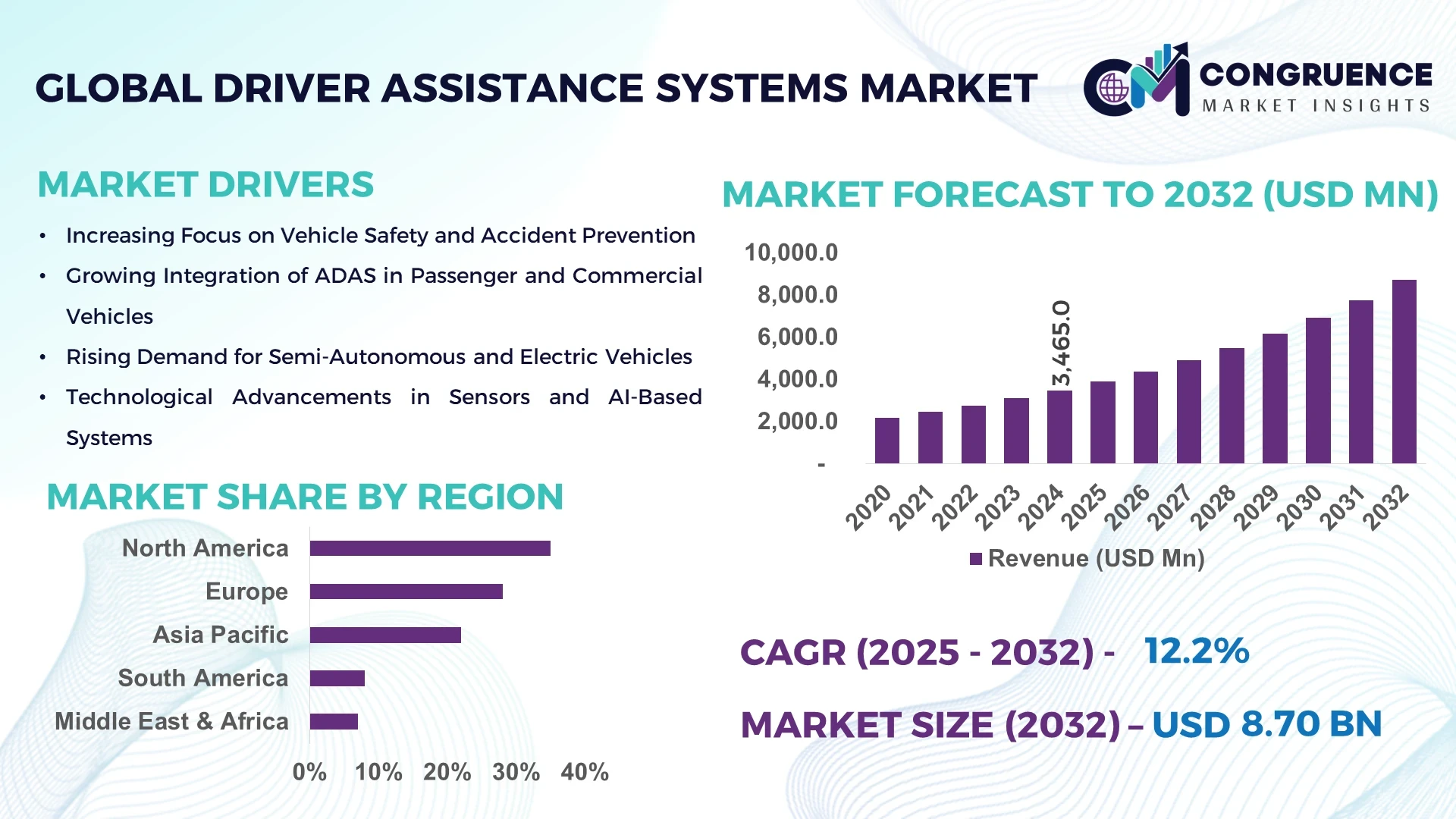
The global ADAS market is experiencing rapid, sustained expansion. Market research reports consistently project compound annual growth rates (CAGR) in the double digits, driven by intersecting regulatory mandates, shifting consumer preferences, and advancements in semiconductor technology.
Regulatory Pressures and Safety Ratings
Government regulations and safety rating organizations act as primary accelerators for ADAS adoption. In the United States, the NHTSA and major automakers reached a voluntary commitment to make automatic emergency braking standard on nearly all new light-duty vehicles. Similarly, Euro NCAP scoring criteria heavily penalize vehicles that lack advanced safety features, effectively forcing manufacturers to include baseline ADAS packages even in entry-level models to secure a five-star safety rating.
Consumer Demand and Demographic Shifts
Modern consumers place a high value on convenience and safety. Features that mitigate driver fatigue during heavy commutes—such as traffic jam assist and adaptive cruise control—are heavily sought after. Younger demographics, accustomed to smartphone-level integration and continuous digital connectivity, view driver assistance features as baseline automotive requirements rather than premium upgrades.
| ADAS Automation Level | Typical Features Included | Primary Cost Drivers | Typical Market Segment |
|---|---|---|---|
| Level 0 (No Automation) | Forward Collision Warning, Rearview Camera | Basic cameras, ultrasonic sensors | Economy / Entry-Level |
| Level 1 (Driver Assistance) | Adaptive Cruise Control, Lane Keeping Assist | Single camera, long-range radar | Mass Market / Mid-Size |
| Level 2 (Partial Automation) | Lane Centering, Automated Lane Changes, Remote Parking | Multiple cameras, surround radar, basic sensor fusion | Premium / Luxury |
| Level 3+ (Conditional Automation) | Eyes-off highway driving, advanced geofenced autonomy | High-density LiDAR, redundant ECUs, advanced SoCs | Luxury / Commercial Fleets |
The Financial Impact on Vehicle Ownership and Repair
While factory-installed ADAS packages add predictable upfront costs to vehicle purchases, the long-term financial implications become starkly apparent during maintenance, insurance claims, and collision repairs.
Upfront Purchase vs. Option Packaging
When purchasing a new vehicle, ADAS features are rarely sold as standalone software switches; they are usually bundled into active safety packages or tied to higher trim levels. This packaging strategy can add anywhere from several hundred to several thousand dollars to the sticker price of a vehicle. However, as component costs decline, baseline safety suites are increasingly rolled into the base MSRP.
Aftermarket Calibration and Collision Repair Costs
One of the most significant hidden costs of ADAS is post-repair calibration. When a vehicle equipped with advanced safety systems is involved in even a minor collision—or undergoes routine maintenance like windshield replacement, wheel alignment, or suspension work—the sensors and cameras must be precisely recalibrated.
Calibration requires specialized diagnostic hardware, software licenses, clean facility spaces, and certified technicians. Consequently, average collision repair bills have risen dramatically over the past decade. Insurance companies have adapted by adjusting premium structures to account for the higher cost of repairing sensor-laden vehicles, directly impacting the total cost of ownership.
Technological Challenges and Future Economic Barriers
Despite robust growth, several technical and economic hurdles threaten to slow the pace of ADAS expansion if not properly managed.
Edge Cases and Environmental Limitations
Sensors remain vulnerable to environmental interference. Heavy snow, torrential rain, road salt, and glaring sunlight can temporarily blind cameras or degrade radar performance. Developing robust fail-safe mechanisms and redundant sensor suites to handle these edge cases increases manufacturing complexity and cost.
Cybersecurity and Data Privacy
As vehicles become software-defined networks on wheels, the attack surface for malicious actors expands. Ensuring end-to-end cybersecurity across all ADAS components requires continuous investment in encryption, secure boot protocols, and intrusion detection systems. Furthermore, managing the vast amounts of telemetry data collected by connected vehicles raises significant regulatory and compliance costs regarding consumer privacy.
Strategic Outlook and Next Actions for Stakeholders
Navigating the financial and developmental landscape of advanced driver assistance systems requires targeted strategies depending on the stakeholder's position in the automotive ecosystem:
- For Consumers: Review vehicle safety specifications and insurance premium impacts before purchasing an ADAS-equipped vehicle. Understand that minor cosmetic repairs may involve expensive sensor recalibrations.
- For Fleet Managers: Factor in both the upfront acquisition cost of safety suites and the long-term reduction in accident liabilities and insurance premiums when calculating total cost of ownership (TCO).
- For Repair Facilities: Invest in technician training, OEM-certified diagnostic tools, and dedicated calibration bays to capture market share in the growing collision repair sector.
- For Manufacturers: Focus on modular software architectures and sensor fusion optimization to reduce hardware redundancy and lower unit production costs without compromising safety standards.
By balancing innovation with rigorous economic evaluation, the automotive industry can continue to scale ADAS deployment sustainably, making roads safer while managing lifecycle expenses for end-users.