The common abbreviation for accounts receivable is "AR" (or sometimes "A/R"). In financial accounting and business correspondence, this term refers to the legally enforceable claims for payment held by a business for goods supplied or services rendered to customers who have agreed to pay for them at a later date.
Understanding the Concept of Accounts Receivable
Accounts receivable represent a critical component of a company's current assets on the balance sheet. When a business delivers a product or completes a service but allows the client to settle the invoice on a credit basis—typically within a window of 30, 60, or 90 days—that transaction is recorded as an account receivable.
The "AR" abbreviation serves as a shorthand to streamline communication among accounting professionals, auditors, and stakeholders. While simple in definition, the management of accounts receivable involves rigorous tracking, verification, and timing. It is a promise of future cash inflow. Because this money is not yet in the bank, the accounts receivable cycle is essentially a form of short-term lending provided by the seller to the buyer.
Standardized Usage in Professional Settings
The usage of the "AR" abbreviation is ubiquitous in professional financial reporting and day-to-day operations. However, context determines when to use the abbreviation versus the full term.
- Financial Statements and Reports: In official internal reports, such as aging schedules or cash flow projections, "AR" is frequently used for brevity. However, in formal audited balance sheets, it is standard practice to write out "Accounts Receivable" in the header to maintain clarity for external investors and regulators.
- Accounting Software and ERP Systems: Enterprise Resource Planning (ERP) systems, such as SAP, Oracle, or QuickBooks, almost universally label their modules as "AR" or "Accounts Receivable." Users should become comfortable using the abbreviation when navigating software menus or automated workflows.
- Business Communication: In internal emails or project management dashboards, "AR" is entirely appropriate. If you are communicating with external clients regarding their balance, it is usually more professional to use the full phrase "account balance" or "outstanding invoice" rather than the technical shorthand "AR."
Why Accounts Receivable Management Matters
The management of AR is not merely about naming the asset; it is about maintaining business liquidity. If a company has a high volume of accounts receivable but struggles to collect the actual cash, it faces a "liquidity crunch." Even if the company is profitable on paper, it may lack the cash flow required to pay its own vendors, meet payroll, or cover overhead costs.
Key Stages in the AR Life Cycle
- Credit Approval: Before issuing credit to a new customer, companies typically check credit history to assess risk.
- Invoicing: The formal request for payment is issued, serving as the official record that the AR has been created.
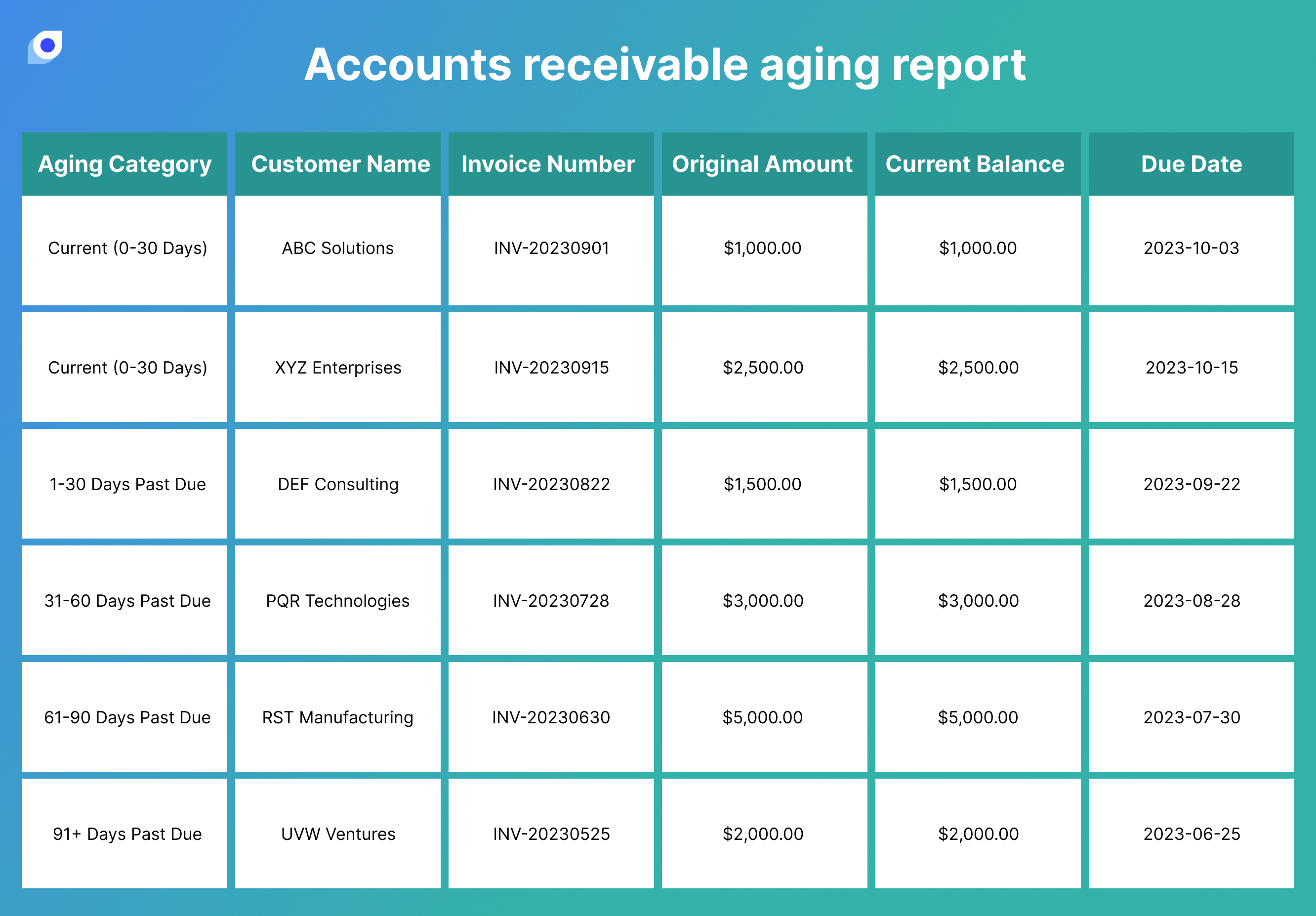
- Aging: Accountants track how long an invoice has remained unpaid. Common intervals are 0-30 days, 31-60 days, and 90+ days.
- Collection: If payment is not received, the business initiates follow-up procedures, ranging from polite reminders to formal collection efforts.
- Reconciliation: Once payment is received, the entry is cleared from the AR ledger and moved to the cash account.
Comparison of Financial Terminology
Understanding the nuances between AR and other similar financial terms is vital for maintaining accurate books.
| Term | Abbreviation | Definition | Role |
|---|---|---|---|
| Accounts Receivable | AR / A/R | Money owed to a business by its customers. | Current Asset |
| Accounts Payable | AP / A/P | Money owed by a business to its vendors. | Current Liability |
| General Ledger | GL / G/L | The master set of accounts for an organization. | Record Keeping |
| Days Sales Outstanding | DSO | A metric measuring the average collection time. | Performance Metric |
Common Mistakes and Misunderstandings
One of the most frequent errors in using the AR abbreviation involves confusing it with "Accounts Payable" (AP). Because the acronyms are phonetically similar and often appear in the same department (the "AP/AR department"), inexperienced staff may accidentally transpose them in documentation.
Another common pitfall is the improper treatment of "bad debt." If an account is deemed uncollectible, it must be written off. Leaving an uncollectible debt in the AR balance distorts the financial health of the company, leading to an overstatement of assets. Rigorous, periodic review of the AR aging report—identifying old or stagnant balances—is essential for accurate financial reporting.
Technical Depth and Accounting Standards
From an accounting perspective, specifically under Generally Accepted Accounting Principles (GAAP) or International Financial Reporting Standards (IFRS), accounts receivable must be recorded at their "net realizable value." This means that the balance reported on the balance sheet should be adjusted for any anticipated "allowance for doubtful accounts."
This allowance is an estimate of the amount of AR that the company expects it will never collect. By using an estimate to reduce the total AR balance, the company ensures that its financial statements remain conservative and do not suggest higher liquidity than actually exists. Professionals dealing with AR should be familiar with the "Allowance Method" versus the "Direct Write-Off Method," the latter of which is often prohibited under standard accrual accounting for significant amounts.
Frequently Asked Questions
Is it "AR" or "A/R"? Both are acceptable. "AR" is more common in modern software interfaces and casual internal business communications, while "A/R" is traditionally used in older accounting textbooks and formal documents. Use the one consistent with your organization’s style guide.
Can I use "AR" in formal financial statements? While "AR" is widely understood, it is generally best practice to use the full "Accounts Receivable" on formal, published financial statements to ensure absolute clarity for external parties, such as lenders or tax authorities.
What is the difference between AR and revenue? Revenue represents the income earned from sales, regardless of when the cash is received. AR is the specific asset created when that revenue is recognized before the cash payment is actually collected.
How does AR impact cash flow? AR is a "bridge" between a sale and the receipt of cash. A high AR balance suggests the company is doing business, but it also indicates that cash is tied up in outstanding invoices. Reducing the time between invoicing and payment collection is the primary goal of AR management.
What is an aging report? An aging report is a periodic summary that categorizes a company’s accounts receivable by the age of the invoice. It helps businesses identify which customers are late on payments and which debts may need to be written off as uncollectible.
Best Practices for AR Management
To optimize your accounts receivable, maintain a disciplined approach to invoicing and follow-up. Ensure that invoices are sent immediately upon the delivery of services or goods. Clearly define credit terms in your contracts so that customers know exactly when payment is due. Automated accounting systems can send reminders automatically as due dates approach, which reduces the administrative burden on your staff and minimizes the likelihood of human error.
If you are currently struggling with high DSO (Days Sales Outstanding), consider conducting a review of your credit verification process. Ensure that your team is not extending credit to high-risk entities without proper collateral or upfront payment requirements. Consistent, proactive communication with clients before the due date often yields faster results than reactive collection efforts after the due date has passed.
Recommendation: For businesses operating in 2026, implement or audit your current AR software to ensure it supports automated reconciliation. If your business relies on manual spreadsheets, transition to an cloud-based accounting platform. This change will reduce the risk of clerical errors and provide real-time visibility into your cash flow, ensuring that your financial data is always audit-ready.