When dealing with structural issues in South Texas, understanding the services provided by regional specialists like ABC Foundation Repair in Corpus Christi is essential for maintaining home safety and property value. This comprehensive guide covers the common geotechnical challenges in the Coastal Bend, evaluating foundation repair contractors, service methodologies, costs, and proactive maintenance strategies tailored to local soil conditions.
Understanding the Corpus Christi Geotechnical Environment
Corpus Christi and the surrounding Coastal Bend region present unique challenges for residential and commercial foundations. The local soil composition is the primary driver behind most structural distress in the area, requiring specialized knowledge and engineered solutions.
The Impact of Expansive Clay Soils
A significant portion of Corpus Christi rests upon expansive clay soils, commonly referred to as gumbo clay. These soils possess a high volumetric expansion potential; they swell considerably when saturated with moisture during heavy rains or tropical weather events and shrink dramatically during extended periods of drought and high heat.
- The Shrink-Swell Cycle: This relentless cycle creates immense vertical and lateral pressure against concrete slab foundations. When soil beneath one side of a home dries out and shrinks, that section of the foundation loses support and settles. Conversely, when clay soil absorbs moisture, it expands and pushes upward, causing the slab to heave.
- Differential Movement: Because moisture distribution underneath a large structure is rarely uniform—often influenced by mature trees, plumbing leaks, drainage patterns, or sun exposure—different sections of the house move at different rates. This differential movement results in shearing stresses that manifest as cracks and structural failures.
Coastal Weather and Environmental Factors
Beyond native soil properties, the coastal environment introduces additional vectors of degradation:
- High Humidity and Salinity: Corpus Christi’s proximity to the Gulf of Mexico means high atmospheric moisture and salt air. While concrete is durable, steel reinforcement bars (rebar) embedded within the foundation can corrode if moisture penetrates the concrete matrix.
- Severe Weather Events: Hurricanes, tropical storms, and flash flooding can rapidly saturate soils that were previously bone-dry, triggering sudden soil expansion and immediate foundation distress.
Common Signs of Foundation Failure in Coastal Homes
Early identification of structural movement can prevent minor cosmetic cracks from escalating into catastrophic failures. Homeowners should routinely inspect both the interior and exterior of their properties for the following warning signs:
Exterior Indicators
- Brick and Mortar Cracks: Stair-step cracking in brick veneer or mortar joints typically indicates differential settling or shifting of the wall framing.
- Gaps Around Windows and Doors: Noticeable separations between exterior door frames or window frames and the surrounding brickwork or siding.
- Leaning Chimneys: A masonry chimney pulling away from the main structure is a severe indicator of deep foundation settlement.
Interior Indicators
- Drywall Cracks: Diagonal cracks radiating from the corners of doors and windows, or vertical cracks running along walls and ceilings.
- Sticking Doors and Windows: Doors that fail to latch properly or windows that become difficult to open and close indicate that the framing has gone out of square due to slab movement.
- Uneven or Sloping Floors: A noticeable tilt when walking across a room, or gaps forming between the floor and baseboards.
Evaluating Foundation Repair Services and Methods
When structural issues are identified, professional evaluation is required. Companies operating in the Corpus Christi market typically employ standardized engineering methods designed to stabilize shifting slabs and piers.
The Evaluation and Engineering Phase
Reputable foundation repair specialists initiate the process with a thorough assessment, often collaborating with independent structural engineers.
- Elevation Surveys: Technicians use high-precision digital levels or water levels to map the elevations of the slab across the entire structure, identifying high and low points.
- Root Cause Analysis: Inspectors evaluate drainage, plumbing integrity, and surrounding vegetation to determine why the foundation failed, ensuring that repairs address the root problem rather than just the symptoms.
Common Repair Techniques in South Texas
Depending on the foundation type (monolithic slab-on-grade vs. pier and beam) and the depth of stable load-bearing strata, contractors utilize specific stabilization methods:
| Repair Method | Description | Primary Application | Advantages | Considerations |
|---|---|---|---|---|
| Pressed Concrete Pilings | Pre-cast concrete cylinders are hydraulically driven deep into the ground beneath the slab until they reach load-bearing strata. | Standard residential slab-on-grade foundations. | Cost-effective; widely available in the regional market. | May not reach as deep as steel piers; less suitable for extremely deep unstable soils. |
| Steel Piers | Galvanized or structural steel pilings are driven hydraulically to bedrock or stable strata and locked into brackets attached to the grade beam. | Heavy structures, severe settlement, or deep unstable clay zones. | Exceptional load capacity; reaches deeper strata; often includes transferable lifetime warranties. | Higher upfront cost compared to concrete pilings. |
| Mudjacking / Polyurethane Foam Injection | High-density polyurethane foam or cementitious grout is pumped beneath sunken concrete slabs to lift and level them. | Void filling, minor slab settling, interior cosmetic leveling, and concrete approach slabs. | Minimal disruption; fast curing times; lightweight (for foam). | Does not anchor the foundation to deep load-bearing strata; used primarily for stabilization and lifting rather than deep structural support. |
The Repair Process: What to Expect
Undergoing foundation repair can be a disruptive experience for homeowners. Understanding the step-by-step workflow helps set realistic expectations.
- Pre-Construction Inspection: Utilities are marked, and baseline elevations are recorded. Homeowners remove delicate items from walls and clear work areas around the perimeter of the home.
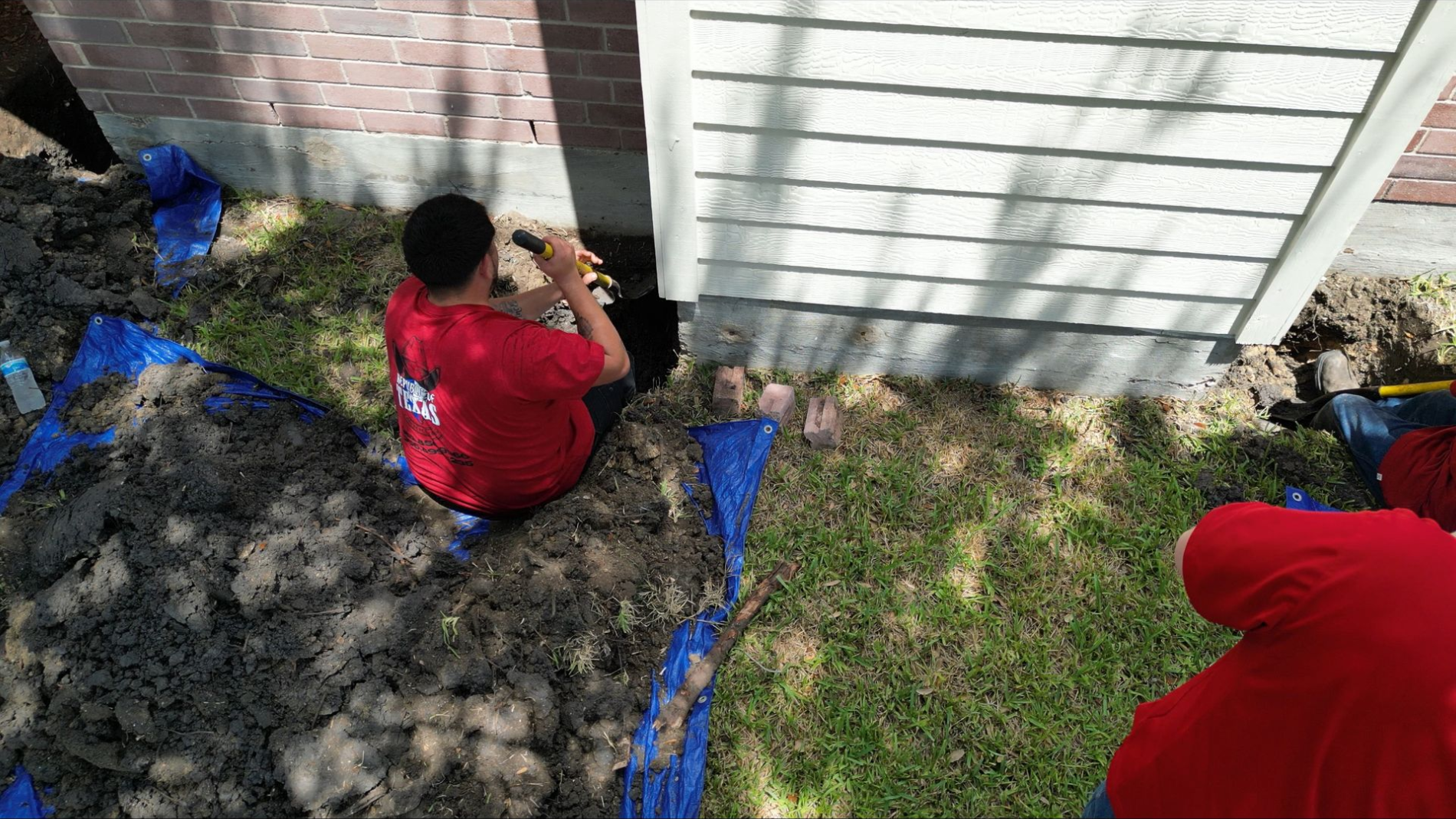
- Excavation: Crews dig small holes (bell holes or access pits) around the perimeter grade beam and, if necessary, through interior slab cutouts to reach the footing.
- Piling Installation: Hydraulic equipment drives the chosen steel or concrete pilings beneath the foundation until refusal (reaching stable strata).
- Lifting and Stabilization: Heavy-duty hydraulic jacks lift the structure toward its original elevation. Steel shims are secured to lock the foundation in place atop the pilings.
- Backfilling and Cleanup: Excavation pits are backfilled with native soil, and landscaping is restored as closely as possible to its original condition.
- Post-Repair Engineering Review: A final elevation survey is conducted to verify that the structure has been leveled within acceptable engineering tolerances.
Cost Factors and Financial Considerations
Foundation repair costs in Corpus Christi vary widely based on the severity of the damage, the linear footage requiring support, and the engineering techniques required.
- Pricing Variables: Minor repairs involving a few pressed concrete pilings may cost a few thousand dollars. Conversely, extensive stabilization using deep steel piers across multiple sides of a large residential structure can cost significantly more.
- Warranty Coverage: Most established foundation repair companies offer transferable warranties. Homeowners should carefully review whether the warranty covers future adjustments and whether it applies to subsequent owners if the property is sold.
- Insurance and Financing: Standard homeowners insurance policies in Texas typically exclude foundation damage caused by settling, earth movement, or soil shrinkage unless caused by a covered peril such as a plumbing leak (subject to specific policy endorsements). Many contractors offer third-party financing plans to help homeowners manage repair expenses.
Proactive Foundation Maintenance for Coastal Homes
Because stopping soil movement entirely is impossible, proactive maintenance focuses on stabilizing soil moisture levels around the perimeter of the home.
- Consistent Watering: During dry summer months, using soaker hoses placed 12 to 18 inches away from the foundation prevents the clay soil from shrinking excessively away from the grade beam.
- Proper Drainage: Ensure that gutters, downspouts, and yard grading direct rainwater away from the foundation walls rather than allowing it to pool near the slab.
- Tree and Vegetation Management: Large trees (such as oaks or elms) consume vast amounts of water from the soil. Planting large trees too close to a foundation can accelerate localized soil drying and subsequent settling.
Frequently Asked Questions
How long does a typical foundation repair project take in Corpus Christi?
Most residential foundation repairs take between one to three days to complete, depending on the number of piers required and whether interior slab penetrations are necessary. Large or complex commercial projects will require extended timelines.
Will foundation repair fix my cracked drywall and sticking doors?
Foundation stabilization stops further movement and often restores doors and windows to normal operation as the framing is lifted. However, cosmetic repairs—such as patching drywall, repainting, and repairing brick mortar—are typically the homeowner's responsibility and should be delayed for several weeks to allow the structure to settle into its new position.
Are foundation warranties transferable if I sell my home?
Most reputable foundation repair companies in Corpus Christi provide a lifetime service agreement that is fully transferable to new owners, which can be a valuable asset during a real estate transaction. Always verify transfer requirements and filing fees with the specific contractor.
Can plumbing leaks cause foundation failure?
Yes. Underslab water or sewer line leaks saturate the soil beneath a localized section of the foundation, causing the clay to expand and heave. Conversely, sewer leaks can wash away supporting soil. Hydrostatic plumbing tests are frequently recommended before undertaking major slab lifting.
How do I know if I need concrete pilings or steel piers?
The choice between concrete and steel depends on soil depth, the weight of the structure, and engineering recommendations. Steel piers are generally recommended when stable load-bearing strata are exceptionally deep, whereas concrete pilings are suitable for standard residential depths in many regional soil profiles.
Conclusion and Next Actions
Addressing structural concerns promptly prevents minor foundation shifts from escalating into severe structural damage. Homeowners suspecting foundation issues should contact a licensed professional for an objective evaluation, review engineer-backed repair options, and ensure proper site drainage and moisture management to protect their investment against the demanding Coastal Bend environment.