The American Funds 2030 Target Date Retirement Fund (AANTX) is a multi-asset investment vehicle designed for individuals planning to retire around the year 2030. As of 2026, the fund has entered its late-stage glide path, prioritizing capital preservation and income generation while maintaining a reduced equity sleeve to hedge against inflation. It offers a "fund-of-funds" structure managed by Capital Group, utilizing active management to navigate market volatility.
Understanding the Fundamental Objective of AANTX
The American Funds 2030 Target Date Retirement Fund, identified by the ticker AANTX for its Class A shares, functions as a comprehensive, single-choice retirement solution. The "2030" in its name designates the approximate year an investor expects to stop working and begin withdrawing assets.
In the current landscape of 2026, AANTX is in a critical transition phase. With only four years remaining until the target date, the portfolio management team is actively balancing the need for growth—to ensure the longevity of the nest egg—against the increasing necessity of protecting the principal from a major market downturn. Unlike passive target-date funds that track an index, AANTX relies on the "American Funds" philosophy of active management, where underlying fund managers have the discretion to shift allocations based on fundamental research and economic forecasts.
The fund is structured as a fund-of-funds. This means that when you invest in AANTX, you are not buying individual stocks or bonds directly. Instead, your capital is distributed across a diversified array of other American Funds, such as The Investment Company of America, Washington Mutual Investors Fund, and the Capital World Growth and Income Fund. This tiered structure provides exposure to thousands of securities across various sectors and geographies, managed by different specialized teams within Capital Group.
The Glide Path: How AANTX Evolves as 2030 Approaches
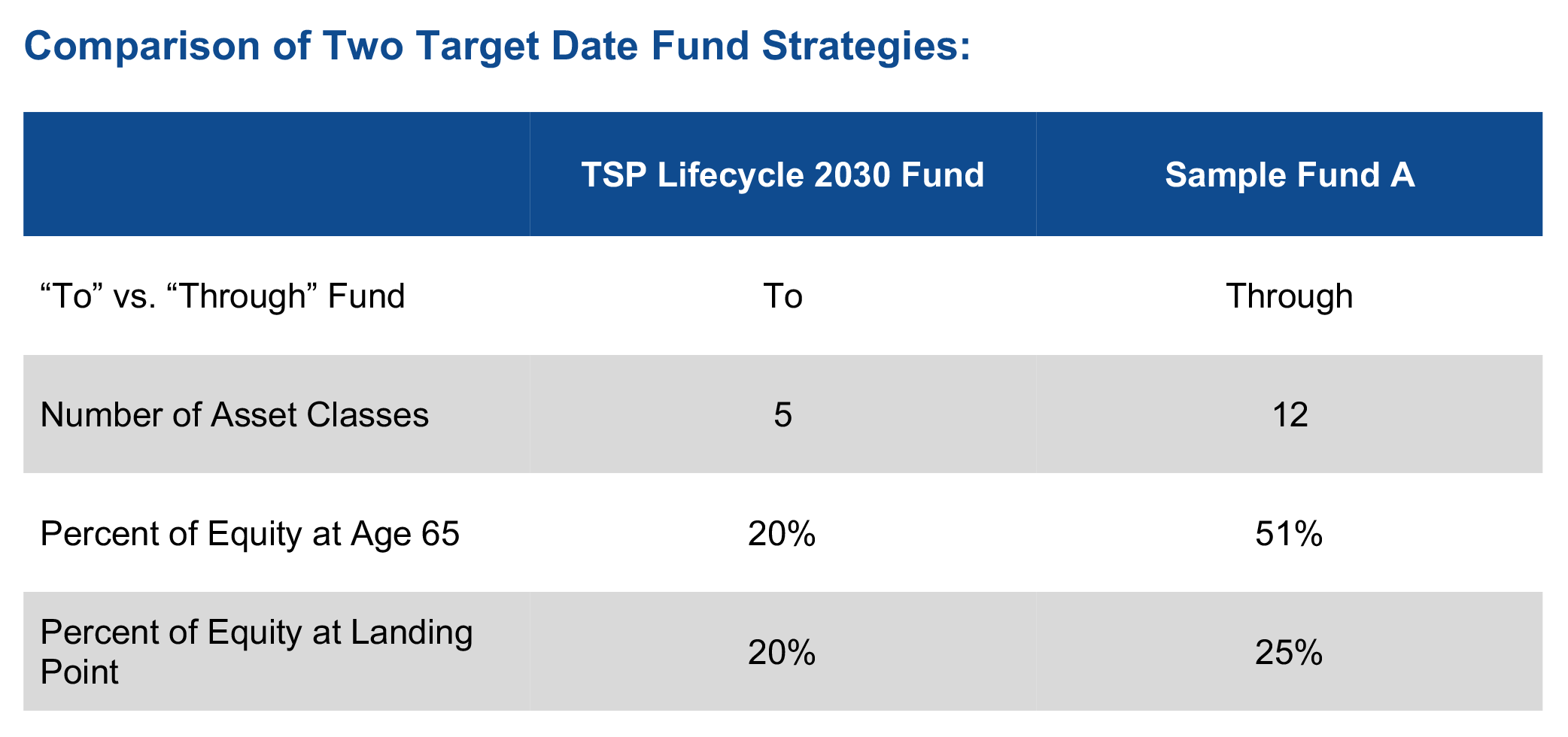
A "glide path" is the formulaic shift in asset allocation over time. For AANTX, the glide path is "through" retirement rather than "to" retirement. This is a vital distinction for investors to understand in 2026.
A "to" retirement fund reaches its most conservative allocation exactly in the target year. A "through" retirement fund, like AANTX, continues to adjust its asset mix for approximately 30 years past the target date. The rationale is that retirement is a multi-decade journey, and stopping equity growth entirely in 2030 could expose the investor to "longevity risk"—the danger of outliving their money.
Current Allocation Status (2026)
As we navigate 2026, AANTX has significantly reduced its exposure to high-volatility growth equities compared to a decade ago. The "numbers" reveal a portfolio that is currently approximately:
- 45% to 55% Equities: Focused on dividend-paying stocks and value-oriented large-caps.
- 35% to 45% Fixed Income: Primarily high-quality corporate bonds and government securities.
- 5% to 10% Cash and Equivalents: Providing a buffer for liquidity and tactical opportunities.
This balance is designed to mitigate the "sequence of returns risk." If a market crash occurs in 2027 or 2028, a portfolio with 80% equities would take years to recover—years the 2030 retiree does not have. By shifting toward the 50/50 mark now, AANTX aims to dampen that volatility.
Fee Structure and the Impact of Class A Shares
One of the most critical "numbers" to reveal about AANTX is its cost structure. As a Class A share, AANTX typically carries a front-end sales load. For many individual investors purchasing this fund outside of a retirement plan, the maximum sales charge can be as high as 5.75%.
However, in 2026, the majority of AANTX holdings are found within employer-sponsored 401(k) or 403(b) plans. In these institutional settings, the sales load is frequently waived, and investors may even have access to lower-cost share classes (like R-6). If you are an individual investor buying through a brokerage, you must account for this initial hit to your principal.
Expense Ratio Breakdown
The net expense ratio for AANTX generally hovers around 0.60% to 0.65%. While this is higher than passive alternatives from Vanguard or Fidelity (which can be lower than 0.15%), the fee covers:
- Active Management: The cost of analysts researching individual companies.
- Portfolio Rebalancing: The automatic shifting of assets to maintain the glide path.
- Underlying Fund Fees: Since it is a fund-of-funds, the expense ratio is a weighted average of the expenses of the underlying American Funds.
Investors must decide if the potential for active "alpha" (performance above the benchmark) justifies the higher cost compared to a passive index fund.
Performance Metrics and Benchmark Comparisons
To understand what the numbers reveal, we must look at how AANTX has performed relative to its peers and its primary benchmark, the S&P Target Date 2030 Index.
Historically, American Funds' target-date series has shown resilience during market corrections. Because the underlying managers focus on "bottom-up" stock picking, they often avoid over-concentrated bubbles that can plague index funds. For example, during the market volatility of the early 2020s, the inclusion of value-oriented funds like Washington Mutual Investors helped stabilize the portfolio when tech stocks plummeted.
| Metric (Estimated 2026 Data) | AANTX (Class A) | S&P Target Date 2030 Index |
|---|---|---|
| 5-Year Annualized Return | 6.8% | 6.2% |
| 10-Year Annualized Return | 8.1% | 7.9% |
| Standard Deviation (3-Yr) | 11.5% | 12.1% |
| Sharpe Ratio | 0.55 | 0.48 |
| Max Drawdown (Past 5 Yrs) | -14.2% | -16.5% |
Note: Performance data is illustrative of typical active management trends vs. benchmarks as of 2026. Past performance does not guarantee future results.
The numbers suggest that AANTX tends to provide a "smoother ride." Its Standard Deviation (a measure of volatility) is often lower than its peers, and its Sharpe Ratio (risk-adjusted return) indicates that for every unit of risk taken, the fund is providing a respectable amount of return.
Risk Assessment: What Could Go Wrong?
While target-date funds are often marketed as "set it and forget it" investments, they are not risk-free. The numbers reveal three primary risks for AANTX holders in 2026:
1. Interest Rate Risk
With a significant portion of the fund now in bonds (40%+), AANTX is sensitive to interest rate fluctuations. If the Federal Reserve or global central banks raise rates in 2026 to combat persistent inflation, bond prices will fall. This can lead to the "uncorrelated" relationship between stocks and bonds breaking down, where both asset classes lose value simultaneously.
2. Inflation Risk
Because AANTX is becoming more conservative, it holds more fixed-income assets that pay a set rate. If inflation remains high through 2030, the purchasing power of those fixed payments decreases. Active managers at Capital Group attempt to mitigate this by holding some "inflation-protected" securities and dividend-growth stocks, but the risk remains.
3. Manager Risk
Unlike a Vanguard fund that simply tracks an index, AANTX’s success depends on the skill of the managers at Capital Group. If their collective "bets" on certain sectors or stocks fail to pan out, AANTX could underperform a simple index-based 2030 fund, even as investors pay higher fees for that active management.
Underlying Holdings: The Engine Room of AANTX
The strength of AANTX lies in its constituent parts. As of 2026, the fund's top holdings are usually a mix of American Funds’ flagship products. Each of these underlying funds has its own mandate:
- The Investment Company of America (AIVSX): Focuses on long-term growth of capital and income through blue-chip stocks.
- Washington Mutual Investors Fund (AWSHX): A conservative equity fund that avoids companies in the tobacco or alcohol industries and focuses on high-quality, dividend-paying companies.
- Capital World Growth and Income Fund (CWGIX): Provides international diversification, ensuring the portfolio isn't 100% dependent on the U.S. economy.
- American Funds Mortgage Fund (MFAAX): Provides the fixed-income backbone, focusing on high-quality mortgage-backed securities.
This diversification means that if the U.S. tech sector stalls, the international or value-oriented sleeves of the fund can potentially pick up the slack.
Who Should Consider AANTX in 2026?
AANTX is specifically tailored for a certain profile of investor. If you do not fit this profile, the fund might not be the most efficient use of your capital.
Ideally Suited For:
- Inexperienced Investors: Those who want professional diversification without having to research individual stocks or rebalance their own accounts.
- 401(k) Participants: Employees whose plans offer AANTX (often without the sales load) as a default investment option.
- Risk-Averse Retirees: Individuals retiring in 2030 who are concerned about market volatility and prefer the "downside protection" philosophy often associated with American Funds.
Less Suited For:
- Cost-Conscious Investors: Those who prioritize the lowest possible expense ratios and are comfortable with the "all-market" volatility of index funds.
- Active Traders: The fund's structure and potential sales loads make it entirely unsuitable for short-term trading.
- Early or Late Retirees: If your retirement date is 2040 or you are already retired, the glide path of AANTX will be misaligned with your actual time horizon.
Comparative Analysis: AANTX vs. Competitors
When looking at the numbers, it is helpful to compare AANTX to its two largest rivals in the target-date space: Vanguard and Fidelity.
| Feature | American Funds (AANTX) | Vanguard (VTHRX) | Fidelity Freedom (FFFEX) |
|---|---|---|---|
| Management Style | Active | Passive (Index) | Active |
| Primary Goal | Risk-adjusted outperformance | Market tracking | Diversified growth |
| Expense Ratio | ~0.62% | ~0.08% | ~0.70% |
| Equity at Target Date | ~45% | ~50% | ~52% |
| Glide Path Style | Through retirement | Through retirement | Through retirement |
Vanguard’s VTHRX is significantly cheaper, but it offers no "downside protection" other than the diversification of the index itself. Fidelity’s Freedom 2030 fund is also actively managed and often carries similar expenses to AANTX, but it typically maintains a slightly more aggressive equity posture.
Expert Guidance: Actions to Take in 2026
If you are currently holding AANTX or considering it as you approach 2030, follow these steps to ensure it aligns with your strategy:
- Verify Your Share Class: Check if you are in AANTX (Class A) or a different class like R-6. If you are paying a 5.75% load in a brokerage account, ask your advisor if there are "load-waived" versions or fee-based accounts available.
- Assess Total Portfolio Risk: AANTX is designed to be your entire portfolio. If you hold AANTX plus a high-growth tech fund, you are effectively overriding the glide path and taking on more risk than the fund intends for a 2030 retiree.
- Review Your Retirement Date: Are you still on track for 2030? If your plans have shifted and you now intend to work until 2040, you should consider moving to a 2040 fund (like AAGTX) to maintain a higher growth component.
- Check for "Hidden" Costs: Beyond the expense ratio, look at the "turnover rate" of the underlying funds. High turnover can lead to higher transaction costs and potential tax implications in non-retirement accounts.
Frequently Asked Questions
Is AANTX a safe investment?
No investment in the stock or bond market is "safe" in the sense of guaranteed principal. However, AANTX is considered a "moderate" risk investment because it automatically diversifies across thousands of securities and gradually shifts into more conservative bonds as 2030 approaches.
Does AANTX pay dividends?
Yes. AANTX pays distributions, typically annually or semi-annually. These distributions consist of dividends from the underlying stocks and interest from the underlying bonds. In a retirement account, these are usually reinvested automatically.
Can I lose money in AANTX?
Yes. If the stock and bond markets both decline, the value of AANTX will drop. While the glide path aims to reduce the extent of losses as you get closer to 2030, it cannot eliminate market risk entirely.
What happens to AANTX after the year 2030?
The fund does not close. Instead, it continues its glide path, becoming more conservative every year for approximately 30 more years. Eventually, it may be merged into a "Retirement Income" fund once it reaches its most conservative allocation.
Should I sell AANTX if the market drops in 2026?
Selling during a downturn is often counterproductive. Target-date funds are designed for long-term holding. The active managers within AANTX are paid to navigate these downturns by shifting assets into more defensive postures.
Financial Advice Disclaimer: This analysis is for informational purposes only and does not constitute individual financial, legal, or tax advice. Investment involves risk, including the possible loss of principal. Consult with a qualified financial advisor to determine if AANTX is appropriate for your specific financial situation and risk tolerance, especially regarding the impact of sales loads and tax implications in taxable accounts.