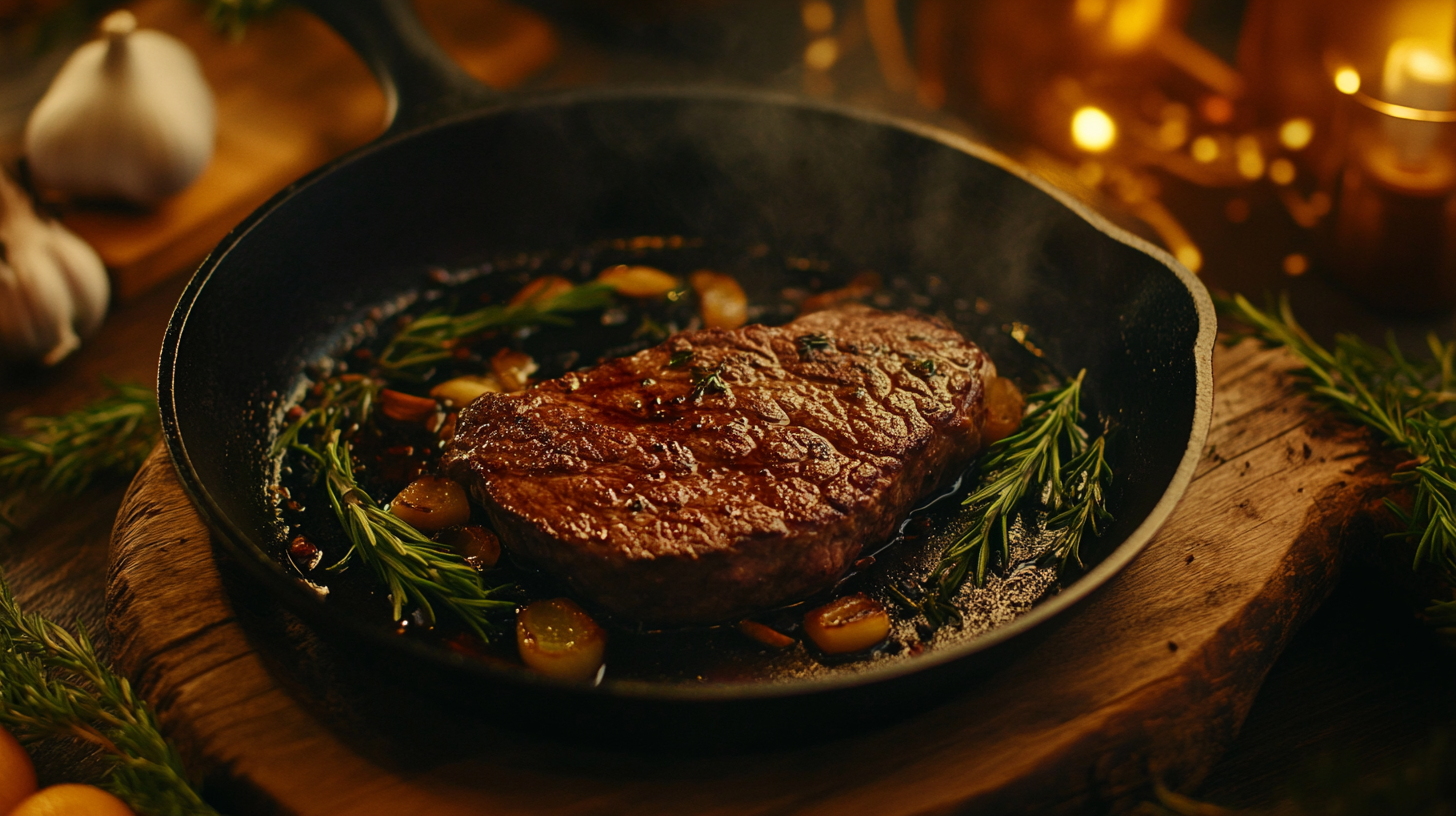
To cook the perfect venison steak, you must master the balance of high-heat searing and precise internal temperature management. Because venison is exceptionally lean, the best method involves tempering the meat to room temperature, dry-brining with salt, searing in a high-smoke-point fat, and pulling the meat off the heat at 125°F to 130°F for a perfect medium-rare finish.
Venison remains one of the most prized wild proteins in 2026, valued for its organic nature, high protein content, and deep, earthy flavor profile. However, many home cooks struggle with its tendency to become tough or "gamey." These issues are almost always the result of overcooking or improper fat management. Unlike beef, which relies on intramuscular marbling (fat) to provide lubrication during the chewing process, venison is nearly pure muscle. This guide provides a comprehensive 7-step technical framework to ensure your venison steaks are as tender and flavorful as the finest heritage-bred beef.
Step 1: Selection, Trimming, and Tempering
The foundation of a great venison steak begins long before the pan hits the stove. In 2026, most culinary experts agree that the "gaminess" people associate with deer meat is actually found in the fat and the silver skin, not the muscle fibers themselves.
Choosing the Right Cut
For a "steak" preparation, you should focus on the backstrap (the longissimus dorsi) or the tenderloin (the psoas major). These muscles do very little work during the animal's life, making them naturally tender. If you are using hindquarter cuts like the top round or eye of round, ensure they are sliced into uniform thicknesses of at least 1 to 1.5 inches. Thinner steaks are incredibly difficult to sear without overcooking the center.
The Importance of Trimming
Venison fat has a high melting point and a waxy texture that can coat the roof of the mouth and carry off-flavors. Use a sharp boning knife to remove every trace of white fat and the iridescent "silver skin" (connective tissue). Silver skin does not break down during a quick sear; instead, it shrinks and tightens, causing the steak to curl and toughen.
Tempering the Meat
Never cook a venison steak straight from the refrigerator. Because you will be using high heat, a cold center will remain raw while the exterior overcooks. Place your trimmed steaks on a wire rack at room temperature for at least 45 to 60 minutes. This process, known as tempering, ensures the muscle fibers are relaxed and will respond evenly to heat.
Step 2: The Science of Dry Brining
Dry brining is the process of salting meat well in advance of cooking. In 2026, this is considered the gold standard for lean game.
When you apply Kosher salt to the surface of the venison, it initially draws moisture out through osmosis. However, given enough time (at least 45 minutes), that salt dissolves into a concentrated brine that is reabsorbed into the meat. This process denatures the protein structures, allowing the muscle to hold onto more moisture during the high-heat cooking process.
Use approximately 1/2 teaspoon of Kosher salt per pound of meat. Avoid using fine table salt, as it is too easy to over-salt. For the best results, salt the meat during the tempering phase. By the time the steak is ready for the pan, the surface should look slightly tacky and darker in color, which is a sign that the brine has successfully penetrated the fibers.
Step 3: Selecting the Right Fat and Equipment
Since venison lacks its own fat, you must introduce a high-quality cooking medium. Not all fats are created equal for this task.
The Equipment
A heavy-bottomed cast iron skillet is the preferred tool for venison. Cast iron has high thermal mass, meaning it won't drop in temperature when the meat hits the pan. This is crucial for achieving a Maillard reaction—the chemical reaction between amino acids and reducing sugars that gives browned food its distinctive flavor. If cast iron is unavailable, a heavy stainless steel pan is the second-best option. Avoid non-stick pans, as they cannot safely withstand the temperatures required for a proper sear.
The Fat Choice
You need a fat with a high smoke point. Butter and extra virgin olive oil will burn and become bitter before the pan is hot enough. Instead, reach for:
- Ghee (Clarified Butter): Provides the flavor of butter without the milk solids that burn.
- Beef Tallow: Adds a rich, savory depth that complements wild game.
- Avocado Oil: Boasts one of the highest smoke points (520°F) and a neutral flavor.
- Duck Fat: Provides a luxurious, silky mouthfeel.
Step 4: Achieving the Perfect Sear
Once your pan is preheated over medium-high heat, add two tablespoons of your chosen fat. Wait until the oil is shimmering and just starting to produce a faint wisp of smoke.
Place the steaks in the pan, ensuring they are not touching. Overcrowding the pan causes the temperature to drop, which leads to the meat "steaming" in its own juices rather than searing. You want to hear a loud, aggressive sizzle the moment the meat makes contact.
For a 1.5-inch steak, sear for approximately 3 minutes on the first side without moving it. Resisting the urge to "peek" or move the meat allows a crust to form. Once a deep, mahogany-brown crust has developed, flip the steak.
Step 5: Temperature Management and the Butter Baste
Venison is best served rare to medium-rare. Because it lacks fat, once it crosses the "medium" threshold (145°F and above), the proteins tighten significantly, and the meat becomes dry and metallic in taste.
Internal Temperature Guide
| Desired Doneness | Pull Temperature (from heat) | Final Temp (after rest) |
|---|---|---|
| Rare | 120°F (49°C) | 125°F (52°C) |
| Medium-Rare | 130°F (54°C) | 135°F (57°C) |
| Medium | 140°F (60°C) | 145°F (63°C) |
| Medium-Well | Not Recommended | 155°F+ |
The Arrosé Technique (Butter Basting)
During the last 60 seconds of cooking, drop a tablespoon of unsalted butter, a crushed garlic clove, and a sprig of fresh rosemary or thyme into the pan. As the butter foams, tilt the pan and use a large spoon to continually pour the flavored butter over the steaks. This adds a layer of fat and aromatics that compensates for the meat's natural leanness.
Step 6: The Non-Negotiable Rest Period
Resting is perhaps the most skipped step in home cooking, but it is the most vital for venison. When meat cooks, the muscle fibers contract and push moisture toward the center. If you cut into the steak immediately after removing it from the pan, those juices will flood onto the cutting board, leaving the meat dry.
Transfer the steaks to a warm plate or a clean wooden board. Tent them loosely with aluminum foil—do not wrap them tightly, or the steam will soften the crust you worked so hard to create.
Allow the steaks to rest for at least 8 to 10 minutes. During this time, the internal temperature will rise by about 5 degrees (carryover cooking), and the muscle fibers will relax, reabsorbing the juices and distributing them evenly throughout the cut.
Step 7: Slicing and Finishing
The final step is about presentation and texture enhancement. To maximize tenderness, always slice venison against the grain. Look for the direction the muscle fibers are running and slice perpendicular to them. This shortens the fibers, making each bite easier to chew.
The Finishing Touches
In 2026, the trend in wild game preparation is to finish with high-quality minerals and acids. A sprinkle of Maldon sea salt (flaky salt) provides a crunch that contrasts with the tender meat. Additionally, a very light drizzle of high-quality balsamic glaze or a squeeze of fresh lemon can brighten the earthy notes of the venison.
If you find the meat is slightly drier than intended, a "board sauce" (mixing the resting juices with a little olive oil and fresh parsley on the cutting board) can be used to coat the slices before serving.
Common Mistakes to Avoid
- Overcooking: This is the primary reason people dislike venison. If you don't own a high-quality digital meat thermometer in 2026, you are guessing at the most critical variable.
- Using "Gamey" Fat: Always trim the white tallow off the deer. Unlike beef fat, deer fat is not delicious.
- Moving the Meat Too Early: A good sear requires uninterrupted contact with the heat. If the meat sticks to the pan when you try to flip it, it’s not ready. It will "release" naturally once the crust is formed.
- Slicing with the Grain: Even a perfectly cooked backstrap will feel "stringy" if sliced parallel to the muscle fibers.
Frequently Asked Questions
How do I remove the "gamey" taste from venison steak?
The "gamey" taste is often a combination of lactic acid buildup from a stressed animal, old fat, or silver skin. To mitigate this, ensure the meat is trimmed perfectly. You can also soak the steaks in buttermilk or saltwater for 2-4 hours before cooking, though a well-handled piece of meat usually does not require this.
Can I cook venison steak from frozen?
It is not recommended. For the high-heat method to work, the meat must be completely thawed and tempered. Cooking from frozen results in a gray, overcooked exterior and a raw, cold interior. Thaw meat slowly in the refrigerator over 24 hours for the best texture.
Should I marinate venison steak?
While you can, a high-quality cut like backstrap is often better with just salt and pepper. If you do marinate, use an oil-based marinade with fresh herbs rather than a highly acidic one (like pure vinegar or lime juice), which can "cook" the outside of the meat and make it mushy.
Why does my venison steak always turn out tough?
Toughness is almost always caused by one of three things: overcooking (going past 140°F), failing to remove the silver skin, or failing to let the meat rest after cooking. Venison does not have the fat to stay juicy at higher temperatures.
What are the best side dishes for venison?
Since venison is earthy and lean, it pairs well with "earthy" sides like roasted root vegetables, wild mushroom risotto, or a tart fruit reduction (such as blackberry or lingonberry sauce) to cut through the richness of the butter baste.
Final Recommendation
For the absolute best results, invest in a cast iron skillet and an instant-read digital thermometer. These two tools are the difference between a mediocre meal and a restaurant-quality experience. Always prioritize the internal temperature over the cooking time, as variables like steak thickness and pan heat will fluctuate. If you pull your venison at 130°F and let it rest for 10 minutes, you will achieve a consistent, tender, and delicious result every time.