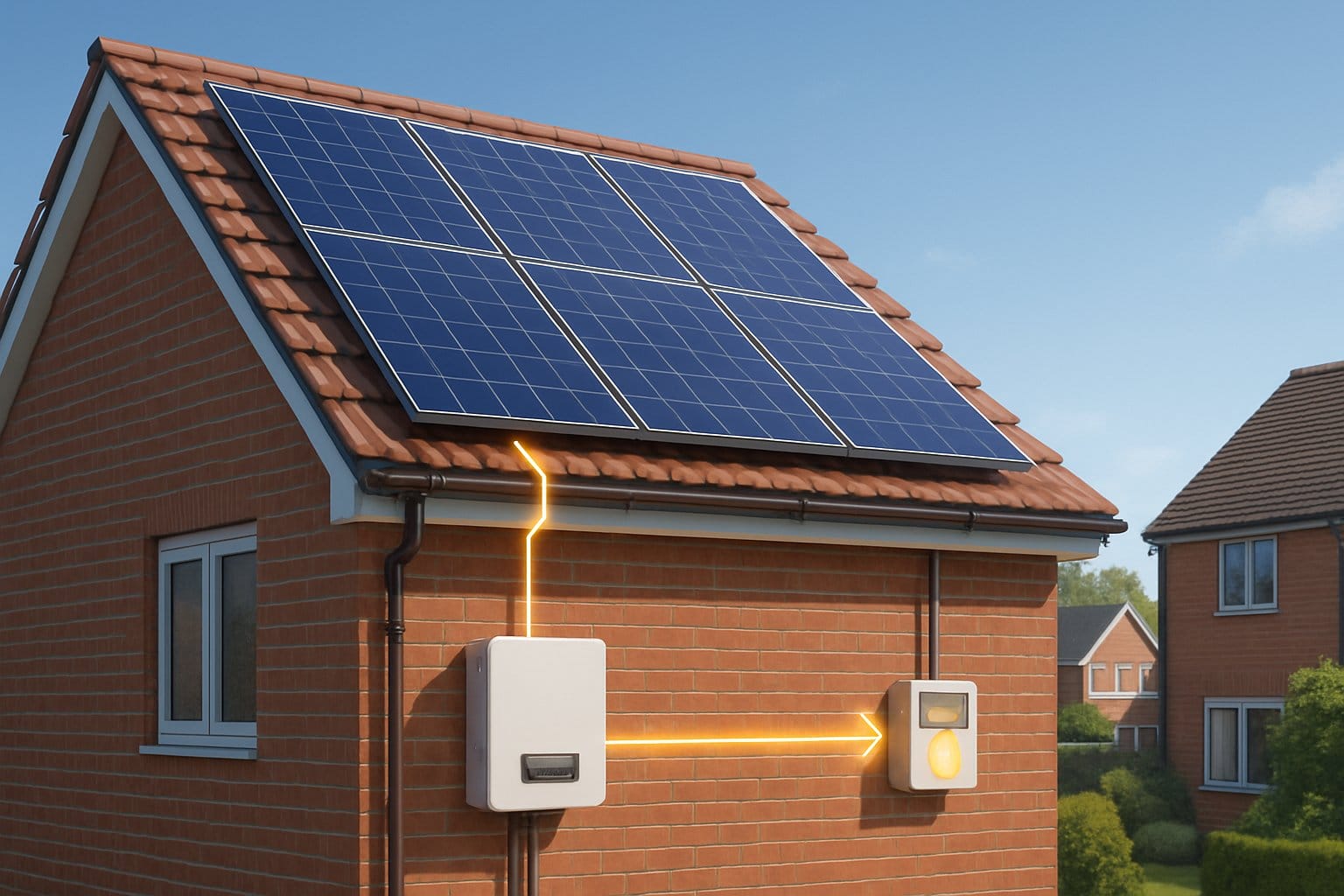
A standard 4kW solar panel installation typically produces between 3,400 and 5,800 kilowatt-hours (kWh) of electricity per year, depending on your geographic location, roof orientation, and local weather patterns. On a daily basis, this equates to an average yield of 9.3 to 16 kWh, providing enough energy to cover a significant portion of a medium-sized household's needs.
Understanding the Capacity of a 4kW Solar System
When discussing a "4kW system," we are referring to the peak capacity of the solar array under Standard Test Conditions (STC). In the solar industry, this is known as the "nameplate capacity." It represents the maximum power the panels can generate at an instantaneous moment when the sun is at its zenith, the sky is clear, and the temperature is a cool 25°C (77°F).
However, real-world conditions rarely mirror laboratory settings. The actual power produced by a 4kW solar panel installation is a dynamic figure influenced by the environment. To understand what this means for your home in 2026, we must distinguish between Power (kW) and Energy (kWh). Power is the capacity of the hardware, while Energy is the actual work performed over time. A 4kW system running at its theoretical maximum for one hour would produce 4kWh of electricity. Because the sun moves and weather changes, the system operates at varying levels of efficiency throughout the day.
In 2026, a 4kW system usually consists of approximately 9 to 11 high-efficiency panels. With modern N-type TOPCon or HJT (Heterojunction) cell technology, individual panels often reach 400W to 450W each, allowing for a smaller physical footprint on your roof compared to systems installed a decade ago.
Key Factors Influencing Daily and Yearly Power Production
The question of how much power a 4kW solar installation produces cannot be answered with a single number because solar energy is inherently site-specific. Several critical variables dictate the efficiency of your investment.
Geographic Location and Peak Sun Hours
The most significant factor in power production is your "Solar Resource," often measured in Peak Sun Hours (PSH). A peak sun hour is not just an hour of daylight; it is an hour in which the intensity of the sunlight (solar irradiance) averages 1,000 watts per square meter.
- High Irradiance Regions: In sunny climates like Arizona, California, or parts of Australia, a 4kW system can benefit from 5.5 to 6.5 PSH daily. This results in an annual yield exceeding 5,500 kWh.
- Moderate Irradiance Regions: In much of Central Europe or the Northern United States, you might average 3.5 to 4.5 PSH, resulting in approximately 3,800 to 4,400 kWh annually.
- Low Irradiance Regions: In areas like the United Kingdom or the Pacific Northwest, the average might be closer to 2.5 to 3 PSH, yielding roughly 3,200 to 3,600 kWh per year.
Panel Orientation and Tilt Angle
For those in the Northern Hemisphere, panels should ideally face due south to capture the maximum amount of sunlight throughout the day. If your roof faces East or West, you can expect a production drop-off of approximately 15% to 20%. However, in 2026, many homeowners prefer East-West splits. This configuration produces less total energy than a south-facing array but spreads the production more evenly across the morning and late afternoon, aligning better with when families actually use electricity.
The tilt angle is also vital. Generally, a tilt equal to your latitude is optimal for year-round production. A steeper tilt favors winter production when the sun is lower in the sky, while a shallower tilt maximizes summer output.
System Losses and Efficiency
No solar system is 100% efficient. When calculating the power produced by a 4kW installation, we must account for "system derate factors." These include:
- Inverter Efficiency: Converting DC (Direct Current) from the panels to AC (Alternating Current) for your home results in a 2% to 4% loss.
- Temperature Coefficients: Solar panels actually become less efficient as they get hotter. High-quality panels in 2026 have a temperature coefficient of around -0.30%/°C, meaning they lose a small fraction of power for every degree above 25°C.
- Soiling and Shading: Dust, bird droppings, and fallen leaves can block sunlight. Even partial shading on one panel can significantly impact a traditional string inverter system, though modern micro-inverters or DC optimizers have largely mitigated this issue.
- Wiring Losses: Resistance in the electrical cables typically accounts for a 1% to 2% loss.
Estimated Annual Yield by Region (2026 Projections)
The following table provides a breakdown of what a homeowner can realistically expect from a 4kW solar installation based on regional solar data.
| Region / Representative City | Avg. Daily Peak Sun Hours | Est. Annual Production (kWh) | Monthly Avg. (kWh) |
|---|---|---|---|
| Phoenix, AZ, USA | 6.2 | 5,900 - 6,300 | 508 |
| Los Angeles, CA, USA | 5.6 | 5,400 - 5,700 | 462 |
| Sydney, Australia | 5.2 | 4,900 - 5,300 | 425 |
| Madrid, Spain | 5.0 | 4,700 - 5,100 | 408 |
| London, UK | 2.8 | 3,300 - 3,600 | 287 |
| Berlin, Germany | 3.1 | 3,400 - 3,800 | 300 |
| New York, NY, USA | 4.1 | 4,100 - 4,500 | 358 |
Note: Figures assume a South-facing (Northern Hemisphere) or North-facing (Southern Hemisphere) array with a 30-degree tilt and 10% total system losses.
Seasonal Variations: What to Expect in Winter vs. Summer
One of the most common misconceptions is that solar panels do not work in the winter. While a 4kW system will produce power during the colder months, the volume is significantly lower due to shorter daylight hours and the sun’s lower position in the sky.
In the height of summer, a 4kW system in a temperate climate might produce 20-25 kWh on a clear day. In contrast, a gloomy December day in the same location might yield only 2-4 kWh. This seasonality is why many 2026 solar installations are paired with Battery Energy Storage Systems (BESS). A battery allows you to store the excess energy produced during those 20+ kWh summer days (or even just the peak sunlight hours of a spring day) to use during the evening, maximizing your self-consumption.
Technical Components of a 2026 4kW System
To achieve the production numbers mentioned above, the quality of the components is paramount. By 2026, the technology has reached a point of high reliability and efficiency.
High-Efficiency Solar Modules
Most 4kW installations now utilize monocrystalline silicon panels. N-type cells have become the industry standard because they offer lower degradation rates. While older panels might have degraded at 0.7% per year, 2026-era panels often come with warranties guaranteeing 90% of their original output after 25 or even 30 years.
Inverter Technology
The inverter is the "brain" of the system. For a 4kW installation, you generally have two choices:
- String Inverters: A single unit that manages the entire array. These are cost-effective but can suffer if one panel is shaded.
- Micro-inverters: Small inverters placed under each individual panel. These maximize the "power produced" because each panel operates independently. If one panel is covered by a stray leaf, the other 9 or 10 panels continue to produce at their maximum capacity.
Smart Monitoring Systems
Modern systems include integrated software that allows you to track production in real-time via a smartphone app. This transparency helps homeowners identify if the power produced is dropping due to maintenance needs or environmental factors, ensuring the system consistently hits its 4kW potential.
Maximizing Your Solar Output
If you want to ensure your 4kW solar panel installation power produced stays at the top end of the estimates, consider these proactive steps:
- Professional Cleaning: While rain cleans most panels, in arid regions or areas with high pollution, a layer of grime can reduce output by 5% to 10%. A bi-annual cleaning can restore this lost capacity.
- Tree Trimming: Trees grow over time. A branch that didn't shade your roof three years ago might now be casting a shadow during the peak production hours of 11 AM to 2 PM.
- Upgrade to Power Optimizers: If you have an older 4kW system, retrofitting it with DC optimizers can help harvest more energy from panels that are mismatched or partially shaded.
- Monitor Your "Self-Consumption": Generating 15 kWh a day is great, but if you aren't home to use it and your local utility has low "feed-in" rates, the financial value of that power is diminished. Use heavy appliances (dishwashers, laundry) during peak sun hours to make the most of the power produced.
Environmental and Financial Impact
A 4kW system is often cited as the ideal size for a "standard" home because it balances the upfront cost with meaningful carbon offset and bill savings.
Carbon Offset: On average, a 4kW system will save approximately 1.3 to 1.6 tonnes of carbon dioxide emissions per year. Over a 25-year lifespan, this is equivalent to planting dozens of trees or avoiding tens of thousands of miles of car travel.
Financial Savings: In 2026, with the average cost of residential electricity continuing to fluctuate, a 4kW system can save a household anywhere from $800 to $1,500 annually depending on local rates and how much of the solar energy is consumed on-site. In regions with "Net Metering" or "Smart Export Guarantees," you can also earn credit for the excess power you send back to the grid.
Frequently Asked Questions
Is 4kW enough to run a whole house?
A 4kW system can provide enough energy for a typical 3-bedroom home, but it rarely runs the entire house simultaneously during high-demand moments. While it may produce 15 kWh in a day (which is the average daily usage for many homes), a 4kW system cannot power a 5kW electric shower or a heavy HVAC load on its own without drawing some power from the grid or a battery. It covers your base load and helps offset major appliances.
Does a 4kW system produce power on cloudy days?
Yes, solar panels produce power on cloudy days, but at a reduced rate. They use both direct and diffuse sunlight. On a very overcast day, the power produced might drop to 10% or 25% of the system’s rated capacity. However, because modern panels are more sensitive to the light spectrum, they are more effective in low-light conditions than older models.
How many solar panels do I need for a 4kW system in 2026?
In 2026, you will typically need 9 to 11 panels. If you use high-efficiency 450W panels, 9 panels will give you a 4.05kW array. If you use slightly smaller 400W panels, you will need 10. The total roof space required is approximately 20 to 25 square meters.
How long does it take for a 4kW system to pay for itself?
The "payback period" typically ranges from 5 to 9 years. This depends on your local electricity prices, the amount of sunlight your location receives, and any available government incentives or tax credits. Given that the systems are designed to last 25+ years, you can expect 15 to 20 years of essentially "free" electricity after the system has paid for itself.
What happens to the power produced if I don't use it?
If your system is "grid-tied," the excess electricity flows back into the municipal power grid. Depending on your local utility's rules, you may receive a credit on your bill for this contribution. Alternatively, you can install a battery to store that excess power for use at night, which is increasingly common in 2026 to avoid high evening peak rates.
Final Recommendation
When planning for a 4kW solar panel installation, do not focus solely on the "4kW" number. Instead, request a site-specific generation report from your installer. This report should use local meteorological data and your specific roof pitch/shading profile to give you a realistic estimate of the kWh you will produce.
For most homeowners in 2026, a 4kW system remains one of the most cost-effective ways to transition to renewable energy. If your daily energy consumption is between 10 kWh and 20 kWh, a 4kW system—especially when paired with a small battery—offers an excellent balance of performance, roof space utilization, and financial return.