Businesses utilizing Amazon for corporate procurement can leverage 30-day credit terms to optimize cash flow, streamline accounting cycles, and manage working capital effectively. Instead of paying for orders immediately at checkout, eligible commercial accounts can defer payment for up to 30 days, bridging the gap between inventory acquisition and customer revenue generation.
Managing corporate cash flow requires balancing immediate operational expenses with incoming revenue streams. For growing businesses, procurement platforms like Amazon represent a significant portion of monthly overhead, covering everything from routine office supplies to bulk manufacturing inventory and tech infrastructure. Utilizing 30-day credit terms for Amazon corporate credit cards and business accounts provides a vital financial buffer, allowing organizations to receive, deploy, and monetize goods before the invoice payment is officially due.
This financial mechanism transforms how businesses handle purchasing workflows. Rather than requiring employees to use personal cards or tying up revolving credit lines with high immediate utilization, structured corporate credit terms establish a predictable, centralized billing cycle. Understanding how these terms work, who qualifies, and how to maximize their utility is essential for procurement managers, controllers, and business owners looking to optimize their corporate finance operations.
The Mechanics of Net 30 Terms in Corporate Procurement
Net 30 terms represent a short-term commercial trade credit agreement where a buyer receives goods or services with the obligation to settle the invoice in full within 30 calendar days from the invoice date. In the context of Amazon corporate accounts, this means orders placed throughout a specific billing cycle are consolidated, and payment becomes due one month later without incurring standard revolving interest charges, provided the balance is paid on time.
Unlike traditional revolving credit cards—which require a minimum monthly payment and accrue high annual percentage rates (APRs) on carried balances—net 30 accounts function more like traditional trade credit lines. They require full balance settlement by the due date. This structure encourages disciplined cash flow management. Businesses use the intervening 30 days to process vendor invoices, collect accounts receivable from their own customers, and integrate Amazon purchases into their enterprise resource planning (ERP) systems without suffering an immediate liquidity drain.
Furthermore, integrating 30-day terms with Amazon corporate purchasing solutions helps departments maintain rigorous internal controls. Purchasing managers can grant employee buyers access to company funds with predetermined spending limits, while financial controllers retain oversight through consolidated monthly invoicing, itemized purchase logs, and centralized payment portals.
Eligibility and Application Prerequisites
Qualifying for 30-day credit terms on Amazon requires meeting specific commercial underwriting criteria. Amazon, alongside its financial partners like American Express or Synchrony Bank (depending on the specific corporate card or Pay by Invoice program), evaluates applicants based on several organizational markers.
Core Underwriting Requirements
- Business Registration and Age: Legal entity status (such as LLC, Corporation, or Partnership) with an active EIN (Employer Identification Number) and a verifiable physical business address.
- Credit History: Established commercial credit history via reporting agencies like Dun & Bradstreet (D&B), Experian Business, or Equifax Business. Personal credit scores of the business owners may also be factored in for smaller or newly established entities.
- Financial Health: Proof of consistent revenue, stable cash flow, and healthy debt-to-equity ratios.
- Trade References: Positive payment histories with existing suppliers and vendors who report to business credit bureaus.
The application process typically requires submitting official corporate documentation, including legal business names, tax identification numbers, estimated annual spend on Amazon, and authorized officer details. Once submitted, underwriters assess the risk profile to determine whether to approve the account for net 30 terms and what initial credit limit to assign.
Comparing Amazon Corporate Financing Options
Amazon offers several distinct pathways for businesses seeking delayed payment structures. Choosing the right option depends on organizational size, monthly purchasing volume, and accounting preferences.
| Program / Product | Primary Feature | Payment Window | Interest / Fees | Best Suited For |
|---|---|---|---|---|
| Amazon Business American Express Card | Revolving credit with promotional financing options | 30 days (standard billing cycle) or revolving | Variable APR if balance carried; 0% promotional terms available | Small-to-medium businesses wanting rewards and flexible terms |
| Amazon Pay by Invoice (Net 30/60) | Corporate trade credit account for invoicing | 30 to 60 days from invoice date | None, if paid within terms | Mid-market to enterprise organizations with centralized purchasing |
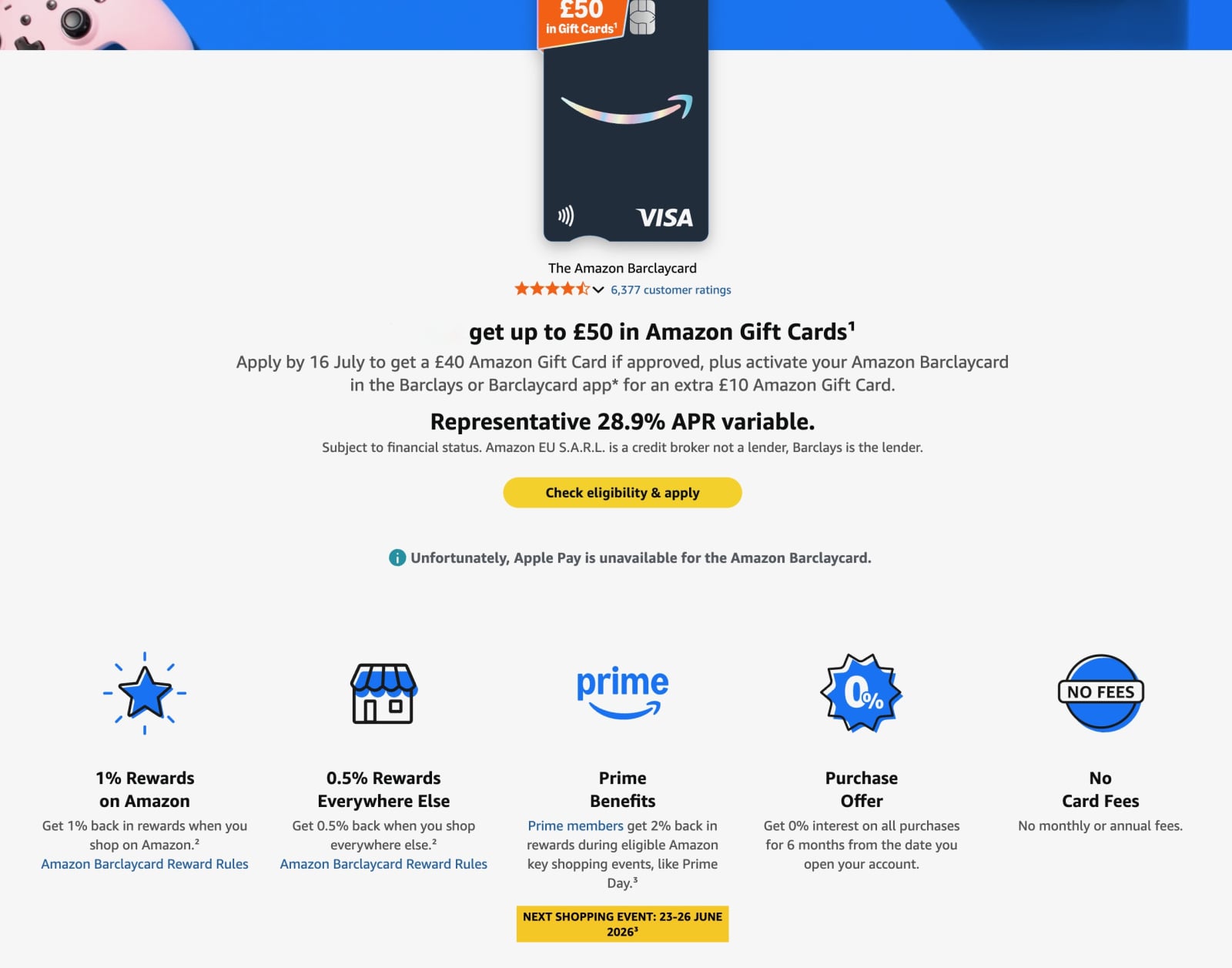
| Synchrony Amazon Corporate Credit Line | Revolving store credit line | Standard monthly billing cycle | Standard retail credit APRs | Businesses needing dedicated Amazon-only purchasing lines |
As shown in the comparison, organizations that strictly require 30-day invoice terms without revolving debt features often gravitate toward the Amazon Pay by Invoice program. Conversely, businesses looking to earn rewards points on everyday business spending while managing cash flow within monthly billing cycles frequently choose co-branded corporate credit cards.
Operational Benefits of Extended Payment Terms
Implementing 30-day credit terms yields multiple strategic advantages for corporate finance and procurement teams.
1. Enhanced Working Capital Management
Working capital is the lifeblood of any commercial enterprise. By delaying cash outflows for 30 days, companies retain liquid cash reserves to cover urgent payroll, unexpected maintenance, or sudden growth opportunities. This float acts as an interest-free buffer that aligns expenses more closely with revenue generation cycles.
2. Streamlined Accounting and Reconciliation
Manual invoice processing is notoriously labor-intensive. Corporate credit accounts and Pay by Invoice programs consolidate hundreds of individual micro-purchases made by various employees into a single, comprehensive monthly statement. This reduces invoice processing costs, minimizes matching errors, and simplifies month-end financial reconciliation.
3. Departmental Spend Controls
Modern Amazon corporate accounts allow administrators to set granular controls, such as requiring manager approval for orders over a certain threshold, restricting product categories, and issuing purchasing cards tied directly to specific cost centers. When combined with 30-day payment terms, financial controllers gain unprecedented visibility over organizational spend before a single dollar leaves the bank account.
Potential Risks and Common Pitfalls
While 30-day credit terms offer substantial utility, failing to manage them correctly can introduce significant financial and operational risks.
- Late Payment Penalties: Missing the strict 30-day window can result in hefty late fees, penalty APRs, and the immediate suspension of purchasing privileges.
- Negative Credit Reporting: Delinquent accounts report negative payment history to commercial credit bureaus, damaging the company's Dun & Bradstreet or Experian Business score and hampering future financing efforts.
- Over-Leveraging: The ease of ordering goods on credit can tempt organizations to overbuy, leading to bloated inventory, storage challenges, and sudden liquidity crunches when the cumulative invoice comes due.
- Unauthorized Spending: Inadequate internal oversight on corporate cards or shared purchasing accounts can lead to rogue spending by employees, straining the net 30 balance before leadership realizes the discrepancy.
To mitigate these risks, organizations must implement automated payment reminders, establish strict internal procurement policies, and conduct regular audits of monthly Amazon statements.
Frequently Asked Questions
Can a newly formed startup qualify for Amazon 30-day credit terms?
New startups can qualify, but approval is more challenging due to a lack of established commercial credit history. Underwriters may require a personal guarantee from the founders, a security deposit, or proof of liquid capital reserves to offset the initial risk.
Do Amazon corporate credit terms affect personal credit scores?
Most true corporate credit lines and Pay by Invoice accounts report exclusively to commercial credit bureaus, protecting personal credit scores. However, certain small business credit cards require a personal guarantee and may report late payments or high utilization to personal credit agencies if the business defaults.
What happens if my business exceeds its assigned credit limit within the 30-day window?
If your purchasing volume exceeds the established credit limit before the 30-day term expires, subsequent orders may be declined at checkout until a payment is made to free up available credit. Many programs allow businesses to make interim payments mid-cycle or request credit limit increases as purchasing volume grows.
Are there any annual fees associated with Amazon corporate net 30 accounts?
The standard Amazon Pay by Invoice program typically does not charge an annual account fee, though specific terms depend on the underwriting agreement. Co-branded corporate credit cards, however, may carry annual fees offset by rewards programs, cash back, or specialized vendor discounts.
How do I dispute an unauthorized or incorrect charge on my corporate statement?
Disputes must be handled through the designated customer support or account management portal associated with your specific credit line or invoice provider. For Pay by Invoice accounts, you can flag specific line items directly within your business account dashboard, while card-related disputes follow standard commercial cardholder protection procedures.
Next Actions for Business Procurement Teams
Organizations seeking to implement or optimize 30-day credit terms on Amazon should begin by auditing their current monthly procurement volume and internal approval workflows. If your organization spends consistently on Amazon and requires better cash flow timing, visit the Amazon Business portal to evaluate eligibility for Pay by Invoice or speak with your commercial banking partner regarding co-branded corporate credit solutions. Ensure your business credit profiles are up to date with major bureaus before applying to maximize your chances of securing favorable credit limits and terms.