Determining the fair market value of a $75,000 whole life insurance policy involves evaluating its guaranteed cash surrender value, assessing potential secondary market offers if considering a life settlement, and factoring in current policy loans or dividends. Because whole life insurance combines a permanent death benefit with a cash value savings component, its worth extends far beyond simple death benefit numbers.
Understanding the true economic value of a permanent life insurance policy requires looking past the face amount printed on the contract. While a $75,000 policy guarantees a payout to beneficiaries upon the insured's passing, the policyowner holds distinct ownership rights while alive. These rights include borrowing against the policy, surrendering it for its accumulated cash value, or potentially selling it to a third party through a life settlement transaction.
Navigating the valuation process accurately ensures that policyholders make informed financial choices, whether they plan to maintain the policy, surrender it back to the insurance carrier, or explore alternative liquidity options. Financial and legal professionals generally approach permanent life insurance valuation through a structured methodology, breaking down complex policy architecture into manageable, verifiable checkpoints.
Step 1: Review the Current Policy Anniversary Statement and Cash Surrender Value
The foundational step in determining the fair market value of a $75,000 whole life insurance policy is obtaining and analyzing the most recent policy anniversary statement. Unlike term life insurance, which builds no equity and expires after a set period, whole life insurance accumulates cash value over time according to a guaranteed schedule set by the issuing insurance company.
Locating Essential Financial Metrics
When reviewing the annual statement issued by the life insurance company, policyholders must identify several distinct financial figures. Confusing these numbers is a common error that leads to inaccurate valuations.
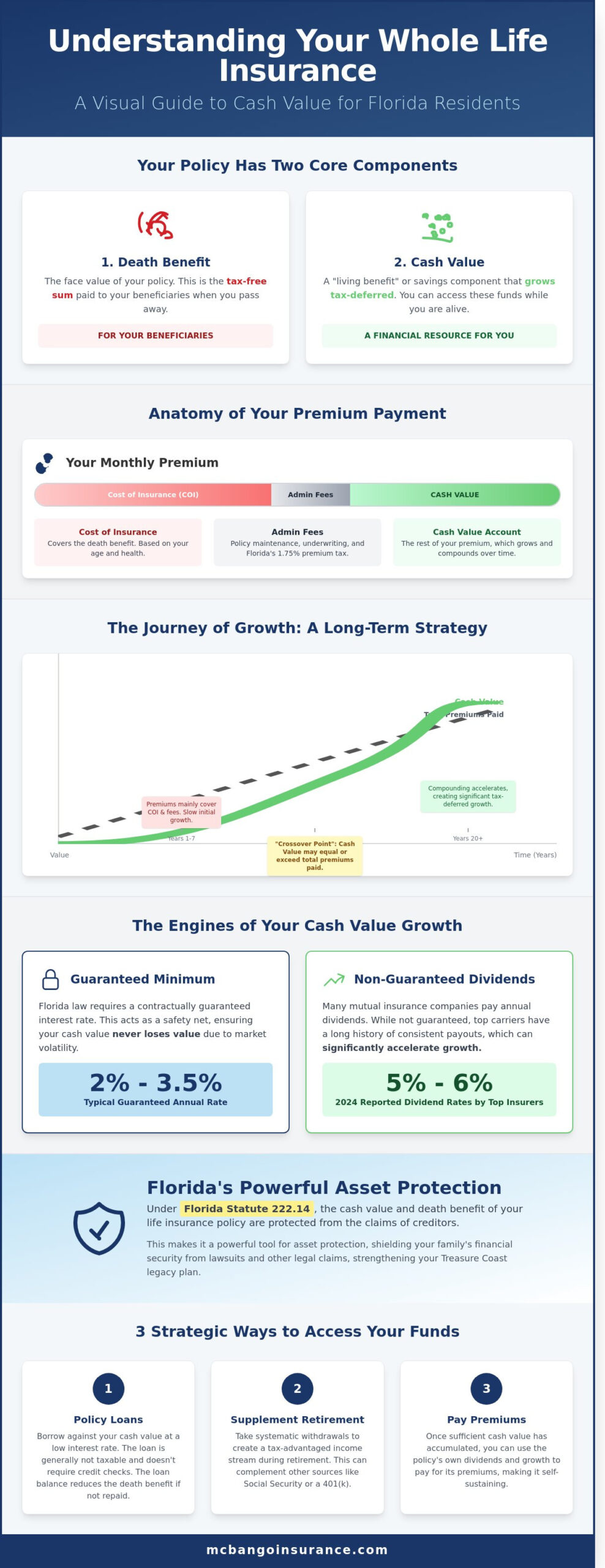
- Gross Cash Value: This represents the total amount of savings accumulated within the policy up to the current date. It grows on a tax-deferred basis through guaranteed interest rates credited by the insurer.
- Policy Loans and Outstanding Interest: If the policyowner has previously borrowed against the cash value, the outstanding loan balance acts as a direct lien against both the cash value and the eventual death benefit.
- Surrender Charges: Insurance companies typically deduct surrender fees during the early years of a policy's life—often the first 10 to 15 years. These charges decrease over time until they reach zero.
- Net Cash Surrender Value: This is the actual amount of money the policyholder would receive if they terminated the contract today. It is calculated by taking the gross cash value, subtracting any outstanding policy loans, and subtracting applicable surrender charges.
Requesting an In-Force Illustration
Annual statements provide a snapshot of the policy's status as of the statement date, but insurance costs and dividends fluctuate. To gain a precise, real-time valuation, the policyowner should request an in-force illustration from the customer service department of the insurance carrier. This document projects future cash values and death benefits under various performance scenarios, providing a clear financial baseline for the $75,000 policy.
| Metric Term | Definition | Impact on Fair Market Value |
|---|---|---|
| Gross Cash Value | Total accumulated savings within the policy. | Baseline from which deductions are made. |
| Surrender Charges | Penalties for early policy termination. | Directly reduces the immediate cash payout. |
| Outstanding Loans | Unpaid borrowed funds plus accrued interest. | Reduces both cash surrender value and death benefit. |
| Net Surrender Value | Cash available after loans and fees. | Represents the baseline floor for fair market value. |
Step 2: Evaluate Alternative Liquidity Options and Life Settlement Valuations
While the net cash surrender value represents the floor—the minimum amount the insurance company is contractually obligated to pay upon surrender—it does not always represent the true fair market value if the policy is sold on the secondary market. For certain policyholders, third-party buyers may offer an amount higher than the cash surrender value but lower than the full $75,000 death benefit.
Understanding Life Settlements and Viatical Settlements
A life settlement involves selling an existing life insurance policy to a licensed third-party investor for a lump-sum cash payment that is higher than the cash surrender value but less than the face value. The buyer takes over premium payments and collects the $75,000 death benefit when the insured passes away.
- Eligibility Factors: Life settlement brokers typically evaluate policies based on the age and health status of the insured, the current premium outlay required to keep the policy active, and the credit rating of the issuing insurance carrier.
- Face Value Consideration: A $75,000 policy is considered a smaller face amount in the secondary market, as institutional buyers often focus on policies with face values exceeding $100,000 or $250,000 due to fixed transaction costs. However, smaller policies can still be evaluated through specialized brokers or group settlement programs.
- Tax Implications: Unlike traditional cash surrenders where gains are taxed as ordinary income, life settlements involve distinct tax rules governed by cost basis calculations and capital gains considerations. Policyholders should consult a qualified tax professional before proceeding.
Assessing Retaining versus Surrendering
Before locking in a valuation through a sale or surrender, the policyholder must weigh the opportunity cost of losing the permanent death benefit. Once a policy is surrendered or sold, the protection for beneficiaries is permanently terminated. In many cases, continuing premium payments or utilizing internal policy options—such as reducing the face amount to make premiums manageable—may offer superior long-term value compared to an immediate liquidation.
Step 3: Account for Dividends, Riders, and Policy Adjustments
The final step in establishing a comprehensive fair market value involves auditing additional policy enhancements, riders, and potential dividend accumulations that modify the standard contract terms.
Participating Versus Non-Participating Policies
If the $75,000 whole life insurance policy was issued by a mutual insurance company, it is likely a participating policy. This means the policyholder may be eligible to receive annual dividends based on the insurer's financial performance, mortality experience, and investment returns.
- Dividend Options: Dividends can be taken in cash, used to reduce current premium payments, left to accumulate interest with the insurer, or used to purchase Paid-Up Additions (PUAs).
- Paid-Up Additions: PUAs function as miniature single-premium whole life policies added onto the main contract. They increase both the total cash value and the overall death benefit above the base $75,000 figure. Checking for accumulated PUAs is essential because they significantly raise the true liquidation value of the contract.
Factoring in Policy Riders
Many whole life contracts include specialized riders that alter the asset profile of the policy:
- Waiver of Premium: This rider waives premium payments if the insured becomes totally disabled, protecting the policy from lapsing but adding no direct cash liquidation value.
- Accelerated Death Benefit Rider: Allows the policyholder to access a portion of the death benefit early if diagnosed with a qualifying terminal illness. While this impacts the eventual payout, it serves as a critical valuation factor during medical emergencies.
Common Mistakes to Avoid When Valuing Whole Life Insurance
Accurately calculating the fair market value of life insurance requires precision. Miscalculating values can lead to severe financial oversights, unexpected tax liabilities, or selling a valuable asset for less than its true worth.
Confusing Face Amount with Cash Value
A frequent error is assuming a $75,000 whole life insurance policy is worth $75,000 in cash. The face amount represents the payout upon death, not the accumulated savings. The actual cash value is typically much lower, particularly during the early decades of the policy lifecycle.
Forgetting to Subtract Outstanding Loans
Failing to account for outstanding policy loans results in an inflated valuation. If a policyholder has an active loan against the cash value, that debt does not vanish upon surrender or sale; it is deducted directly from the final proceeds, reducing the net cash realized.
Overlooking Tax Consequences
Liquidating a whole life policy can trigger taxable events. If the net cash surrender value exceeds the total amount of premiums paid into the policy (the cost basis), that gain is considered taxable income. Policyholders must review their historical premium payment records to establish an accurate cost basis before executing any financial transactions.
Summary Comparison of Valuation Methods
To determine the most appropriate valuation path for a $75,000 whole life insurance policy, policyholders can compare the primary methods of accessing or assessing policy value:
| Valuation / Action Method | How It Works | Typical Financial Return | Best Suited For |
|---|---|---|---|
| Net Cash Surrender | Terminating the policy directly with the insurer. | Equal to gross cash value minus fees and loans. | Immediate cash need with no further need for coverage. |
| Life Settlement | Selling the policy to a third-party investor. | Higher than cash surrender; lower than death benefit. | Seniors or terminally ill policyholders needing substantial liquidity. |
| Policy Loan | Borrowing against the accumulated cash value. | Leaves the policy active while providing liquid funds. | Temporary financial needs where coverage must be maintained. |
| Reduced Paid-Up | Stopping future payments and lowering face value. | Converts existing cash value into a smaller, paid-up policy. | Policyholders who can no longer afford premium payments. |
Frequently Asked Questions
Is the cash value of a $75,000 whole life insurance policy equal to $75,000?
No. The $75,000 figure represents the death benefit paid to beneficiaries upon the insured's death. The cash value is a separate savings component that accumulates slowly over time and is typically much lower than the face amount, especially during the first 10 to 15 years of the policy.
How do I find the exact cash surrender value of my policy?
The most reliable way to find the exact cash surrender value is to request an official in-force illustration or a surrender quote directly from your insurance company's customer service department. You can also review your most recent annual policy statement, though real-time figures may vary slightly.
Can I sell a $75,000 whole life insurance policy?
Yes, policies can potentially be sold through a life settlement or viatical settlement. However, because $75,000 is a relatively small face amount, transaction costs may limit market interest from institutional buyers. Consulting a licensed life settlement broker is necessary to determine if secondary market buyers are willing to make an offer.
Are the proceeds from surrendering a whole life policy taxable?
Portions of the payout may be taxable. If the net cash surrender value exceeds your total cost basis—the cumulative amount of premiums you have paid into the policy—the excess gain is treated as ordinary income and is subject to taxation.
What happens to my cash value if I stop paying premiums?
If you stop paying premiums and have accumulated sufficient cash value, the insurance company may automatically use the cash value to keep the policy active through non-forfeiture options, such as extended term insurance or reduced paid-up insurance, depending on your contract terms.
Next Steps and Professional Guidance
Determining the fair market value of a $75,000 whole life insurance policy requires balancing contractual guarantees with current market realities. Begin by retrieving your most recent policy statement and contacting your insurance carrier for an up-to-date in-force illustration. If you are considering surrendering or selling the policy, consult with an independent financial advisor, certified financial planner (CFP), or tax professional to evaluate the long-term tax implications and ensure your estate and insurance planning goals remain fully aligned.