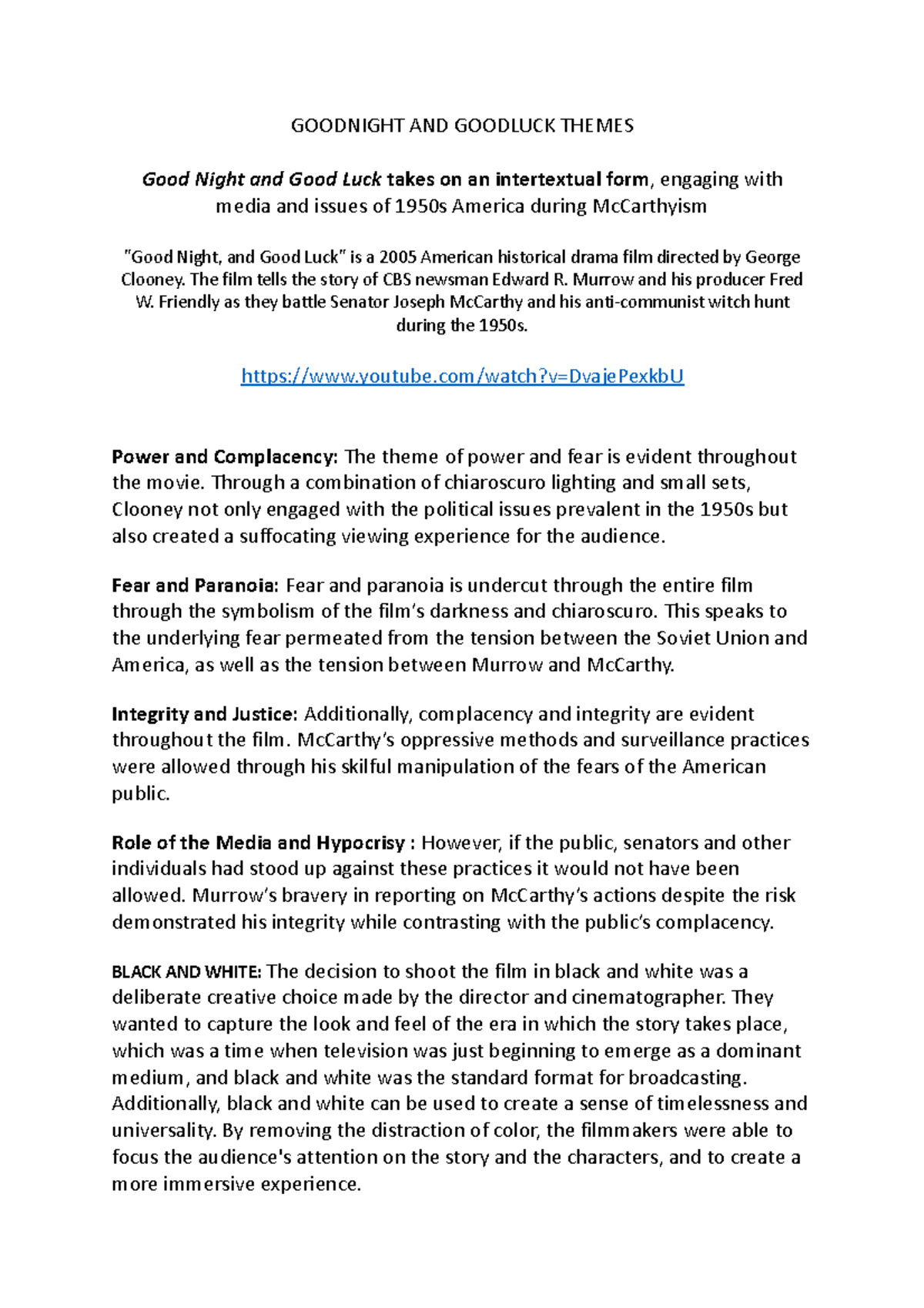
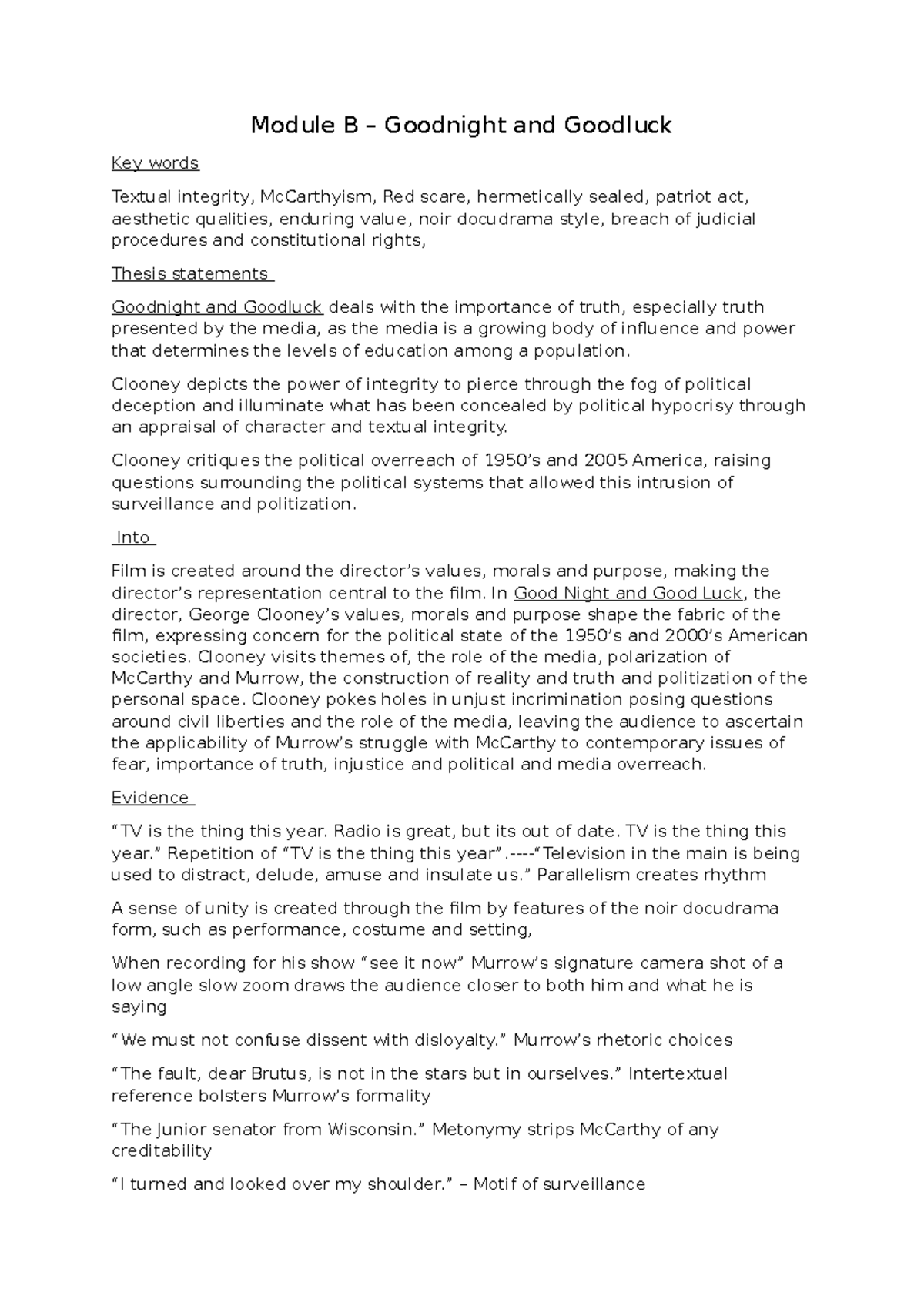
The 2025 outlook for Good Night, and Good Luck was defined by its high-profile transition from a critically acclaimed film to a major Broadway production. Starring George Clooney in his stage debut as Edward R. Murrow, the play opened at the Winter Garden Theatre in the spring of 2025, revitalizing interest in historical journalism and the ethical responsibilities of modern media.
The year 2025 marked a pivotal moment for the intellectual property of Good Night, and Good Luck. Originally released as a feature film in 2005, the narrative found a new medium and a new level of cultural urgency. As we evaluate the status of this work from the vantage point of 2026, it is clear that the 2025 "outlook" was not merely about a theatrical release, but about the enduring relevance of the conflict between journalistic integrity and political demagoguery. This comprehensive analysis explores the production details, the thematic resonance of the 2025 staging, and the technical execution of bringing the 1950s CBS newsroom to a live audience.
The Evolution from Screen to Stage: The Clooney Factor
The most significant development in the 2025 outlook for Good Night, and Good Luck was George Clooney’s decision to move the project to Broadway. While Clooney co-wrote and directed the 2005 film, he notably played Fred Friendly, the producer, rather than Edward R. Murrow. In the 2025 stage adaptation, Clooney took on the mantle of Murrow himself, a move that fundamentally shifted the dynamic of the production.
A New Interpretation of Edward R. Murrow
By stepping into the role of Murrow, Clooney brought a seasoned, authoritative presence that resonated with 2025 audiences. The stage version, co-written by Clooney and Grant Heslov, required a tighter focus than the film. While the 2005 movie utilized the intimacy of close-ups and the starkness of black-and-white cinematography to convey tension, the 2025 play relied on the visceral energy of a live newsroom.
The transition to stage allowed for a deeper exploration of Murrow’s internal conflicts. In 2025, the outlook for the character was one of "burdened heroism"—a man aware of his platform’s power but also its fragility. This portrayal was essential for a modern audience accustomed to rapid-fire digital commentary, reminding them of a time when a single half-hour broadcast could shift the national consciousness.
The Role of David Cromer
The direction of the 2025 production fell to David Cromer, a Tony Award-winning director known for his ability to handle intimate human dramas within grand settings. Cromer’s vision for the 2025 outlook focused on "sonic realism." He utilized the acoustics of the Winter Garden Theatre to simulate the chaotic environment of a 1950s television studio, where the clicking of typewriters and the hum of broadcast equipment served as a percussive background to the dialogue.
Historical Context and Modern Resonance
To understand why the 2025 outlook for Good Night, and Good Luck was so positive, one must look at the historical parallels that emerged during that year. The play depicts the real-life conflict between Murrow and Senator Joseph McCarthy during the height of the Red Scare.
The Murrow-McCarthy Conflict
In the early 1950s, Senator McCarthy used fear and unsubstantiated accusations of communism to dismantle the careers of political opponents and private citizens. Murrow, through his program See It Now, chose to challenge McCarthy directly. The 2025 production emphasized the "March 9, 1954" broadcast, which is widely considered the turning point in McCarthy's influence.
In 2025, the themes of "fear-based governance" and "media accountability" were particularly salient. The outlook for the play was bolstered by a public desire for stories that championed objective truth over partisan rhetoric. By focusing on the specific mechanics of how Murrow and his team built their case, the play served as a masterclass in investigative rigor.
The Fragility of the First Amendment
A core component of the 2025 narrative was the pressure from sponsors and network executives. The play highlighted the character of William Paley, the founder of CBS, and the delicate balance between corporate interests and journalistic duty. This aspect of the 2025 outlook provided a stark commentary on the current state of media ownership and the influence of advertising revenue on news content.
Technical Specifications of the 2025 Production
The 2025 staging was a technical marvel, blending mid-century aesthetics with modern stagecraft. The goal was to maintain the "noir" feel of the original film while utilizing the dimensions of a Broadway stage.
| Feature | 2005 Film Specification | 2025 Broadway Specification |
|---|---|---|
| Lead Actor | David Strathairn (Murrow) | George Clooney (Murrow) |
| Visual Style | High-contrast Black & White Film | Monochromatic Lighting & Set Design |
| Primary Setting | CBS Studio 17 (Cine-realistic) | Multi-level Newsroom Set (Live) |
| Runtime | 93 Minutes | 105 Minutes (No Intermission) |
| Director | George Clooney | David Cromer |
| Sound Design | Jazz-heavy Soundtrack | Diegetic Newsroom Soundscape |
Scenic Design and Immersion
The 2025 production utilized a set designed by Takeo Watanabe, which featured a functional "control room" elevated above the main stage. This allowed the audience to see the reactions of the producers (led by the character of Fred Friendly) in real-time as Murrow delivered his monologues. The use of period-accurate television cameras, which projected "live" grain-heavy feeds onto screens above the stage, created a bridge between the 1950s technology and the 2025 audience's digital expectations.
Lighting as a Narrative Tool
Since the play sought to emulate the black-and-white look of the film, the lighting design by Kenneth Posner was critical. Using a palette of whites, grays, and deep shadows, the 2025 production managed to make the stage feel like a film set come to life. This "staged monochrome" was one of the most discussed technical achievements of the 2025 Broadway season.
The Economic and Cultural Impact in 2025
The financial outlook for Good Night, and Good Luck in 2025 was exceptionally strong. As a limited-engagement run, the production saw record-breaking pre-sales.
Ticket Pricing and Accessibility
In 2025, Broadway faced significant pressure regarding ticket affordability. The production responded by implementing a "Student Journalist Tier," offering discounted tickets to those enrolled in communications and political science programs. This initiative ensured that the play’s message reached the next generation of media professionals, further solidifying its status as a cultural touchstone rather than just a celebrity vehicle.
Award Season Performance
The 2025 outlook was also defined by its trajectory toward the 78th Tony Awards. The production was a frontrunner in several categories, including Best Revival of a Play (though technically a new play, it was often discussed in the context of the source material's legacy) and Best Leading Actor for Clooney. The critical consensus was that the play successfully avoided the "star-vehicle" trap, providing a robust ensemble performance that honored the collective effort of the original CBS news team.
Challenges and Critical Reception
Despite the favorable 2025 outlook, the production did face challenges. Some critics questioned whether a story set in 1954 could fully capture the complexities of the 2025 media landscape, which is defined by decentralized social media rather than centralized network news.
Addressing the "Gatekeeper" Critique
A minor point of contention among 2025 reviewers was the portrayal of the "golden age of journalism." Some argued that the play romanticized a time when a few men in New York decided what the nation should think. However, the production’s 2025 updates to the script included more nuanced depictions of the junior staff and the legal risks taken by the reporting team, which helped mitigate these concerns.
The Physical Demands of the Role
For George Clooney, the 2025 outlook involved the physical challenge of a rigorous eight-show-a-week schedule. Broadway audiences are notoriously demanding, and the transition from the controlled environment of a film set to the high-stakes environment of live theater was a major narrative arc in the entertainment press throughout the year.
The Legacy of the 2025 Staging
Looking back from 2026, the 2025 outlook for Good Night, and Good Luck was a resounding success in both commercial and artistic terms. It proved that historical dramas, when handled with technical precision and contemporary relevance, can still draw massive audiences.
Educational Integration
Following the Broadway run, the 2025 production scripts were integrated into several university curricula. The "Clooney-Heslov" text is now used as a tool to teach both dramatic writing and the ethics of public discourse. This educational outreach has ensured that the 2025 outlook extends far beyond the final curtain call at the Winter Garden Theatre.
Future Adaptations and Touring
The success of the 2025 run has led to discussions regarding a national tour and potential West End debut in late 2026. The 2025 outlook established a blueprint for how to adapt mid-budget historical films for the stage: prioritize thematic urgency, secure a compelling lead, and utilize innovative stagecraft to honor the original medium.
Frequently Asked Questions
What was the primary reason for the 2025 revival of Good Night, and Good Luck?
The revival was driven by George Clooney’s desire to bring the story to a live audience during a period of significant global political and media polarization. The stage format allowed for a more visceral exploration of the themes of truth and accountability that were central to the 2005 film.
Is the 2025 play an exact copy of the 2005 movie?
No. While the 2025 play shares the same historical foundation and much of the dialogue, it was specifically rewritten by Clooney and Grant Heslov for the stage. It features a more concentrated focus on the newsroom environment and expands on the roles of the supporting CBS staff.
Who directed the 2025 Broadway production?
The production was directed by David Cromer. His approach emphasized the claustrophobic and high-stakes nature of 1950s live television, using a set that mimicked a functional newsroom and control booth.
How did the 2025 outlook affect George Clooney's career?
The 2025 outlook solidified Clooney's reputation as a versatile artist capable of succeeding in live theater. His performance as Edward R. Murrow was praised for its restraint and gravitas, proving he could translate his cinematic "movie star" presence into a compelling stage performance.
Where can I find more information about the historical events depicted?
For those interested in the factual basis of the play, the National Archives and the Museum of Broadcast Communications offer extensive records on Edward R. Murrow’s career and the McCarthy hearings.
Practical Next Steps for Enthusiasts
For those looking to engage further with the themes of Good Night, and Good Luck after the 2025 season, the following actions are recommended:
- Review the Original Broadcasts: Many of Murrow's See It Now episodes, including the famous McCarthy broadcast, are available through public domain archives and university library systems.
- Study the Script: The 2025 stage script offers a unique look at how historical dialogue is adapted for dramatic pacing.
- Explore Journalism Ethics: Organizations like the Poynter Institute provide modern resources on the very same ethical dilemmas faced by Murrow’s team in 1954.
The 2025 outlook for Good Night, and Good Luck reminded the world that while the technology of news delivery changes, the fundamental requirement for courage in the face of power remains constant.