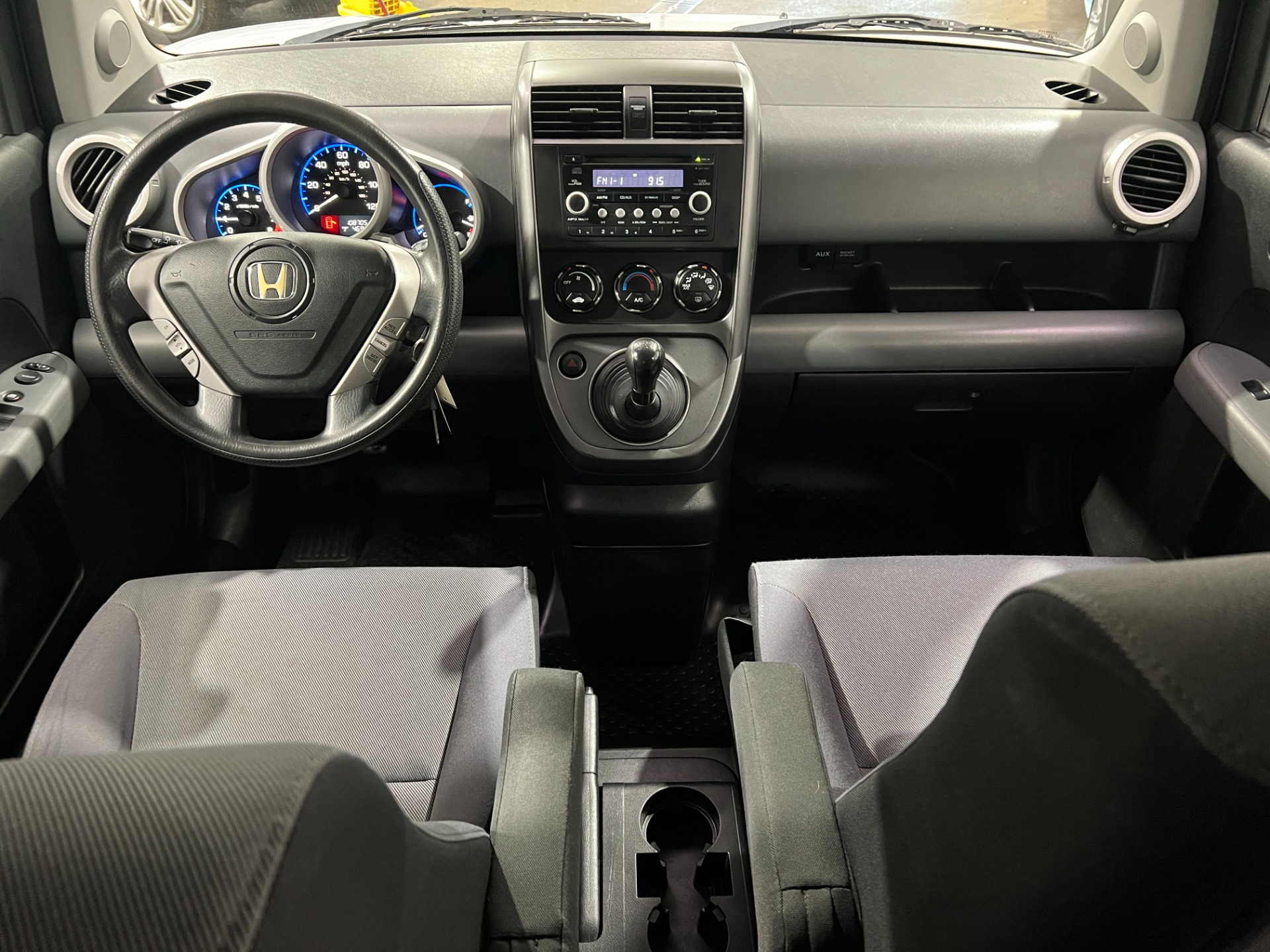
The 2003 Honda Element is a cult-classic compact crossover renowned for its utilitarian "toaster" shape, water-resistant interior flooring, and versatile clamshell doors. However, as an aging vehicle on the secondary market, it faces several well-documented mechanical and structural issues. These include excessive oil consumption, VTC actuator and timing chain wear, suspension component fatigue, rust on the rear trailing arm mounts, and door latch failure.
Understanding these mechanical realities is essential for prospective buyers, DIY mechanics, and current owners looking to preserve their vehicles. While the Element shares its reliable K24A4 engine platform and mechanical architecture with the contemporary Honda CR-V and Accord, its specific chassis, utility-focused interior, and boxy aerodynamics introduce distinct maintenance challenges.
The Heritage and Mechanical Identity of the 2003 Honda Element
Introduced for the 2003 model year, the Honda Element was designed to cater to active lifestyles, pet owners, and outdoor enthusiasts. Built on a modified, shortened platform derived from the CR-V—often referred to as a "Global Compact Platform"—it featured a reinforced frame without a traditional B-pillar, relying instead on heavy-duty side-access doors that opened in opposite directions.
Underneath the hood, the 2003 model utilizes a 2.4-liter, naturally aspirated 4-cylinder engine (K24A4) equipped with Honda's i-VTEC (intelligent Variable Valve Timing and Lift Electronic Control) system. It was offered in both front-wheel drive (FWD) and Real Time 4WD configurations, paired with either a 5-speed manual transmission or a 4-speed automatic. While the powertrain is fundamentally robust, the accumulation of over two decades of wear means that standard maintenance items have graduated into major preventative repairs.
Engine and Powertrain Issues
The K24 engine family is generally celebrated for reaching high mileage milestones, but the initial 2003 iteration exhibits specific vulnerabilities that require regular monitoring.
Excessive Oil Consumption and Piston Rings
One of the most frequently reported mechanical issues in early K24 engines is oil consumption. Due to potential premature wear on the oil control rings or carbon buildup clogging the piston oil return holes, the engine can burn oil between standard service intervals.
- The Symptom: Rapid depletion of engine oil without visible external leaks or blue exhaust smoke.
- The Impact: Running low on oil can lead to timing chain tensioner failure, VTEC system disengagement, and catastrophic engine seizure.
- The Resolution: Owners must check their oil dipstick weekly. Resolving the root cause requires a piston soak or a complete piston ring replacement job.
Timing Chain Stretch and Tensioner Failure
While designed to last the lifetime of the vehicle, the timing chain in the 2003 Honda Element can stretch prematurely if oil changes are neglected or if the engine is frequently run low on oil.
- The Symptom: A rattling noise from the passenger side of the engine bay, particularly during cold starts, alongside Check Engine lights relating to camshaft/crankshaft correlation codes (such as P0341).
- The Impact: A severely stretched chain can skip teeth, leading to valve-to-piston contact and total engine destruction.
- The Resolution: Replacement of the timing chain, guides, tensioner, and associated gaskets, which is an intensive labor procedure.
VTEC System Malfunctions
The i-VTEC system relies heavily on clean, pressurized engine oil to alter valve timing dynamically.
- The Symptom: Engine entering "limp mode" (failing to rev past 3,000 RPM), accompanied by diagnostic trouble codes like P2646 (VTEC Oil Pressure Switch Circuit Low Voltage).
- The Cause: A clogged VTEC spool valve filter screen, a failing oil pressure switch, or low oil levels.
- The Resolution: Removing the VTEC assembly, cleaning or replacing the filter screen, and ensuring proper oil viscosity and level.
Suspension, Steering, and Chassis Concerns
The Element's heavy boxy profile places distinct physical loads on its suspension components, leading to accelerated wear patterns compared to standard sedans.
Rear Suspension Sag and Tire Cupping
The rear suspension utilizes a double-wishbone design that, over time, suffers from fatigued coil springs and worn-out control arm bushings.
- The Symptom: Visible sagging in the rear end, bottoming out over large bumps, and uneven inner tire wear (cupping) that creates a loud humming noise at highway speeds.
- The Resolution: Replacing the rear struts, coil springs, and upper control arms. Many owners opt for adjustable upper control arms to correct negative camber issues.
Front Suspension Ball Joints and Control Arms
The front lower control arm bushings and ball joints take the brunt of steering forces and road imperfections.
- The Symptom: Clunking noises when turning or going over bumps, vague steering feel, and wandering on the highway.
- The Impact: A catastrophic lower ball joint separation can cause the wheel to tuck under the vehicle, resulting in an immediate loss of control.
- The Resolution: Immediate inspection and replacement of worn lower control arms and ball joints with OEM or high-grade aftermarket components.
Structural Integrity and Body Hardware
Unlike mechanical components that can be easily swapped, structural vulnerabilities require careful inspection before purchasing a used 2003 model.
Rear Trailing Arm Mount Rust
This is widely considered the most dangerous structural flaw associated with the first-generation Honda Element, sharing a platform vulnerability with the contemporaneous Honda CR-V.
- The Mechanism: Road salt and moisture accumulate inside the rear subframe channels near where the trailing arms attach to the unibody frame.
- The Hazard: Severe corrosion can cause the mounting bracket to detach from the chassis entirely, rendering the rear suspension completely unstable and the vehicle unsafe to drive.
- Inspection Protocol: Prospective buyers must inspect the underside of the vehicle behind the rear doors, specifically using a flashlight and a mechanical pick to test for metal flaking or structural perforation.
Side-Access Door Latch Failures
The clamshell door design relies on cables and latches housed inside the rear access doors, which can seize or snap over time.
- The Symptom: The rear side door refuses to open from either the inside or the outside, or the door ajar dash warning light remains illuminated.
- The Cause: Rusted or snapped internal release cables.
- The Resolution: Removing the interior door panel and replacing the cable assembly, a common DIY repair that requires patience due to tight working spaces.
Common 2003 Honda Element Issues Summary
| Problem Category | Specific Issue | Typical Symptom | Severity / Urgency |
|---|---|---|---|
| Engine | High Oil Consumption | Rapid oil loss between changes | High (Risk of engine failure) |
| Engine | Timing Chain Wear | Cold-start rattle, check engine light | High (Risk of bent valves) |
| Chassis | Rear Trailing Arm Rust | Structural detachment, sagging rear | Critical (Safety hazard) |
| Suspension | Worn Lower Ball Joints | Clunking noises, wandering steering | Critical (Loss of control risk) |
| Body/Interior | Door Latch Failure | Door will not open from inside/out | Moderate (Inconvenience) |
Frequently Asked Questions
Is the 2003 Honda Element a reliable car overall?
Yes, despite its known issues, the 2003 Honda Element is generally considered a highly reliable vehicle. Its core engine and transmission architecture can easily surpass 250,000 miles with proper fluid changes. However, its age means that rubber bushings, suspension parts, and gaskets require periodic replacement.
How can I check for the rear trailing arm rust issue?
Crawl underneath the vehicle behind the rear driver and passenger doors where the rear suspension trailing arm bolts to the chassis unibody. Look for heavy flaking rust, bubbling paint, or holes in the frame rail. If the metal gives way when probed with a screwdriver, the vehicle should be avoided or professionally repaired.
Does the 2003 Honda Element have head gasket problems?
Unlike some other Honda engines of that era (such as those found in certain Civic models), the K24 engine in the Element is not notoriously prone to blown head gaskets. Head gasket failures typically only occur if the engine has experienced severe overheating due to coolant loss or radiator failure.
What is the real-world fuel economy of a 2003 Element?
Due to its boxy, aerodynamic drag coefficient and heavy unibody construction, fuel economy is modest. Front-wheel-drive models typically achieve around 20-22 MPG in mixed driving conditions, while the Real Time 4WD variants generally hover around 18-20 MPG.
Are parts easy to find for a 2003 model?
Yes. Because the Element shares a vast mechanical overlap with the immensely popular Honda CR-V and Accord of the same generation, engine components, brakes, and general maintenance parts are widely available through both OEM dealerships and aftermarket suppliers.
Final Recommendation for Owners and Buyers
If you are inspecting or purchasing a 2003 Honda Element, prioritize a pre-purchase inspection that places the vehicle on a lift to examine the structural frame and rear trailing arm mounts. If the structural integrity is sound and the engine displays consistent maintenance records with routine oil changes, the Element serves as a remarkably practical, durable, and versatile vehicle. Budget an immediate contingency fund for replacing aged suspension components and checking fluid levels to secure long-term operational reliability.