Methane ($\text{CH}_4$) is a nonpolar hydrocarbon that lacks the structural requirements for hydrogen bonding, possessing a symmetric tetrahedral geometry and a negligible electronegativity difference between carbon and hydrogen. Consequently, its physical properties are governed exclusively by weak London dispersion forces rather than hydrogen bonds.
Introduction to Intermolecular Forces and Molecular Polarity
To understand why methane ($\text{CH}_4$) does not exhibit hydrogen bonding, one must first examine the fundamental nature of chemical bonding and intermolecular forces. Intermolecular forces are the electrostatic interactions that occur between molecules, distinct from the intramolecular covalent bonds that hold individual atoms together within a molecule. These intermolecular forces dictate macroscopic physical properties such as boiling points, melting points, vapor pressures, and viscosities.
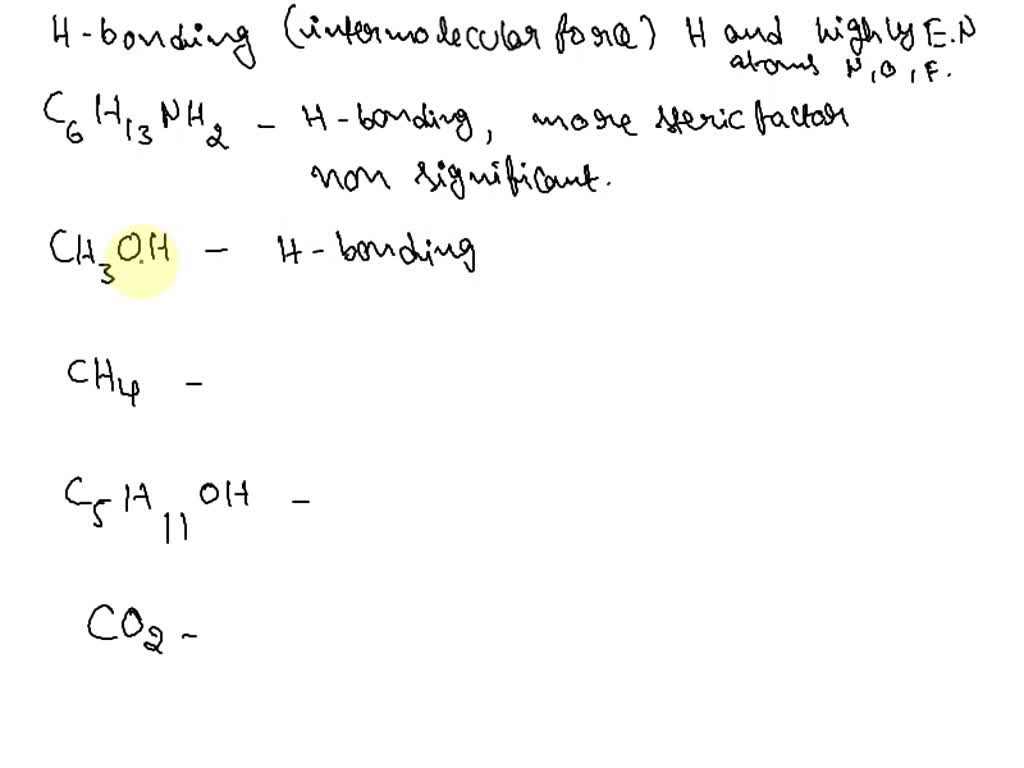
Among intermolecular forces, hydrogen bonding represents a particularly strong subtype of dipole-dipole interaction. It occurs exclusively when hydrogen is covalently bonded to highly electronegative atoms—specifically fluorine, oxygen, or nitrogen (FON). Because these atoms pull shared electron density strongly toward themselves, they leave the hydrogen atom with a significant partial positive charge ($\delta^+$). This electron-deficient hydrogen is then strongly attracted to the lone pairs of electrons on a neighboring electronegative atom.
Methane, the simplest alkane, consists of one carbon atom bonded to four hydrogen atoms. Analyzing its molecular geometry, electronegativity values, and electron distribution reveals why it cannot participate in this specialized form of intermolecular attraction, relying instead on weaker London dispersion forces.
Molecular Geometry and Symmetry of Methane ($\text{CH}_4$)
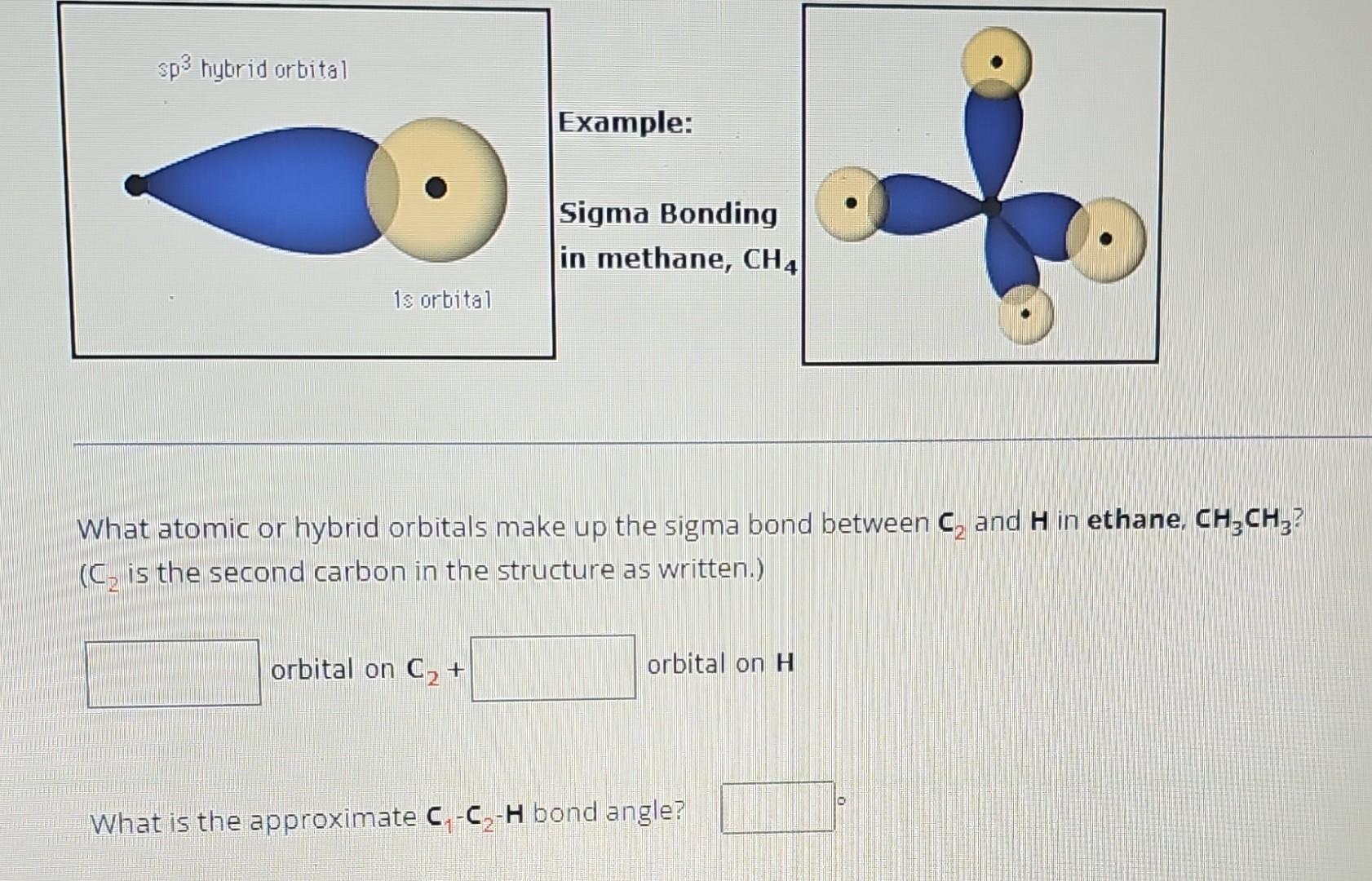
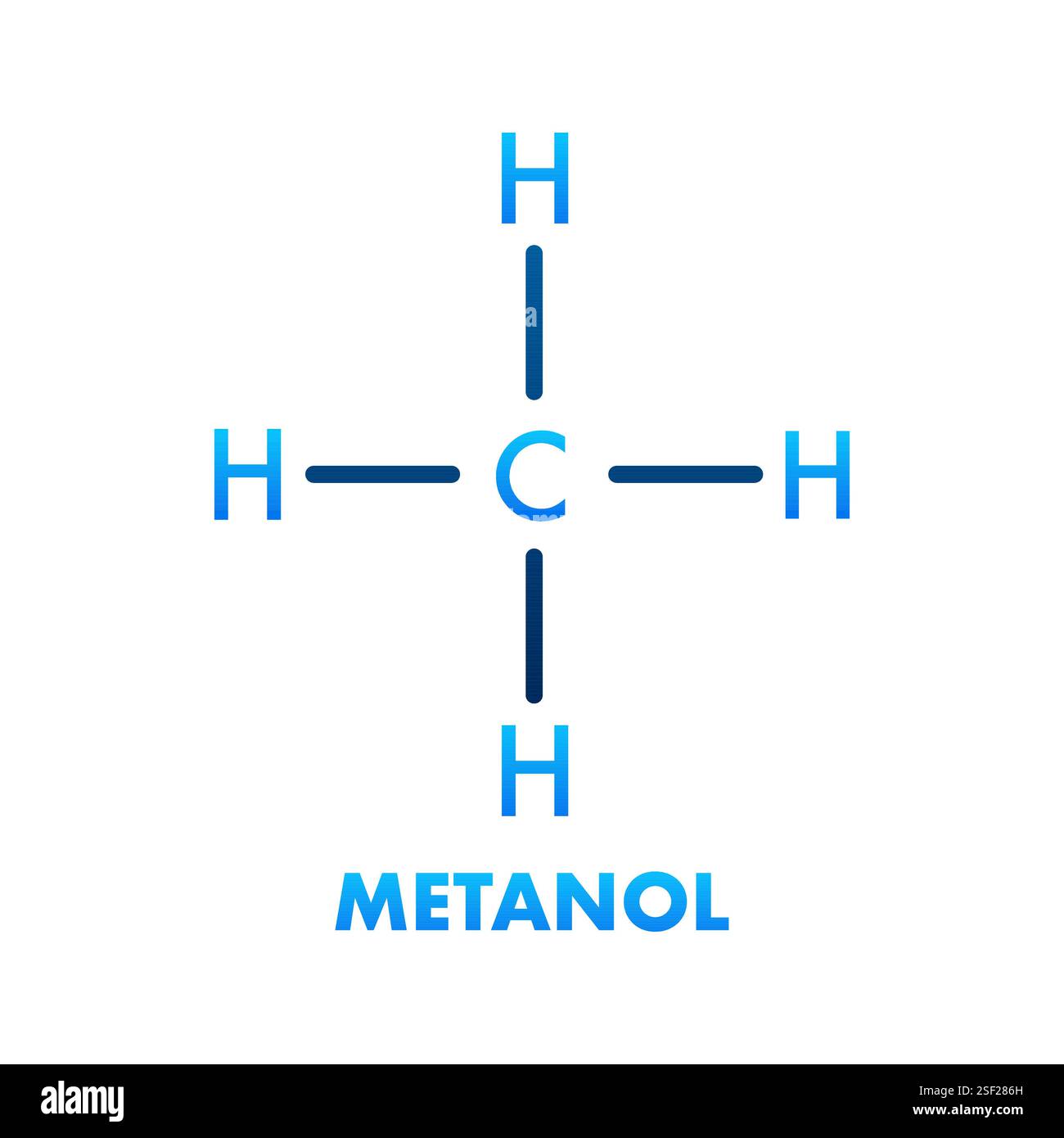
The physical and chemical behavior of $\text{CH}_4$ is deeply rooted in its spatial configuration. According to Valence Shell Electron Pair Repulsion (VSEPR) theory, a carbon atom bonded to four other atoms with no lone pairs adopts a tetrahedral geometry. In this arrangement, the four $\text{C-H}$ bonds are directed toward the corners of a regular tetrahedron, creating an optimal bond angle of approximately $109.5^\circ$.
This tetrahedral symmetry has profound implications for molecular polarity:
- Symmetrical Charge Distribution: Because the four identical bonds are spaced symmetrically in three-dimensional space, the individual bond dipoles pull equally in opposite directions.
- Vector Cancellation: The bond dipoles vectorally cancel one another out completely.
- Net Dipole Moment: As a result of this complete cancellation, methane has a net dipole moment of zero ($\mu = 0\text{ D}$), classifying it definitively as a nonpolar molecule.
Because nonpolar molecules lack permanent positive and negative poles, they cannot engage in dipole-dipole interactions, laying the structural groundwork for why hydrogen bonding is entirely absent in methane systems.
Electronegativity and the Absence of Hydrogen Bonding Requirements
The capacity to form a hydrogen bond depends heavily on the electronegativity values of the constituent atoms involved in the bond. Electronegativity measures an atom's ability to attract shared electrons in a chemical bond.
| Element / Bond | Electronegativity Values (Pauling Scale) | Electronegativity Difference ($\Delta\text{EN}$) | Polarity Status | Capable of Hydrogen Bonding? |
|---|---|---|---|---|
| Carbon ($\text{C}$) / Hydrogen ($\text{H}$) | $\text{C} = 2.55$, $\text{H} = 2.20$ | $0.35$ | Essentially Nonpolar | No |
| Nitrogen ($\text{N}$) / Hydrogen ($\text{H}$) | $\text{N} = 3.04$, $\text{H} = 2.20$ | $0.84$ | Polar | Yes |
| Oxygen ($\text{O}$) / Hydrogen ($\text{H}$) | $\text{O} = 3.44$, $\text{H} = 2.20$ | $1.24$ | Polar | Yes |
| Fluorine ($\text{F}$) / Hydrogen ($\text{H}$) | $\text{F} = 3.98$, $\text{H} = 2.20$ | $1.78$ | Highly Polar | Yes |
As illustrated in the comparative table above, the electronegativity difference between carbon ($2.55$) and hydrogen ($2.20$) is merely $0.35$. According to standard chemical principles, an electronegativity difference below $0.5$ indicates a covalent bond where electrons are shared relatively equally.
Because carbon is not significantly more electronegative than hydrogen, the carbon-hydrogen bond does not create a strong partial positive charge on the hydrogen atom. Without a substantial partial positive charge on hydrogen and without lone pairs of electrons on a highly electronegative donor atom, methane fails to meet the strict criteria required to establish a hydrogen bond.
Dominant Intermolecular Forces in Methane: London Dispersion Forces
With hydrogen bonding, dipole-dipole interactions, and ion-dipole forces entirely ruled out due to its nonpolar nature, methane relies exclusively on London dispersion forces (also known as instantaneous dipole-induced dipole forces) to hold its molecules together in condensed phases.
London dispersion forces arise from the quantum mechanical fluctuations of electron density surrounding atomic nuclei. Even in a nonpolar, symmetrical molecule like $\text{CH}_4$, electrons are in constant motion. At any given fraction of a second, the electron cloud may become momentarily asymmetrical, creating an instantaneous dipole.
This fleeting dipole induces a corresponding dipole in a neighboring molecule, resulting in a weak, short-lived electrostatic attraction. Several factors influence the strength of these dispersion forces in hydrocarbons:
- Molecular Weight and Size: Larger molecules with more electrons exhibit greater polarizability, meaning their electron clouds are more easily distorted.
- Surface Area: Elongated molecules have larger contact areas, allowing for more extensive intermolecular interactions than compact, spherical molecules.
Methane possesses a relatively low molecular mass ($16.04\text{ g/mol}$) and a compact, spherical geometry. Consequently, its polarizability is extremely low. This weakness in London dispersion forces explains why methane is a gas at room temperature, boasting a very low boiling point of $-161.5^\circ\text{C}$ ($111.65\text{ K}$).
Comparative Analysis: Methane vs. Hydrogen-Bonded Molecules
To appreciate the structural isolation of methane from hydrogen bonding phenomena, it is instructive to compare its physical characteristics with those of isoelectronic or structurally comparable molecules that do exhibit hydrogen bonding, such as water ($\text{H}_2\text{O}$), ammonia ($\text{NH}_3$), and hydrogen fluoride ($\text{HF}$).
| Molecule | Molar Mass ($\text{g/mol}$) | Principal Intermolecular Forces | Boiling Point ($^\circ\text{C}$) | Melting Point ($^\circ\text{C}$) |
|---|---|---|---|---|
| Methane ($\text{CH}_4$) | $16.04$ | London Dispersion Forces | $-161.5$ | $-182.5$ |
| Ammonia ($\text{NH}_3$) | $17.03$ | Hydrogen Bonding, Dipole-Dipole, Dispersion | $-33.3$ | $-77.7$ |
| Water ($\text{H}_2\text{O}$) | $18.02$ | Hydrogen Bonding, Dipole-Dipole, Dispersion | $100.0$ | $0.0$ |
| Hydrogen Fluoride ($\text{HF}$) | $20.01$ | Hydrogen Bonding, Dipole-Dipole, Dispersion | $19.5$ | $-83.6$ |
The data table highlights a dramatic anomaly in physical chemistry known as trend deviation caused by intermolecular hydrogen bonding. Despite having a comparable molar mass ($\approx 16\text{ to }20\text{ g/mol}$), water, ammonia, and hydrogen fluoride exhibit vastly higher boiling points than methane.
While methane requires temperatures as low as $-161.5^\circ\text{C}$ to transition from a liquid to a gas, water boils at $100^\circ\text{C}$. This massive divergence occurs because breaking the robust network of intermolecular hydrogen bonds in water requires significantly more thermal energy than overcoming the feeble, transient London dispersion forces holding methane molecules together.
Frequently Asked Questions
Can methane form hydrogen bonds under high pressure?
No. Extreme pressure can force molecules closer together, increasing the density of liquid or solid methane, but it cannot alter the fundamental electronegativity of carbon and hydrogen or create a permanent molecular dipole. Methane remains nonpolar and incapable of hydrogen bonding regardless of environmental pressure.
Why is methane a gas at room temperature while water is a liquid?
Methane molecules are held together only by weak London dispersion forces, which are easily disrupted by thermal energy at room temperature. Water molecules engage in strong hydrogen bonding networks that require substantial heat energy to break, keeping water in a liquid state under standard conditions.
Does the carbon atom in methane have lone pairs?
No. Carbon has four valence electrons and forms four single covalent bonds with four hydrogen atoms, satisfying the octet rule completely. It has zero lone pairs of electrons, which contributes directly to its symmetrical tetrahedral shape and nonpolar nature.
How do intermolecular forces affect the solubility of methane in water?
Because methane is nonpolar and water is highly polar, methane molecules cannot form hydrogen bonds or dipole-dipole interactions with water molecules. Consequently, methane is extremely insoluble in water, as dissolving it would require breaking up favorable water-water hydrogen bonds without forming sufficiently strong new interactions.
Practical Takeaways and Summary
Understanding that methane does not engage in hydrogen bonding clarifies core principles of chemical structure and physical behavior. Because $\text{CH}_4$ is nonpolar with a symmetric tetrahedral geometry and a minimal electronegativity difference between carbon and hydrogen, its intermolecular interactions are restricted entirely to weak London dispersion forces. This lack of robust hydrogen bonding accounts for its low boiling point, gaseous state at ambient temperatures, and poor solubility in polar solvents like water.