The 1993 Dodge D150 represents the final year of the first-generation Ram truck lineage, serving as a durable, "square-body" bridge between vintage utility and modern fuel-injection performance. For owners and collectors in 2026, this model remains highly sought after for its refined Magnum engines, simplistic mechanical layout, and its status as the last of the classic Dodge D-Series pickups.
The Significance of the 1993 Model Year
The 1993 Dodge D150 holds a unique place in automotive history. While 1994 ushered in the radical "Big Rig" styling that redefined the American pickup, the 1993 model was the culmination of a design that had been in production since 1972. By 1993, Dodge had ironed out many of the structural and mechanical gremlins inherent in earlier iterations, resulting in what many enthusiasts consider the most reliable version of the classic D-Series.
As of 2026, these trucks have officially entered "classic" status, often appearing at vintage shows and serving as reliable platforms for restoration. The "D" designation identifies the truck as a two-wheel-drive (RWD) model, whereas the "W" designation was reserved for four-wheel-drive versions. The 150 suffix denotes the half-ton payload class, making it the most common and versatile entry in the lineup.
Engine Specifications: The Magnum Revolution
The most critical technical aspect of the 1993 Dodge D150 is the presence of the Magnum series engines. Introduced shortly before the platform's retirement, these engines replaced the older Throttle Body Injection (TBI) and carbureted systems with high-flow cylinder heads, multi-port fuel injection, and higher compression ratios.
3.9L Magnum V6
The base engine for the D150 was the 3.9L V6. While often overlooked in favor of the V8s, the 1993 3.9L was significantly more potent than its predecessors.
- Horsepower: 175 hp @ 4,800 RPM
- Torque: 225 lb-ft @ 3,200 RPM
- Practicality: This engine is ideal for light-duty commuting and light hauling. In 2026, it is valued for its slightly better fuel economy compared to the V8s, though it lacks the grunt needed for heavy towing.
5.2L Magnum V8 (318 cu in)
The 5.2L Magnum is perhaps the most balanced engine offered in the D150. It provided a substantial leap in technology over the legendary but aging "LA" 318.
- Horsepower: 230 hp @ 4,400 RPM
- Torque: 280 lb-ft @ 3,200 RPM
- Practicality: The 5.2L is widely regarded for its longevity. It utilizes a roller camshaft and high-output alternator as standard, making it a robust choice for a daily-driven classic.
5.9L Magnum V8 (360 cu in)
For maximum gas-powered performance in the half-ton frame, the 5.9L Magnum was the top-tier choice.
- Horsepower: 230 hp @ 4,000 RPM
- Torque: 330 lb-ft @ 3,200 RPM
- Practicality: While it shares the same horsepower rating as the 5.2L, the 5.9L offers significantly more low-end torque. This makes it the preferred engine for those intending to use their D150 for significant towing or hauling.
Transmission and Drivetrain Configurations
The 1993 D150 was offered with several transmission options, each impacting the truck's drivability and modern-day maintenance requirements.
- A500 (42RH) 4-Speed Automatic: Usually paired with the V6 and the 5.2L V8. This transmission features an overdrive gear, which is essential for highway speeds in 2026.
- A518 (46RH) 4-Speed Automatic: Paired with the 5.9L V8. This is a heavy-duty version of the A500, capable of handling the higher torque loads of the 360 engine.
- Standard 5-Speed Manual: A rugged option for those who prefer direct control. These units are increasingly rare and are prized by collectors for their mechanical simplicity.
The rear axle typically featured the Chrysler 8.25-inch or the heavy-duty Chrysler 9.25-inch differential. Buyers should check for the "Anti-Spin" (limited-slip) differential option, which significantly improves traction in wet or snowy conditions on these rear-wheel-drive trucks.
Chassis, Payload, and Towing Capacities
The D150 utilized a traditional carbon steel C-channel frame. While robust, the suspension design was relatively simple, featuring independent front suspension with coil springs for the RWD D-series, providing a smoother ride than the leaf-sprung 4WD counterparts.
| Feature | Specification (Standard Bed) | Notes |
|---|---|---|
| Wheelbase | 115 in (Short) / 131 in (Long) | Long bed provides better stability for towing. |
| Max Payload | ~1,500 lbs | Varies based on cab configuration and options. |
| Max Towing Capacity | 5,000 - 7,500 lbs | Requires 5.9L V8 and proper towing package. |
| Fuel Tank Capacity | 22 or 30 Gallons | 30-gallon tank is highly desirable for long trips. |
| Curb Weight | 3,600 - 4,000 lbs | Relatively light compared to modern aluminum trucks. |
Practical Considerations for Ownership in 2026
Operating a 1993 Dodge D150 today requires a shift in mindset. While these trucks are durable, they are over 30 years old. Prospective owners must account for the following practical realities.
Rust and Body Integrity
The first-generation Dodge trucks are notorious for rust in specific areas. When inspecting a D150, prioritize checking:
- Cab Mounts: The points where the cab meets the frame often trap moisture.
- Drip Rails: The rain gutters above the doors can corrode, leading to interior water leaks.
- Floor Pans: Particularly on the driver's side, where salt and moisture from boots accumulate.
- Fuel Tank Straps: These are prone to thinning over decades of exposure.
Electrical Systems and the PCM
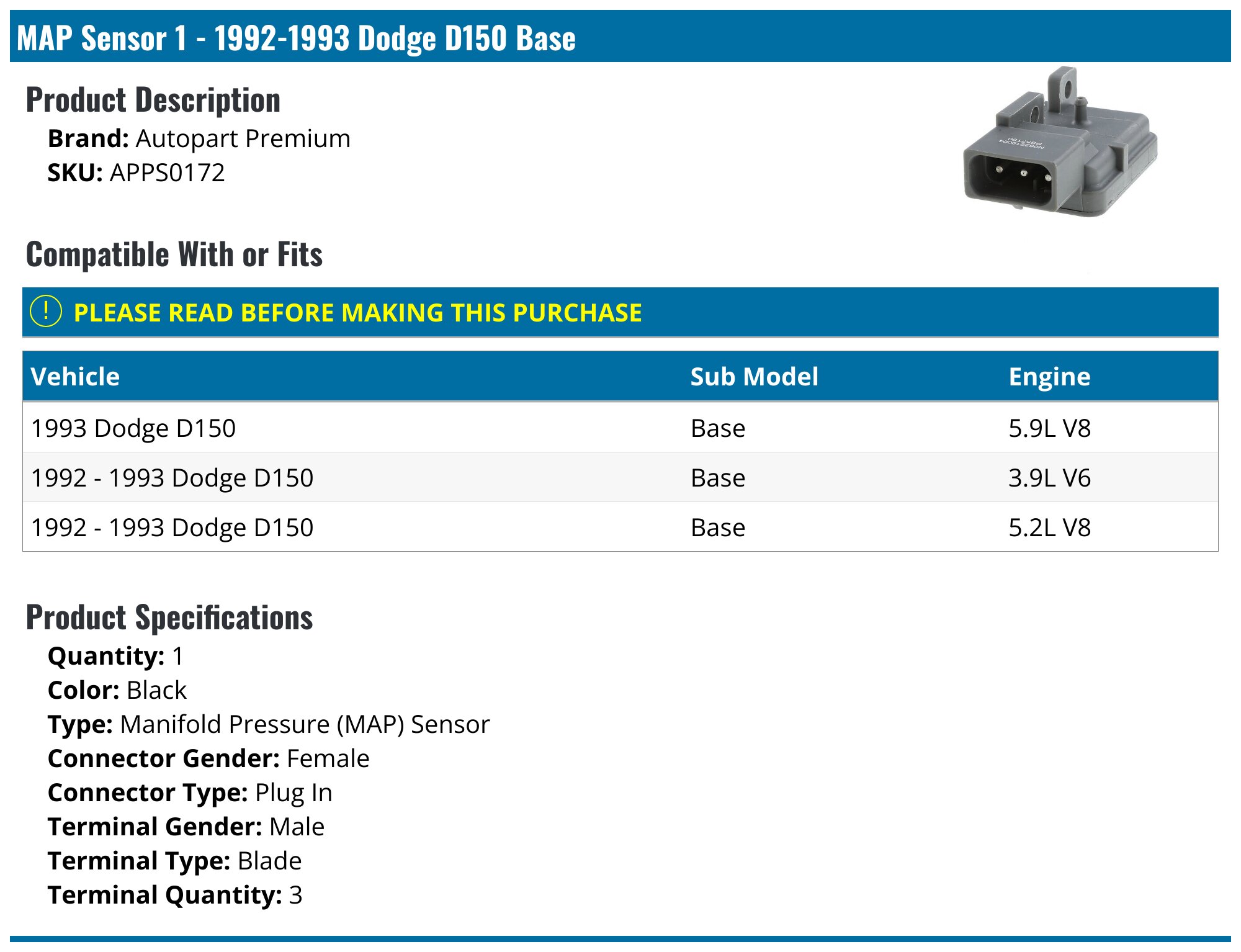
The 1993 model relies on a Powertrain Control Module (PCM) to manage the Magnum engine's multi-port injection. In 2026, finding original, functional PCMs can be challenging. Many owners turn to specialized remanufacturing services. Additionally, the bulkhead connector (where the wiring harness passes through the firewall) can develop corrosion, leading to intermittent electrical failures in the dashboard or lighting.
Fuel Economy in a Modern Context
The 1993 D150 was built in an era of different efficiency standards. Even with the Magnum fuel injection, owners should expect:
- City: 10–12 MPG
- Highway: 15–17 MPG These figures make the D150 more suited for weekend utility or local shows rather than a 100-mile daily commute, given 2026 fuel prices and environmental considerations.
Parts Availability
One of the greatest "practical" strengths of the D150 is the interchangeability of parts. Because the body style ran for two decades, many components like glass, trim, and suspension parts are readily available through aftermarket suppliers like LMC Truck or RockAuto. However, specific 1993-only interior plastics or trim pieces for the "LE" (Luxury Edition) grade can be difficult to source and may require scouring salvage yards.
Interior Comfort and Trim Levels
By 1993, Dodge had upgraded the interior to be more car-like, though it remains utilitarian by today's standards.
- S (Standard): The workhorse trim. Expect vinyl floors, manual windows, and a basic AM/FM radio.
- Base: Adds slight comforts like carpeting and cloth upholstery.
- LE (Luxury Edition): The top-of-the-line trim for 1993. This included "Tulip" cloth or optional leather seats, woodgrain dashboard accents, power windows, power locks, and air conditioning.
In 2026, a well-preserved LE interior is a hallmark of a high-value collector truck. The seats in these models are often praised for their "living room sofa" comfort, a stark contrast to the firm, bolstered seats found in modern performance pickups.
Troubleshooting Common Issues
If you are experiencing performance issues with a 1993 D150, the following steps are standard practice for this specific era of Dodge engineering:
- Check for "Death Wobble" or Steering Play: While more common on 4WD models, the 2WD D150 can develop significant steering slop due to worn tie-rod ends or a failing steering gear box. Replacing the rag joint is a common and effective fix.
- Plenum Gasket Failure: A known issue with Magnum engines is the blowing of the lower intake manifold (plenum) gasket. If the truck is consuming oil or pinging under load, this is the likely culprit.
- Transmission Governor Pressure Sensor: If the automatic transmission is "hunting" for gears or refusing to shift into overdrive, the electronic sensors inside the transmission may be fouled. These are relatively easy to replace during a fluid and filter service.
Buying Advice: Selecting the Right D150
When shopping for a 1993 Dodge D150 in the current market, prioritize mechanical history over mileage. A truck with 180,000 miles that has had its plenum gasket, cooling system, and transmission sensors replaced is often a better purchase than a 60,000-mile "barn find" with dry-rotted seals and a gummed-up fuel system.
Seek out trucks that have spent their lives in "salt-free" climates. While mechanical parts are easy to replace, structural cab rust on these trucks is expensive and labor-intensive to repair correctly.
Frequently Asked Questions
Is the 1993 Dodge D150 considered a "Classic"?
Yes. As of 2026, any vehicle over 25 years old is generally classified as a classic. The 1993 D150 is particularly collectible because it is the final year of the first-generation body style and features the desirable Magnum engine upgrades.
Can the 1993 D150 handle modern highway speeds?
Yes, provided it is equipped with the 4-speed automatic (overdrive) or the 5-speed manual transmission. Models with the older 3-speed automatics (rare by 1993 but possible in some fleet configurations) will struggle with high RPMs at modern speeds of 75+ mph.
What is the difference between a D150 and a W150?
The "D" stands for 2-wheel drive (Rear-Wheel Drive), and the "W" stands for 4-wheel drive. The D150 sits lower to the ground, has independent front suspension, and generally gets slightly better fuel economy than the W150.
Are 1993 Dodge D150s expensive to maintain?
No, they are among the most affordable classic trucks to maintain. Their mechanical systems are straightforward, and there is no complex infotainment or advanced driver-assistance systems (ADAS) to fail. Most repairs can be performed by a hobbyist with a standard set of tools.
Does the 1993 D150 have airbags?
No. The 1993 model year predates the federal requirement for front airbags in light trucks. Safety features are limited to anti-lock brakes (usually rear-wheel ABS only) and three-point seatbelts.
Final Recommendation
For those seeking a vintage truck that can still perform actual work, the 1993 Dodge D150 is an excellent choice. To maximize your investment, look for a 5.2L Magnum V8 with the LE trim package. This configuration offers the best balance of power, comfort, and long-term parts availability. Before finalizing any purchase, ensure a thorough inspection of the plenum gasket and the rear cab mounts to avoid the two most common "hidden" costs associated with this model year.