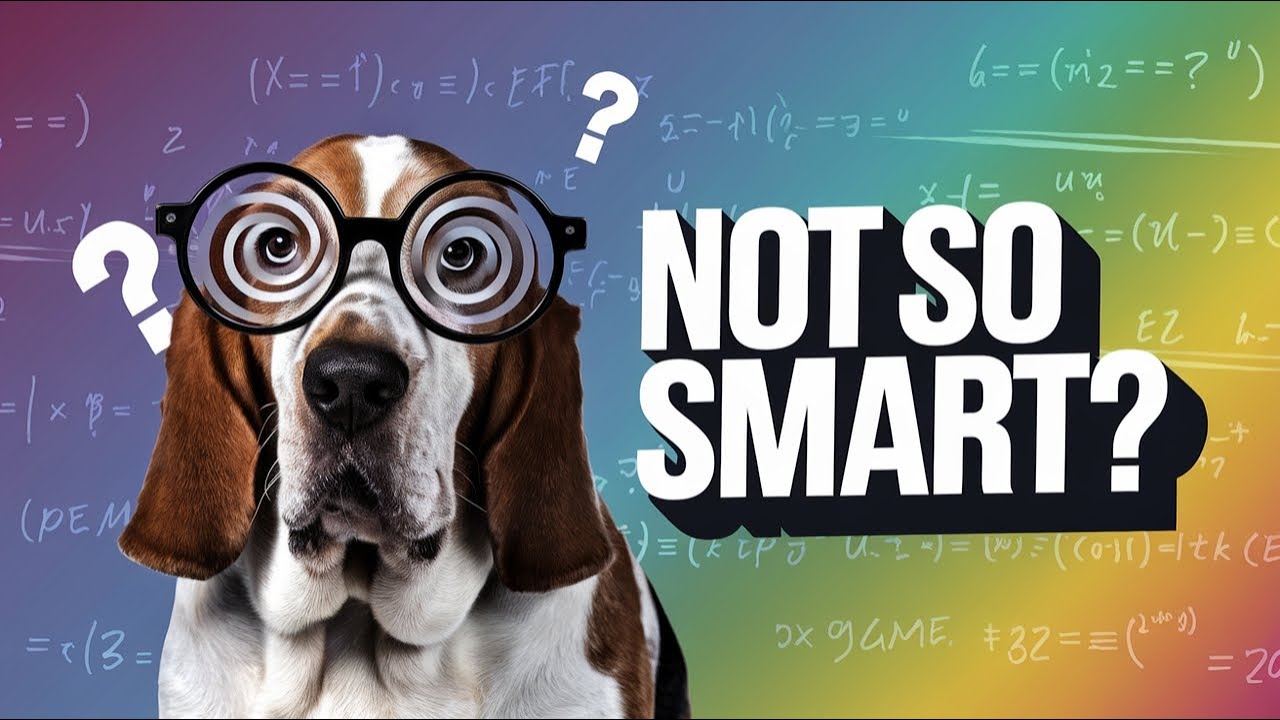
When people search for the "dumbest" dog breeds, they are usually looking for pets that are harder to train, slower to respond to commands, or seemingly less attentive to human cues. However, canine behavioral science reveals that what looks like a lack of intelligence is almost always a specialized working intelligence or an independent streak bred into the dog for a specific historical purpose.
The concept of canine intelligence is generally categorized into three distinct types: adaptive intelligence (how well a dog solves problems on its own), instinctive intelligence (what the dog was bred to do, such as herding or hunting), and working and obedience intelligence (how quickly a dog learns commands from humans). Stanley Coren, a canine psychologist, famously ranked dog breeds by working and obedience intelligence in his influential book The Intelligence of Dogs. The breeds frequently labeled as the "dumbest" typically rank at the bottom of obedience trials, not because they lack brainpower, but because they possess high levels of independence, stubbornness, or low motivation for traditional human-led tasks. Understanding these traits helps owners tailor training methods to bridge the gap between human expectations and canine behavior.
The Science of Canine Intelligence: Working vs. Adaptive Brainpower
To understand why certain dog breeds struggle with obedience training, it is essential to examine how canine cognition is measured. For decades, researchers and trainers have studied how dogs process information, solve spatial puzzles, and respond to human communication.
Working and obedience intelligence relates directly to how many repetitions a dog needs to learn a new command and how often they obey the first known command. Breeds bred to work closely alongside humans—such as Border Collies or German Shepherds—were selected for immediate responsiveness. Conversely, breeds bred to hunt independently, track scent over miles, or guard livestock without human supervision had to make decisions on their own. A hound that stops to follow a scent trail instead of listening to a recall command is not necessarily unintelligent; it is simply prioritizing its instinctive programming over human instruction.
Adaptive intelligence, on the other hand, measures a dog's ability to learn from experience, solve everyday problems, and navigate its environment. A dog might struggle to learn complex obedience routines (low working intelligence) yet excel at opening doors, finding hidden treats, or reading human emotional states (high adaptive intelligence). Evaluating a dog's intelligence solely by its obedience test scores overlooks the diverse array of cognitive strengths found across the canine spectrum.
Examining the 10 Breeds Frequently Ranked Lowest in Obedience
While no dog is truly devoid of intelligence, certain breeds consistently rank at the bottom of standard obedience and working trials. The following sections examine ten breeds often cited in behavioral studies for their independent nature, stubbornness, or slower response times to human commands.
1. Afghan Hound
The Afghan Hound is frequently cited at the bottom of Coren's obedience rankings, requiring dozens of repetitions to learn a new command and showing low compliance rates for initial cues. Known for its striking appearance and aloof demeanor, this ancient sighthound was bred to hunt prey independently over rugged terrain using sight and speed rather than human direction. Because they relied on their own autonomous judgment to capture game, Afghan Hounds possess a distinctly independent mindset. They require patient, gentle, and creative training methods rather than harsh corrections, which tend to make them shut down.
2. Basenji
Often referred to as the "barkless dog," the Basenji possesses an independent streak that can easily be mistaken for a lack of intelligence. Originating from Central Africa, these dogs were used for flushing game into nets and tracking. They exhibit cat-like behaviors, including grooming themselves and climbing, and they display a famously stubborn attitude toward standard obedience training. Basenjis think for themselves; if a command does not serve their immediate interests, they will often ignore it entirely, requiring experienced owners who understand primitive breed traits.
3. Bulldog (English Bulldog)
English Bulldogs are beloved for their gentle, affectionate nature, but they rarely score high on obedience trials. Their placid, low-energy demeanor can translate into what owners perceive as stubbornness or slow comprehension during training sessions. Bulldogs were originally bred for bull-baiting and later as companion animals, requiring little complex problem-solving or independent working capability. Their physical structure and brachycephalic anatomy also mean training sessions must be kept short and low-intensity to avoid respiratory stress.
4. Chow Chow
The Chow Chow is an ancient Chinese breed known for its lion-like mane and aloof, cat-like independence. Chow Chows are fiercely loyal to their immediate families but are notoriously suspicious of strangers and indifferent to pleasing people outside their circle. This lack of people-pleasing drive makes traditional obedience training a challenge. They do not respond well to repetitive drills or coercive tactics; instead, they require early socialization, firm boundaries, and respectful handling to manage their naturally guarded disposition.
5. Borzoi
The Borzoi, or Russian Wolfhound, shares many traits with the Afghan Hound. Bred by Russian nobility to course wolves, these large sighthounds needed to spot prey, chase it down, and dispatch it without human intervention. Consequently, they possess immense speed and independent problem-solving skills, but very little inclination to sit, stay, or heel on command unless they see a direct benefit. Their sensitive nature means they require calm, positive reinforcement rather than forceful handling.
6. Bloodhound
Famous for having one of the most acute olfactory systems in the animal kingdom, the Bloodhound is a specialized tracking machine. When a Bloodhound catches a scent, its brain effectively shuts out all other stimuli, including its owner's voice. This hyper-focus on tracking scents makes them appear disobedient or "dumb" in standard household obedience settings, though their tracking intelligence is world-class. Managing a Bloodhound requires understanding that their nose dictates their reality, making secure containment and specialized tracking training essential.
7. Pekingese
Bred as lapdogs for Chinese royalty, Pekingese dogs possess a regal, dignified, and fiercely independent personality. They were never required to herd, retrieve, or hunt, meaning they lack the instinctual drive to cooperate with human tasks. Their stubborn streak is legendary, and they can be difficult to housebreak or teach basic commands to if the owner lacks consistency and patience. Pekingese prefer to dictate the terms of their environment, requiring patient, reward-based motivation to encourage compliance.
8. Beagle
Beagles are popular family pets, but their scenthound heritage often places them lower on obedience indices. Bred to hunt in packs by trailing rabbits and hares, Beagles are easily distracted by interesting odors in the environment. Their independent hunting drive means that when they pick up a track, their selective deafness kicks in. While they are food-motivated and can learn basic commands, their impulse control around wildlife and scents requires dedicated, lifelong management.
9. Basset Hound
With their drooping ears and mournful expression, Basset Hounds are slow-moving scenthounds bred to hunt low-to-the-ground game under dense brush. Their heavy bone structure and relaxed pace mean they approach training with deliberate slowness. Like Bloodhounds and Beagles, their primary cognitive focus is olfactory, not obedience. Bassets are notoriously difficult to recall once they catch a scent, and their stubborn persistence requires high-value food rewards and immense patience from their handlers.
10. Shih Tzu
The Shih Tzu rounds out this group as another ancient companion breed originating from Tibetan monasteries and Chinese palaces. Bred exclusively for companionship, they lack the working drives found in herding or sporting dogs. While they are friendly, adaptable, and generally eager to please their owners compared to some primitive hounds, they can be notoriously difficult to house-train and stubborn during basic obedience drills. Their small size and charming demeanor often lead to "small dog syndrome," where inconsistent rule enforcement hinders their learning progress.
| Breed | Primary Historical Purpose | Working/Obedience Intelligence Rank | Key Training Challenge |
|---|---|---|---|
| Afghan Hound | Sighthound hunting | Very Low | Aloofness, independent problem-solving |
| Basenji | Flushing game, tracking | Very Low | Extreme independence, cat-like demeanor |
| Bulldog | Bull-baiting, companionship | Low | Low energy, stubborn compliance |
| Chow Chow | Guarding, hunting | Low | Suspicious of strangers, low people-pleasing drive |
| Borzoi | Wolf coursing | Very Low | High prey drive, autonomous decision-making |
| Bloodhound | Trailing scents | Low | Olfactory distraction, single-minded focus |
| Pekingese | Royal lapdog | Low | Regal stubbornness, difficult housebreaking |
| Beagle | Pack hunting | Low | Selective deafness around scents |
| Basset Hound | Scent tracking | Low | Slow pace, stubborn persistence |
| Shih Tzu | Palace companion | Low | House-training hurdles, inconsistent focus |
How to Train a "Stubborn" or Independent Dog Breed
Training a dog with low working intelligence requires a shift in mindset. Traditional obedience methods designed for highly compliant herding dogs often fail with hounds, sighthounds, and primitive companion breeds.
First, owners must leverage high-value motivators. Standard kibble is rarely sufficient when competing against the scent of a squirrel or the independent instincts of an Afghan Hound. Using small pieces of cooked chicken, liver, or specialized training treats provides the necessary incentive. Second, keep training sessions short—five to ten minutes maximum—to prevent the dog from becoming bored or shutting down. Independent breeds quickly lose interest in repetitive drills, so varying the routine and incorporating games yields better results.
Finally, patience and consistency are paramount. Independent breeds do not respond well to punishment or harsh reprimands, which can damage the human-canine bond and cause the dog to become fearful or defensive. Positive reinforcement, clear boundaries, and an understanding of the breed's historical purpose will transform a challenging pet into a well-adjusted companion.
Frequently Asked Questions
Are "dumb" dogs actually less intelligent than other dogs?
No. Dogs categorized as having low working intelligence are usually just less responsive to human commands. They often possess high adaptive or instinctive intelligence, meaning they excel at solving environmental problems or performing specific tasks like tracking scents without human guidance.
Can independent dog breeds ever become reliable off-leash?
For many hounds and sighthounds, reliable off-leash reliability is extremely difficult or impossible to achieve safely. Their instinctive drive to chase prey or follow scents overrides basic obedience training when distractions arise. Secure fencing and long lines are recommended for these breeds.
Why do some dogs ignore their owners during training?
Dogs ignore commands when the motivation to obey is lower than the motivation to engage in an alternative behavior, such as sniffing a bush, chasing a moving object, or resting. Understanding what motivates the individual dog is key to overcoming this hurdle.
How many repetitions do low-ranking obedience breeds need to learn a new command?
According to canine behavioral studies, breeds at the lower end of the obedience spectrum typically require 80 to 100 repetitions or more to learn a new command, and they obey the first known command less than 25 percent of the time.
What is the difference between working intelligence and adaptive intelligence?
Working intelligence measures how quickly a dog learns human commands and how reliably it obeys them. Adaptive intelligence measures a dog's ability to learn from its environment, solve novel problems independently, and navigate everyday situations without human direction.
Conclusion and Next Actions
Labeling a dog breed as "dumb" simplifies a complex interplay of genetics, history, and canine psychology. Breeds that struggle with traditional obedience are often displaying the exact traits they were selectively bred to possess—independence, focus, and autonomous problem-solving. If you own or are considering one of these independent breeds, shift your focus from rigid obedience to positive reinforcement, mental enrichment, and mutual respect. Assess your training goals, invest in high-value rewards, and embrace your dog's unique cognitive strengths rather than measuring them against herding or working standards.