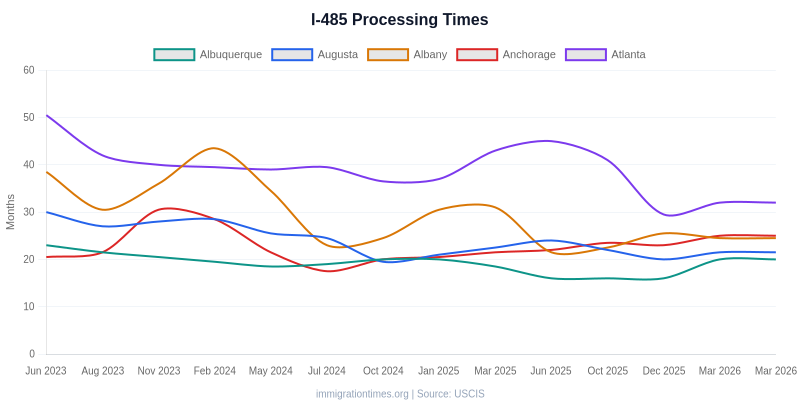
While applicants often search for a "1 year timeline for i 485 premium processing time," United States Citizenship and Immigration Services (USCIS) does not currently offer premium processing for Form I-485, Application to Register Permanent Residence or Adjust Status. Standard processing times for Form I-485 routinely range from 6 months to over 2 years depending on the underlying immigrant category, the processing service center or local field office, and the volume of pending applications.
Understanding Form I-485 and the Mechanics of Adjustment of Status
Form I-485 is the pivotal legal instrument used by individuals currently residing inside the United States to apply for lawful permanent resident status, commonly known as getting a Green Card. This application represents the final administrative stage of a multi-step immigration journey. Before filing Form I-485, most applicants must have an approved or concurrently filed immigrant petition, such as Form I-140 (Immigrant Petition for Alien Workers) or Form I-130 (Petition for Alien Relative), or qualify through humanitarian pathways such as asylum or refugee status.
The complexity of adjusting status lies in the exhaustive vetting process conducted by USCIS. Adjudicating officers must evaluate medical examinations, criminal history clearances through fingerprinting and background checks, financial affidavits of support (such as Form I-864), and continuous maintenance of lawful nonimmigrant status. Because every applicant's background is unique, processing times fluctuate wildly. The widespread public desire for a "1 year timeline for i 485 premium processing time" stems from frustration with these systemic delays, yet understanding the actual operational environment is critical for managing expectations.
Why Premium Processing is Unavailable for Form I-485
Many applicants conflate the rules governing employment-based petitions with those of adjustment of status applications. USCIS expanded premium processing services under the Emergency Stopgap USCIS Stabilization Act, allowing expedited processing for Form I-129 (Petition for a Nonimmigrant Worker) and Form I-140. Recently, this expansion extended to certain applications for change of status or extension of stay on Form I-539, as well as employment authorization applications on Form I-765.
However, Congress and USCIS have explicitly excluded Form I-485 from the premium processing framework. The rationale rests on national security and inter-agency coordination. Form I-485 requires mandatory background checks, name checks, and fingerprint biometrics processing through the Federal Bureau of Investigation (FBI) and other intelligence databases. Furthermore, many adjustment applications require coordinated file transfers between regional service centers and local USCIS field offices for in-person interviews. Because external law enforcement agencies and decentralized field offices dictate the pace of these security checks, USCIS cannot guarantee the strict 15-day or 45-day turnaround times characteristic of premium processing models.
Realistic Timelines: Breaking Down the Wait
Evaluating a standard timeline requires looking at historical data and current USCIS processing tools. While some straightforward family-based or employment-based adjustments may resolve within 6 to 12 months, complex cases frequently exceed a year. The following table illustrates the variance across common filing categories and procedural stages.
| Category / Stage | Average Processing Range | Key Variables & Dependencies |
|---|---|---|
| Employment-Based (EB-1, EB-2, EB-3) | 8 to 18 Months | Visa bulletin retrogressions, priority date availability, and whether an interview is waived. |
| Family-Based (Immediate Relative of U.S. Citizen) | 10 to 24 Months | Local field office workload, completeness of the initial filing, and background check hits. |
| Employment Authorization (Form I-765) | 2 to 6 Months | Can be accelerated if filed concurrently with eligible categories or via available expedited criteria. |
| Advance Parole (Form I-127 / Travel Document) | 3 to 6 Months | Required for international travel while I-485 is pending to avoid abandoning the application. |
Applicants should consult the official USCIS Processing Times Tool to check specific office and form-type data regularly, as processing times are updated monthly based on historical completions from the previous six months.
Interim Benefits While Waiting for Form I-485 Adjudication
Because the wait for a final green card decision often stretches well beyond a year, federal regulations provide interim benefits to bridge the gap. Successfully filing Form I-485 unlocks procedural protections that allow applicants to live and work in the United States while their permanent residency is evaluated.
- Employment Authorization Document (EAD): Applicants can file Form I-765 concurrently with Form I-485 or anytime while it remains pending. An approved EAD grants unrestricted authorization to work for any employer in the United States.
- Advance Parole (Travel Document): By filing Form I-131, applicants can obtain permission to travel abroad and return to the United States without abandoning their pending adjustment application. Leaving the country without Advance Parole while an I-485 is pending results in the automatic legal abandonment of the case.
- Period of Authorized Stay: Filing Form I-485 establishes a period of authorized stay in the United States. Even if an underlying nonimmigrant visa (such as an H-1B or F-1) expires while the adjustment application is pending, the applicant remains in a legal status authorized for stay by the Attorney General.
Common Mistakes That Delay Adjustment of Status
Navigating the adjustment process without professional oversight frequently introduces administrative delays that stretch a timeline far beyond a standard year. Avoiding these frequent missteps protects an application from unnecessary stagnation.
- Submitting Incomplete Medical Examinations: Form I-693 (Report of Immigration Medical Examination and Vaccination Record) must be completed by a USCIS-certified civil surgeon. Submitting an outdated version of the form, failing to include all required vaccine records, or submitting an unsealed envelope will trigger a Request for Evidence (RFE), halting adjudication for months.
- Failure to Maintain Continuous Status: For many employment-based and family-based preference categories, maintaining a valid nonimmigrant status up to the point of filing is mandatory. Lapsed status before filing can disqualify an applicant under Section 245(c) of the Immigration and Nationality Act.
- Incorrect Filing Fees: USCIS frequently updates filing fees and biometric fee structures. Including an incorrect check amount or failing to account for separate biometric fees for specific age brackets results in outright rejection of the entire packet.
- Neglecting Address Updates: Applicants must notify USCIS of any residential relocation within 10 days of moving by filing Form AR-11 and updating their pending application profile. Missing an interview notice or RFE mailed to an old address can lead to administrative closure or denial of the case.
Troubleshooting Delays and Exploring Expedite Requests
When an application significantly exceeds normal published processing times, applicants have recourse options. While premium processing is unavailable, USCIS permits formal inquiries and, under strict criteria, expedite requests.
Submitting an Outside Normal Processing Time Inquiry
If the online processing time tool indicates that an application's receipt date falls outside the published window, the applicant or their legal representative can submit an "e-Request" online. This prompts USCIS to pull the physical or electronic file and review why adjudication has stalled.
Qualifying for an Expedite Request
USCIS considers expedite requests on a case-by-case basis, typically requiring documented proof matching specific criteria:
- Severe financial loss to a company or person, provided that the need for urgent action is not the result of the petitioner's failure to timely file or timely respond to requests.
- Emergency situations and urgent humanitarian reasons.
- Nonprofit status of the requesting organization in furtherance of the cultural and social interests of the United States.
- U.S. government interests (such as cases designated by federal agencies as urgent).
- Clear error by USCIS.
Gathering robust, verifiable evidence is paramount when requesting expedited handling, as subjective claims without concrete documentation are routinely denied. Immigration law is complex and subject to regulatory shifts; applicants navigating complicated procedural histories or facing unique obstacles should consult a qualified immigration attorney to evaluate legal options.
Frequently Asked Questions
Can I pay an extra fee to speed up my I-485 application?
No. USCIS does not offer premium processing for Form I-485. While premium processing is available for certain underlying petition forms like the I-140, paying an extra fee will not expedite the actual adjustment of status application.
What happens to my job if my I-485 takes longer than a year?
If you applied for and received an Employment Authorization Document (EAD) alongside your Form I-485, you can legally continue working even if your green card is delayed. Additionally, individuals on dual-intent visas such as H-1B or L-1 can maintain their nonimmigrant employment status while the adjustment application pends.
Can I travel internationally while my I-485 is pending?
You should not leave the United States while your Form I-485 is pending unless you have already received an approved Advance Parole travel document (Form I-131). Leaving the country without it constitutes an abandonment of the adjustment application, requiring you to restart the process through consular processing abroad.
Why do some people get their green cards in 6 months while others wait 2 years?
Processing times vary dramatically based on the applicant's immigrant category, whether the case requires an in-person interview at a local field office, the volume of background check clearances, and whether USCIS issues a Request for Evidence (RFE) for missing documentation.
What is the best way to track my I-485 case status?
Applicants can track their cases using the USCIS online account portal or the official case status tracker tool with the 13-character receipt number found on official filing receipt notices (Form I-797).