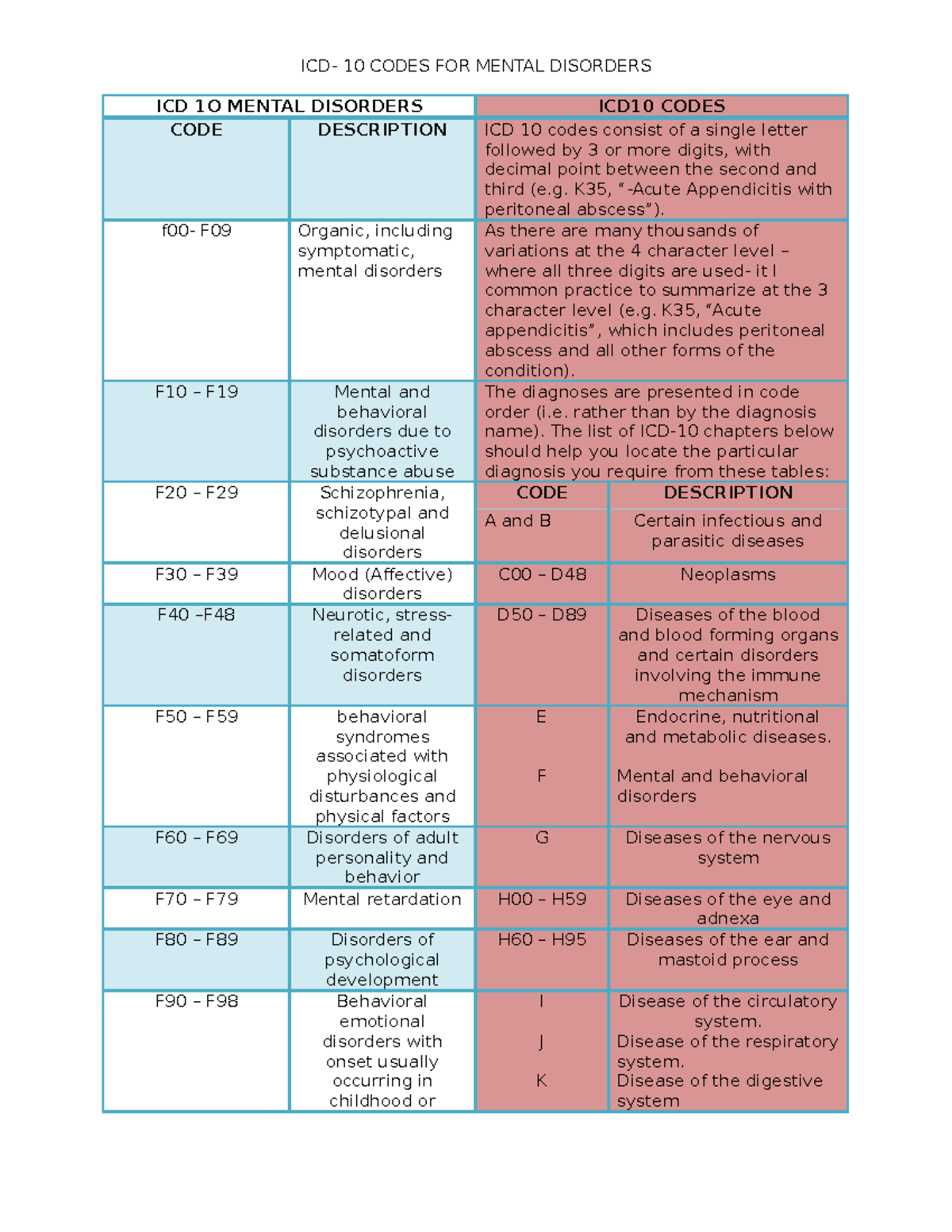
Navigating the classification of speech, language, and communication impairments requires a precise understanding of the International Classification of Diseases, Tenth Revision (ICD-10). These alphanumeric codes are essential for clinical documentation, treatment planning, and medical billing across healthcare and educational environments.
The Role and Structure of ICD-10 Coding in Speech-Language Pathology
The International Classification of Diseases, Tenth Revision, serves as the global standard for reporting diseases, health conditions, and related clinical symptoms. Within speech-language pathology and allied medical fields, accurate coding provides a standardized language that bridges clinical observations with administrative records, insurance claims, and epidemiological tracking.
Unlike medical diagnoses that rely heavily on laboratory tests or imaging, speech and language diagnoses depend on comprehensive standardized evaluations, clinical observations, and developmental histories. Consequently, selecting the correct code requires a deep understanding of the distinctions between speech production, language comprehension, fluency, and voice production.
A standard ICD-10 code ranges from three to seven characters. The initial three characters designate the category of the condition, while subsequent characters provide crucial specificity regarding etiology, anatomical location, severity, and the encounter episode (such as initial encounter, subsequent encounter, or sequela). For speech and communication disorders, these administrative details ensure that payers, billing specialists, and downstream providers understand the exact nature and chronicity of the client's presentation.
Key Categories of Speech and Language Disorders in ICD-10
The ICD-10 code set organizes communication impairments across several chapters, with the vast majority falling under Chapter V (Mental and Behavioural Disorders) and Chapter XVIII (Symptoms, Signs, and Abnormal Clinical and Laboratory Findings, Not Elsewhere Classified), as well as specific congenital and neurological categories. Understanding these structural groupings helps clinicians navigate the manual efficiently.
Speech Production vs. Language Processing Impairments
A foundational distinction in communication coding is the separation of speech production from language processing.
- Speech production disorders involve the physical mechanics of articulation, motor planning (apraxia), and phonation.
- Language processing disorders pertain to the cognitive and linguistic rules governing the comprehension and expression of spoken, written, or other symbol systems.
Failing to separate these domains can result in claim denials, inappropriate treatment authorizations, and poor continuity of care.
Developmental Versus Acquired Conditions
Documentation must also distinguish whether a communication disorder is developmental—meaning it emerged during the typical window of speech and language acquisition—or acquired secondary to trauma, stroke, neurodegenerative disease, or structural pathology. Developmental codes usually point toward long-term habilitative intervention, whereas acquired codes typically point toward rehabilitative models aimed at restoring previously established functional skills.
Common ICD-10 Codes for Speech and Language Disorders
To assist clinicians and administrative staff, the table below outlines frequently utilized ICD-10 codes related to speech and language impairments, along with their primary clinical descriptions and diagnostic considerations.
| ICD-10 Code | Clinical Description | Primary Diagnostic Focus |
|---|---|---|
| F80.0 | Specific speech articulation disorder | Difficulty with speech sound production; phonological errors persisting past developmental norms. |
| F80.1 | Expressive language disorder | Impaired ability to use spoken language, marked by limited vocabulary and grammar. |
| F80.2 | Mixed receptive-expressive language disorder | Deficits in both understanding and producing spoken or written language systems. |
| F80.89 | Other developmental disorders of speech and language | Other specified developmental communication delays that do not fit standard categories. |
| F80.9 | Developmental disorder of speech and language, unspecified | Unspecified communication delay when detailed diagnostic data is pending. |
| F80.81 | Childhood onset fluency disorder (Stuttering) | Disruptions in the normal flow and timing of speech, including repetitions and blocks. |
| R47.01 | Aphasia | Acquired language disorder resulting from brain injury, stroke, or neurological disease. |
| R47.89 | Other speech disturbances | Residual or atypical speech abnormalities not classified elsewhere. |
| R49.0 | Dysphonia | Impairments in vocal quality, pitch, or loudness originating from laryngeal pathology. |
Detailed Breakdown of Specific Diagnostic Codes
Articulation and Phonological Disorders (F80.0)
Code F80.0 is applied when an individual exhibits atypical speech sound production that significantly interferes with intelligibility or social communication. Clinicians use this code when errors involve omissions, substitutions, or distortions of phonemes beyond the expected age of acquisition. It is important to differentiate pure articulation errors (motor-based mechanical execution) from phonological processing disorders (rule-based cognitive patterns), though both often share this billing designation depending on institutional guidelines.
Language Disorders (F80.1 and F80.2)
Expressive language disorder (F80.1) highlights difficulties in verbal output where receptive language skills remain relatively intact. Conversely, mixed receptive-expressive language disorder (F80.2) captures individuals who struggle to process incoming linguistic information while also experiencing output limitations. Comprehensive audiological evaluations are typically required prerequisites before assigning these codes to rule out hearing loss as the primary etiology.
Fluency Disorders (F80.81)
Childhood-onset fluency disorder (F80.81), commonly known as stuttering, involves core speech behaviors such as sound repetitions, prolongations, and audible or silent blocks. Documentation should capture secondary behaviors, emotional reactions, and environmental triggers to support medical necessity for fluency-shaping or stuttering-modification therapies.
Acquired Speech and Language Conditions (R-Codes)
When communication disorders arise after a period of typical development due to neurological events, Chapter XVIII codes become relevant. For example, R47.01 (Aphasia) is essential for stroke rehabilitation documentation. Similarly, R49.0 (Dysphonia) captures voice disorders stemming from vocal fold nodules, paralysis, or muscular tension dysphonia, requiring laryngeal visualization findings to substantiate the diagnosis.
Documentation and Clinical Documentation Improvement (CDI) Best Practices
Accurate coding depends entirely on rigorous clinical documentation. Payers and compliance auditors look for direct links between assessment findings and the chosen ICD-10 code.
- Establish Medical Necessity: Documentation must articulate how the speech disorder impacts functional communication in daily life, academic performance, or occupational duties.
- Specify Severity and Chronicity: Vague notes lead to claim rejections. Clinicians should explicitly state whether a condition is acute, chronic, developmental, or acquired.
- Incorporate Standardized Test Scores: Including objective metrics—such as standard scores, percentile ranks, or intelligibility percentages—validates the severity level indicated by the chosen code.
- Update Codes Concurrently: As a client progresses or new diagnostic data emerges, treatment plans and billing codes must be updated to reflect the current clinical reality.
Frequently Asked Questions
What is the difference between F80.0 and F80.9 in ICD-10?
Code F80.0 is a specific diagnosis designated for articulation and phonological speech sound disorders. In contrast, F80.9 is an unspecified developmental communication disorder utilized when a client exhibits general language or speech delays, but comprehensive diagnostic testing has not yet isolated a specific subtype or when more granular clinical data is pending.
Can speech-language pathologists assign medical ICD-10 codes?
Speech-language pathologists (SLPs) do not provide formal medical diagnoses in the physician sense, but they are fully authorized and professionally expected to select and assign the appropriate ICD-10 diagnostic codes that correspond to their scope of practice for evaluation and treatment documentation, as dictated by facility guidelines and payer requirements.
Why is an audiological evaluation often required alongside language codes?
Language acquisition and processing depend heavily on functional auditory input. Payers frequently require proof of a recent hearing screening or formal audiological evaluation to rule out sensorineural or conductive hearing loss as the primary cause of a communication delay before approving coverage under F80 codes.
How do acquired speech disorders differ from developmental codes in billing?
Developmental codes (typically found in the F80 series) indicate delays or differences in acquiring speech and language during childhood. Acquired codes (such as R47.01 for aphasia) denote the loss or impairment of previously mastered speech and language skills due to sudden neurological trauma, stroke, or progressive disease.
Next Actions for Clinical and Administrative Teams
To ensure seamless compliance and minimize claim rejections, healthcare and educational practices should implement routine cross-disciplinary training between clinicians and billing personnel. Review existing documentation templates to ensure they capture the exact parameters required for high-specificity ICD-10 coding. When complex diagnostic presentations arise, consult official coding guidelines and professional association resources to maintain alignment with current standards.