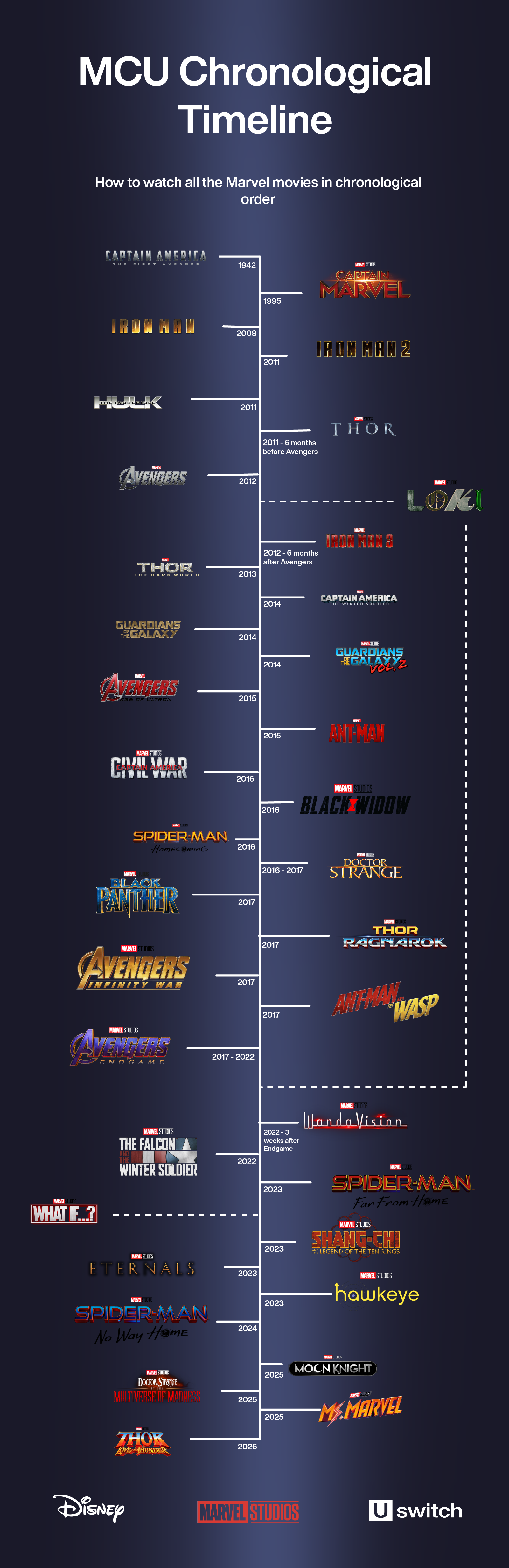
The Marvel Cinematic Universe (MCU) Phase 1 consists of six films released between 2008 and 2012. In order of release, they are: Iron Man, The Incredible Hulk, Iron Man 2, Thor, Captain America: The First Avenger, and Marvel's The Avengers. This sequence establishes the foundational heroes and the "Avengers Initiative."
The Marvel Cinematic Universe has become a cultural juggernaut, but its origins are rooted in a series of experimental films known collectively as Phase 1: Avengers Assembled. Even as we look back from the perspective of 2026, these six films remain the essential blueprint for the interconnected storytelling that redefined modern cinema. Whether you are a newcomer starting your journey or a veteran fan revisiting the "Infinity Saga," understanding the order and narrative weight of Phase 1 is crucial.
The Two Ways to Watch: Release Order vs. Chronological Order
When organizing a Phase 1 marathon, viewers must decide between two primary methodologies: Release Order and Chronological Order.
Release Order follows the films as they were originally presented in theaters. This is the intended experience designed by Marvel Studios, allowing the mystery of the "post-credits scenes" to build anticipation for the eventual team-up. It mirrors the evolution of the studio’s technical capabilities and casting choices.
Chronological Order follows the timeline of events within the MCU universe. While most of Phase 1 takes place within a relatively tight window (often referred to as "Fury’s Big Week"), Captain America: The First Avenger is a significant outlier, as the vast majority of its plot occurs during World War II (1942–1945), decades before Tony Stark builds his first suit.
For most viewers, especially first-timers, Release Order is the recommended path. It preserves the narrative reveals and the natural introduction of S.H.I.E.L.D. as a mysterious organization that slowly steps into the light.
1. Iron Man (May 2008)
The film that started it all, Iron Man, was a massive gamble for Marvel Studios, which at the time was self-financing its productions for the first time. Directed by Jon Favreau and starring Robert Downey Jr. as Tony Stark, the movie successfully blended high-stakes action with a character-driven redemption arc.
Tony Stark, a billionaire arms manufacturer, is captured by a terrorist group in Afghanistan. To escape, he builds a crude suit of armor, an event that triggers a fundamental shift in his morality. Upon returning home, he refines the suit and takes on the mantle of Iron Man.
Narrative Significance: Beyond the origin of Stark, this film introduced the "post-credits scene" as a staple of the franchise. When Samuel L. Jackson appeared as Nick Fury to mention the "Avengers Initiative," it signaled that the movie was part of a larger, shared world.
2. The Incredible Hulk (June 2008)
Often the "forgotten" entry of Phase 1, The Incredible Hulk stars Edward Norton as Bruce Banner. While Norton was later replaced by Mark Ruffalo in The Avengers, this film remains canon. It follows Banner as he lives in hiding, attempting to cure the radiation poisoning that turns him into a green behemoth when he loses his temper.
The film leans more toward the "chase thriller" genre than its predecessor. It features General "Thunderbolt" Ross and the villainous Abomination. In the final scene, Tony Stark approaches Ross in a bar, further cementing the idea that these heroes exist in the same reality.
Narrative Significance: It established the military's interest in "super-soldiers," a theme that would later connect back to Captain America. It also introduced the concept that the government was tracking these "enhanced" individuals.
3. Iron Man 2 (May 2010)
Iron Man 2 was the first film to shoulder the burden of heavy world-building. While it continues Tony Stark's personal struggles—specifically his declining health and the legacy of his father, Howard Stark—it also introduces several key MCU pillars.
We are introduced to Natasha Romanoff (Black Widow), who is undercover as Stark’s assistant to evaluate his fitness for the Avengers. We also see the expansion of S.H.I.E.L.D.’s role, with Nick Fury taking a more active hand in managing Stark's chaotic behavior.
Narrative Significance: This film introduced War Machine (James Rhodes, played by Don Cheadle) and provided the first glimpse of a map showing other "hotspots" of superhero activity, including a hint toward Wakanda and Atlantis.
4. Thor (May 2011)
Directed by Kenneth Branagh, Thor brought a Shakespearean, cosmic element to the grounded world of Iron Man. The story follows the arrogant God of Thunder who is stripped of his powers and banished to Earth by his father, Odin.
The film introduces the concept of the "Nine Realms" and establishes that "magic" is simply science that humans don't yet understand. Crucially, it introduces Tom Hiddleston as Loki, the God of Mischief, who would become the primary antagonist for the culmination of Phase 1.
Narrative Significance: Thor was the first time the MCU moved beyond Earth (Midgard). It also featured a brief cameo by Jeremy Renner as Clint Barton (Hawkeye), further populating the world with future Avengers.
5. Captain America: The First Avenger (July 2011)
Set primarily in the 1940s, this film tells the origin of Steve Rogers, a frail young man who is transformed into a super-soldier via the "Super Soldier Serum." He battles HYDRA, the Nazi science division led by the Red Skull.
While the film is a period piece, its framing device is modern. It begins and ends with the discovery of Rogers' frozen body in the Arctic in the present day. This allows the character to transition from the past to the modern-day lineup of the Avengers.
Narrative Significance: The film introduces the Tesseract (the Space Stone), the first of the Infinity Stones to play a major role in the franchise. It also establishes the deep history between the Stark family (via Howard Stark) and S.H.I.E.L.D.
6. Marvel's The Avengers (May 2012)
The grand finale of Phase 1, The Avengers, brought all the previously established heroes together for the first time. Directed by Joss Whedon, the film follows the team as they attempt to stop Loki and a Chitauri alien army from conquering Earth during the "Battle of New York."
The film was a massive success, proving that the shared universe model was not only viable but incredibly lucrative. It balanced the disparate tones of the previous movies—Iron Man’s snark, Thor’s nobility, and Captain America’s earnestness—into a cohesive whole.
Narrative Significance: The film concludes the "Avengers Initiative" arc and introduces the mid-credits reveal of Thanos, the overarching villain for the next two phases of the MCU.
Phase 1 Technical and Production Overview
The following table summarizes the key technical and narrative elements of each Phase 1 film.
| Film Title | US Release Date | Director | Primary Antagonist | MacGuffin/Key Tech |
|---|---|---|---|---|
| Iron Man | May 2, 2008 | Jon Favreau | Obadiah Stane | Arc Reactor |
| The Incredible Hulk | June 13, 2008 | Louis Leterrier | Emil Blonsky (Abomination) | Super Soldier Serum |
| Iron Man 2 | May 7, 2010 | Jon Favreau | Ivan Vanko (Whiplash) | Palladium/New Element |
| Thor | May 6, 2011 | Kenneth Branagh | Loki | Mjolnir |
| Captain America: TFA | July 22, 2011 | Joe Johnston | Red Skull | The Tesseract |
| Marvel's The Avengers | May 4, 2012 | Joss Whedon | Loki / The Chitauri | Loki's Scepter |
The "Fury’s Big Week" Timeline Explained
One of the most complex aspects of Phase 1 for timeline enthusiasts is what fans call "Fury’s Big Week." This refers to the fact that the events of Iron Man 2, The Incredible Hulk, and Thor actually overlap significantly.
In the official MCU tie-in comics and chronologies, it is established that the ending of Iron Man 2 (the Battle at Stark Expo) happens almost simultaneously with the arrival of Thor in New Mexico and the Hulk’s battle at Culver University. This rapid succession of "super-events" is what finally convinced the World Security Council to authorize Nick Fury’s Avengers Initiative, as Earth was clearly becoming the center of attention for both domestic and extraterrestrial threats.
Identifying the Narrative Threads: What to Watch For
To fully appreciate Phase 1 in 2026, keep an eye on these evolving elements that pay off in later films:
- The Tesseract: First appearing in the post-credits of Thor and then fully in Captain America, this cube is the driving force of The Avengers. We later learn it houses the Space Stone.
- The Evolution of S.H.I.E.L.D.: Watch how S.H.I.E.L.D. transitions from a secretive, slightly ominous agency in Iron Man to a full-scale global defense force with a Helicarrier in The Avengers.
- Agent Phil Coulson: Played by Clark Gregg, Coulson is the connective tissue of Phase 1, appearing in four of the six films. His "death" in The Avengers is the catalyst that finally unites the team.
- Tony Stark’s Growth: Phase 1 tracks Tony from a selfish merchant of death to a man willing to make the "sacrifice play" by flying a nuclear missile into a wormhole.
Common Mistakes When Watching Phase 1
- Skipping The Incredible Hulk: Many viewers skip this because of the actor change. However, characters like General Ross and the Leader (introduced as Samuel Sterns) reappear in later MCU entries, making this film essential for context.
- Ignoring the Post-Credits Scenes: In the early days, these were not just jokes; they were the primary way Marvel moved the overarching plot forward.
- Confusion over the Tesseract: Some viewers confuse the Tesseract with the Arc Reactor. While both are blue and glow, the Arc Reactor is a human-made power source, whereas the Tesseract is an ancient cosmic artifact.
Frequently Asked Questions
Why is Edward Norton not in The Avengers?
Edward Norton played Bruce Banner in The Incredible Hulk, but due to creative differences regarding the direction of the character and the collaborative nature of the ensemble cast, Marvel Studios decided to recast the role. Mark Ruffalo took over the part starting in 2012's The Avengers and has played the character ever since.
Is Captain America: The First Avenger better to watch first?
If you prefer a strict chronological timeline, yes. However, watching it fifth (in release order) provides a sense of "history" to the world you’ve already seen. It explains where the Tesseract came from and why Howard Stark was so important, which feels more rewarding after seeing his son Tony in the previous films.
What is the official name of Phase 1?
The official title for this collection of films is "Phase One: Avengers Assembled." It serves as the opening chapter of "The Infinity Saga," which spans Phases 1 through 3.
Are the Marvel One-Shots part of Phase 1?
Yes. During the original home media releases of Phase 1, Marvel included short films called "One-Shots." The most notable are The Consultant (explaining the Hulk/Stark connection) and A Funny Thing Happened on the Way to Thor's Hammer. These provide extra context but are not strictly required to follow the main plot.
How long does it take to watch all of Phase 1?
The total runtime for all six films in Phase 1 is approximately 12 hours and 24 minutes. This makes it a perfect candidate for a weekend binge or a dedicated one-day marathon.
Summary and Next Steps
Watching the MCU Phase 1 in release order remains the most effective way to experience the growth of the franchise. By starting with Iron Man and concluding with The Avengers, you witness the transformation of a disparate group of individuals into Earth's Mightiest Heroes.
Once you have completed Phase 1, your next step is Phase 2, which begins with Iron Man 3. This next chapter explores the fallout of the Battle of New York and introduces the cosmic side of the universe more deeply through the Guardians of the Galaxy. If you are watching on a streaming service like Disney+, most platforms now offer a "Marvel Cinematic Universe in Order" playlist that can automate this process for you.