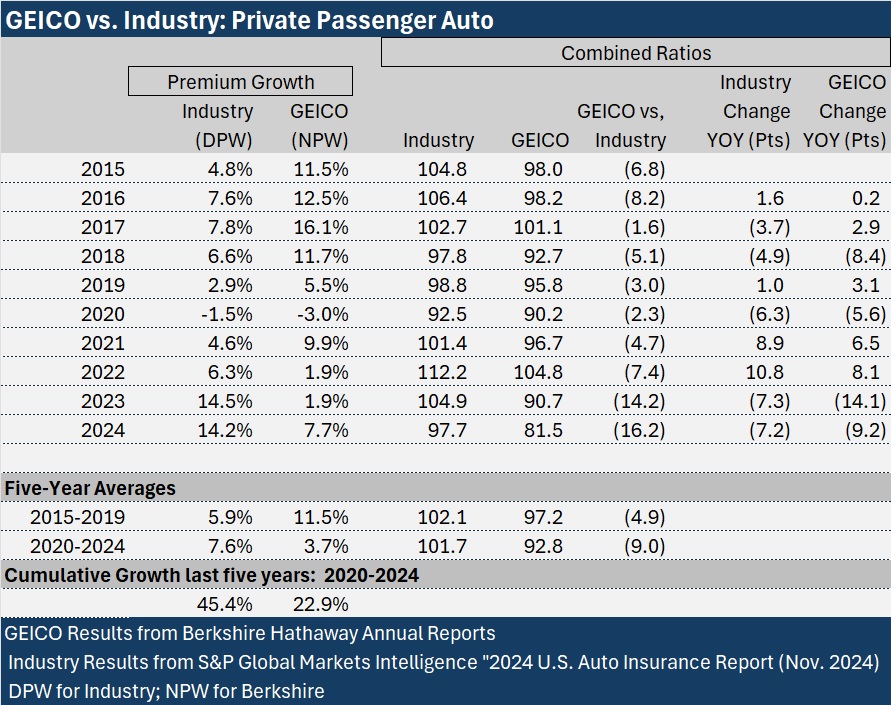
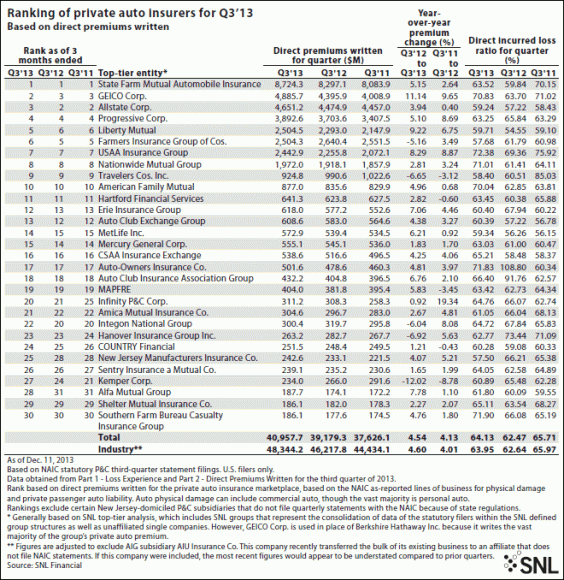
In 2017, the auto insurance landscape was defined by the massive market dominance of State Farm and the aggressive expansion of direct-to-consumer giants like GEICO and Progressive. While State Farm held the largest market share at approximately 18%, companies like USAA and Amica Mutual consistently outperformed the industry leaders in customer satisfaction and claims-handling quality.
The year 2017 served as a critical inflection point for the insurance industry. It was a period where traditional "captive agent" models—where agents sell policies for only one company—faced significant pressure from digital-first platforms. As we look back from the perspective of 2026, the rankings from 2017 provide an essential baseline for understanding how the modern insurance market was shaped by consumer preferences for mobile accessibility and pricing transparency nearly a decade ago.
The 2017 Market Share Leaders: The "Big Four"
The 2017 fiscal year saw the "Big Four" (State Farm, GEICO, Progressive, and Allstate) controlling nearly half of the private passenger auto insurance market in the United States. According to data released by the National Association of Insurance Commissioners (NAIC), these companies utilized vastly different strategies to maintain their rankings.
State Farm: The Perpetual Leader
State Farm remained the undisputed leader in 2017, a position it had held for decades. Its ranking was bolstered by a massive network of over 18,000 local agents. In 2017, State Farm’s written premiums exceeded $63 billion. The company’s strength lay in its "multiline" approach, encouraging customers to bundle auto insurance with homeowners and life insurance policies. This "stickiness" made it difficult for competitors to peel away its core customer base, despite State Farm often charging higher premiums than direct competitors in certain demographics.
GEICO: The Direct-to-Consumer Challenger
GEICO, a subsidiary of Berkshire Hathaway, continued its relentless pursuit of the number one spot in 2017. Its ranking was driven by a heavy investment in advertising—often exceeding $1 billion annually—and a streamlined direct-sales model. By bypassing the traditional agent network, GEICO was able to offer competitive pricing that appealed to younger, tech-savvy drivers. In 2017, GEICO firmly held the second-place spot, steadily closing the gap with State Farm.
Progressive: The Innovation Engine
Progressive’s ranking in 2017 was notable for its growth trajectory. The company was a pioneer in telematics through its "Snapshot" program, which allowed the insurer to track driving behavior to offer personalized discounts. This data-driven approach helped Progressive attract low-risk drivers and maintain a healthy "combined ratio" (a measure of profitability). Progressive’s focus on the independent agent channel, combined with its direct-to-consumer website, gave it a unique dual-pronged growth strategy.
Allstate: The Transition Year
Allstate held the fourth position in 2017. The company was in the midst of a significant transition, attempting to balance its expensive captive agent network with its direct-to-consumer brand, Esurance (which it owned at the time). Allstate’s 2017 strategy focused on "sophisticated pricing," using advanced analytics to segment risk more accurately than its competitors, though this sometimes led to slower growth compared to GEICO or Progressive.
Customer Satisfaction Rankings: The J.D. Power Perspective
While market share tells us who is the largest, customer satisfaction rankings tell us who is the best-regarded by policyholders. The J.D. Power 2017 U.S. Auto Insurance Study provided a deep dive into how consumers perceived their carriers across five key factors: interaction, policy offerings, price, billing process/policy info, and claims.
In 2017, the industry average for customer satisfaction was approximately 819 on a 1,000-point scale. However, there were significant regional variations and clear winners in the "niche" and "regional" categories.
The USAA Exception
USAA consistently earned the highest scores in the industry, often exceeding 900 points. However, because USAA is restricted to members of the U.S. military and their families, J.D. Power did not include them in the official rankings for the general public. In 2017, USAA was the gold standard for claims satisfaction and customer service, setting a benchmark that few other national carriers could meet.
Regional Champions
In many parts of the country, smaller regional players outranked the national giants. For example:
- Amica Mutual: Known for its high-touch service, Amica frequently ranked at the top of the New England region.
- Erie Insurance: Dominant in the Mid-Atlantic, Erie was praised for its "Erie Rate Protect" feature, which kept premiums stable even after a claim.
- Texas Farm Bureau: This organization took the top spot in the Texas region in 2017, proving that localized knowledge and community ties remained a powerful competitive advantage.
- NJM Insurance Group: In the Mid-Atlantic region (specifically New Jersey and Pennsylvania), NJM was a perennial leader in satisfaction due to its dividend-paying structure for policyholders.
Financial Strength and Claims-Paying Ability: A.M. Best Ratings
For consumers and industry analysts, a company's ranking is also determined by its financial solvency. A.M. Best is the primary agency that rates the financial strength of insurance companies. In 2017, these ratings were crucial as the industry faced rising claim costs due to increased distracted driving and higher repair costs for modern vehicles equipped with advanced sensors.
| Company Name | 2017 Market Share | A.M. Best Rating (2017) | Primary Strength |
|---|---|---|---|
| State Farm | 18.1% | A++ (Superior) | Massive capital reserves and agent network |
| GEICO | 12.8% | A++ (Superior) | Low operating costs and Berkshire backing |
| Progressive | 9.8% | A+ (Superior) | Telematics and data analytics |
| Allstate | 9.3% | A+ (Superior) | Diverse product lines and brand recognition |
| USAA | 5.7% | A++ (Superior) | Exceptional customer loyalty |
| Liberty Mutual | 5.0% | A (Excellent) | Global presence and affinity groups |
| Farmers Insurance | 4.6% | A (Excellent) | Strong presence in the Western U.S. |
| Nationwide | 3.3% | A+ (Superior) | Robust commercial and personal lines |
A.M. Best ratings of "A" or higher indicated that these companies had a "superior" or "excellent" ability to meet their ongoing insurance obligations. In 2017, this was particularly important as several catastrophic weather events, including Hurricanes Harvey and Irma, tested the liquidity of the major carriers.
The Role of Pricing and Claims in 2017 Rankings
In 2017, the "Price" factor was the most volatile element of auto insurer rankings. The industry saw a general upward trend in premiums. This was largely attributed to "social inflation"—the rising costs of legal settlements—and the increasing complexity of vehicle technology. A bumper that cost $500 to replace in 2007 often cost $2,500 in 2017 because it now contained cameras and parking sensors.
The Claims Experience Gap
The 2017 rankings revealed a widening gap between companies that excelled at the digital claims process and those that did not. This was the year that "photo-based estimating" became mainstream. Insurers like Allstate and Progressive encouraged users to upload photos of vehicle damage via mobile apps to receive an instant estimate.
Companies that ranked high in claims satisfaction (like Hartford and Erie) typically combined this digital ease with human empathy. According to 2017 consumer surveys, the most frustrated policyholders were those who felt "stuck" in automated phone systems during the stressful period following an accident.
Technological Shifts Influencing 2017 Rankings
The year 2017 marked the rise of "Insurtech." While traditional rankings focused on the established players, newer companies like Root (which launched its full expansion around this time) began to challenge the status quo by using smartphone-based telematics as the only way to get a quote.
The Growth of Telematics
Progressive and State Farm (with its "Drive Safe & Save" program) were the leaders in telematics during 2017. These programs shifted the ranking criteria for many tech-forward consumers. If a carrier didn't offer a way to "prove" one was a good driver to get a lower rate, they were often ranked lower in "Policy Offerings."
Mobile App Usability
By 2017, a carrier’s mobile app became a primary touchpoint. GEICO’s app was frequently ranked as the best in the industry, offering features like virtual assistants (Lily), digital ID cards, and easy roadside assistance requests. This digital superiority was a major factor in GEICO’s 2017 growth among Millennials and Gen Z drivers.
Why the 2017 Rankings Matter in 2026
Analyzing 2017 rankings is not merely an exercise in nostalgia; it provides vital context for the current 2026 insurance market. Many of the trends that dominate the industry today—AI-driven underwriting, fully automated claims, and the decline of the local insurance office—find their roots in the competitive shifts of 2017.
In 2017, the industry was grappling with the first major wave of "connected car" data. The rankings from that year show which companies were early adopters of technology and which were laggards. For instance, the steady rise of Progressive in the 2017 rankings foreshadowed its current position as a technological leader in the 2026 market. Conversely, the struggles of some regional carriers in 2017 to modernize their digital interfaces led to the wave of consolidations and acquisitions we have witnessed over the last nine years.
FAQ: Understanding the 2017 Auto Insurance Landscape
Which company had the best overall ranking in 2017?
The answer depends on the criteria. For market share and stability, State Farm was the top-ranked insurer. For customer satisfaction, USAA held the highest scores (for those eligible), while Amica Mutual was often the top-ranked company for the general public. For digital innovation and growth, GEICO and Progressive were the industry leaders.
Why did GEICO and Progressive grow so much faster than State Farm in 2017?
GEICO and Progressive benefited from their "direct" business models, which had lower overhead than State Farm’s agent-heavy model. Additionally, their heavy investment in digital advertising and telematics appealed specifically to the growing demographic of consumers who preferred managing their policies online rather than meeting with an agent in person.
Were there any major insurance company failures in 2017?
While there were no major national carrier failures in 2017, several smaller, high-risk non-standard insurers faced financial difficulties due to the high volume of catastrophic weather claims and rising repair costs. Most major carriers maintained "A" ratings from A.M. Best due to their diverse portfolios and strong reinsurance backing.
How did 2017 rankings handle "Insurtech" companies?
In 2017, companies like Root and Metromile were still considered "disruptors" and were often too small to appear in the top 10 market share rankings. However, they were frequently cited in industry reports for their innovative use of data, which forced established giants to upgrade their own technology to remain competitive in the rankings.
What was the biggest complaint from consumers in 2017 insurer rankings?
The most frequent complaint was rising premium costs. Even drivers with clean records saw their rates increase in 2017. This led to a "shopping" trend where consumers frequently switched carriers every 6–12 months to find a lower introductory rate, a behavior that significantly impacted the retention rankings of major insurers.
Final Recommendation for Historical Researchers
When evaluating 2017 auto insurer rankings, it is essential to look beyond the "Top 10" lists. While the national leaders provide a snapshot of the macro-economy, the true health of the insurance market in 2017 was found in the regional satisfaction scores and the financial strength ratings. For those researching these trends in 2026, the 2017 data serves as a reminder that customer service and financial stability are the two pillars that sustain an insurance company over the long term, regardless of technological shifts.
Researchers should consult the National Association of Insurance Commissioners (NAIC) for raw market share data and J.D. Power for qualitative consumer experience metrics to get the most accurate historical picture.